
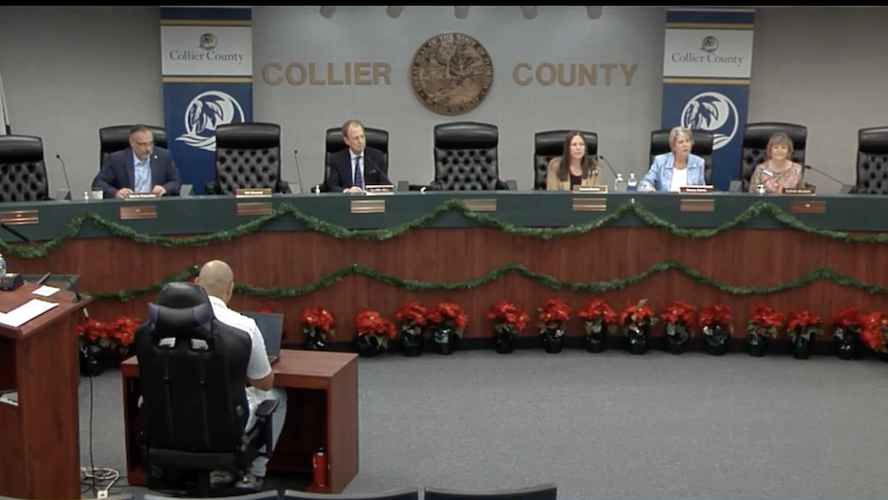


Collier County’s tourism promotion division is a step closer to becoming a standalone nonprofit after the Tourist Development Council voted unanimously Dec. 12 to support the conversion.
The TDC voted to accept the findings of a county-commissioned feasibility study and forward its recommendation to the Board of County Commissioners for consideration early in 2026.
If the county commission approves the change, the Naples, Marco Island and Everglades Convention and Visitors Bureau would transition from a county government division to a 501(c)(6) nonprofit.
Voting in favor were TDC members Clark Hill, Laura Radler, Darrin Palumbo, Bill Kramer, Nancy Kerns, Michael McComas and Susan Becker. Absent were Edward “Ski” Olesky and County Commissioner Chris Hall, who would have been presiding over his final meeting as TDC chair.
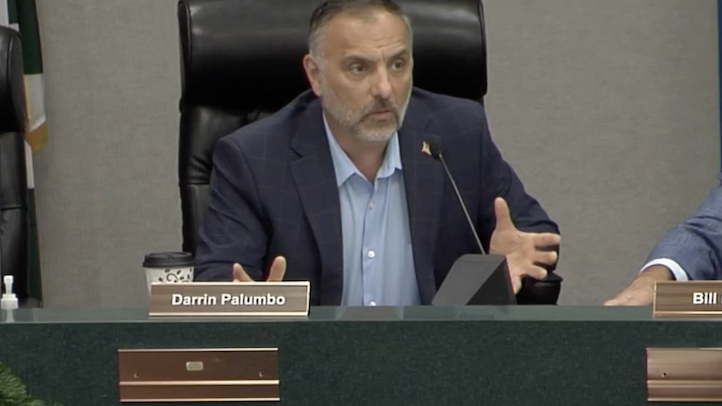
Tourist Development Council member Darrin Palumbo discusses the proposed governance change for Collier County’s tourism promotion division during the Dec. 12 council meeting.
In a statement read at the meeting, Hall said he would “wholeheartedly endorse” advancing the recommendation to the county commission.
The proposal is based on a feasibility study conducted by former Collier tourism director Jack Wert and his firm, Wert Marketing Group LLC, in partnership with Civitas Advisors. County Manager Amy Patterson commissioned the study in February. The county paid Wert’s firm $18,000 for the work.
John Mullins, director of communications, government and public affairs for the county and the county manager’s office, said the study stemmed from discussions he and Patterson had in late October 2024 with the Florida Restaurant and Lodging Association regarding operational issues within the tourism division.
Those issues included travel approvals for tourism-related events, procurement procedures, staffing levels and other requirements governed by countywide policies.
“As a result of this meeting, manager Patterson authorized a study to be undertaken on alternative governance models to administer tourism, marketing and promotion, and to evaluate the potential benefits of transitioning from a government-based tourism division to a hybrid or private sector destination marketing organization,” Mullins said.
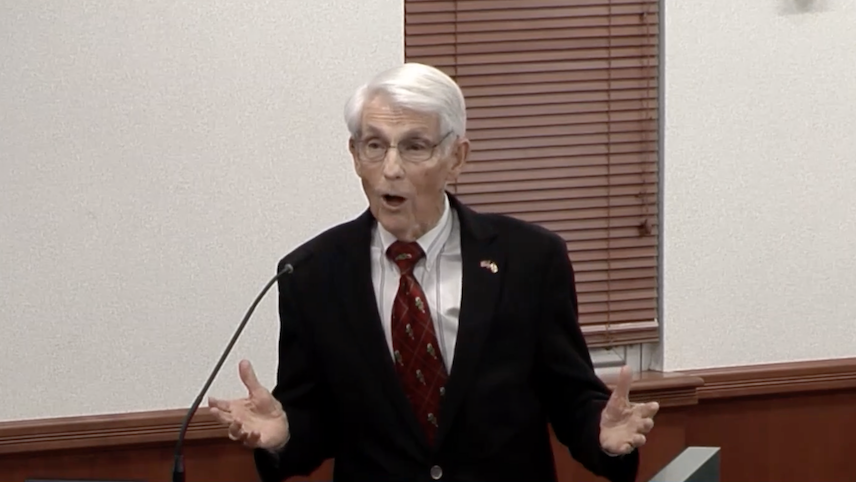
Jack Wert of Wert Marketing Group LLC presents findings from a county-commissioned feasibility study recommending that Collier County’s tourism promotion division transition to a nonprofit structure.
Improved efficiency and flexibility
Presenting the study, Wert said the proposed nonprofit structure improves efficiencies and improves flexibility and responsiveness.
He said that responsiveness is especially critical following hurricanes or other major events, when tourism bureaus must quickly counter misinformation.
Wert pointed to delays after two hurricanes in 2024, when marketing funds could not be spent until approved by the county commission.
“There was money in reserves that couldn’t be spent until the BCC approved that, and that’s just something that you can’t be that far behind your competition with,” Wert said. “And that’s exactly what happened. We were up to four months out of the market without being able to tell the world that our county was fine.”
Wert said the study identified early benefits to a nongovernment structure.
“It certainly does help to optimize visitor spending, and it really streamlines operations, and that was really what we’ve been looking at and wanting to accomplish for some time,” he said.
The CVB is currently funded through the Tourist Development Tax, a 5% levy on overnight lodging stays, which would remain in place under the proposed nonprofit model. The study found the new structure also would allow the organization to pursue additional revenue through supplemental funding programs.
Wert said the change could reduce county costs related to legal services, human resources and procurement.
“This kind of move would allow the county to perhaps reassign those duties, because the new organization would take over all those functions and pay for that out of their revenue rather than it being county staff,” he told the council.
John Lambeth of Civitas Advisors said the study examined tourism organizations in markets such as San Antonio, Texas and Kissimmee that transitioned from government-run entities to private nonprofits. In those cases, county governments retained oversight roles, creating what he described as a public-private partnership.
“The feedback we heard from them is that this transition, in both cases, had been quite successful, and both the government entities and the private entities have been very happy with the results,” Lambeth said.
He cited faster speed to market and greater flexibility as key benefits.
The study found nearly 85% of destination marketing organizations nationwide operate as nonprofits, compared with just over 15% that remain government-run. In Florida, nearly half are nonprofits, with the creation and conversion trends favoring that governance model.
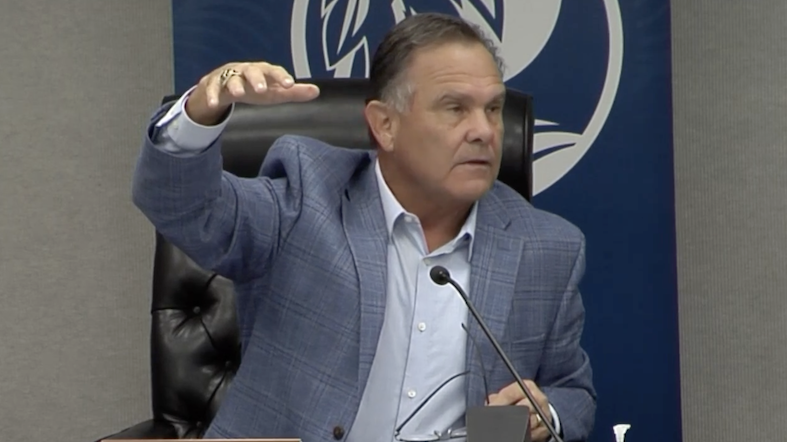
Tourist Development Council member Bill Kramer speaks during the Dec. 12 meeting, which advanced a proposal to transition the Naples, Marco Island and Everglades Convention and Visitors Bureau into a 501(c)(6) nonprofit.
Support from CVB partners
Several representatives from the hospitality and arts sectors spoke in favor of the transition.
Jenny Gezella, president of Hoffmann Marine in Naples and chair of the steering committee that supported the study, emphasized tourism’s economic importance.
“Tourism in Collier County contributes $49.8 million in TDT collections, creating an economic impact of $3.9 billion,” Gezella said. “Tourism is one of the top industries here, supporting over 27,000 jobs. And between 2024 and early 2026, we’re going to see an additional 1,600 hotel rooms be added.”
She said the CVB plays a critical role for businesses that lack the resources to market individually.
Kevin Smith, director of major gifts at Artis—Naples, home of The Baker Museum and the Naples Philharmonic, said a strong CVB “is essential to sustaining the cultural vibrancy that draws visitors to our community.”
“As demand for tourism continues to grow, Collier County needs a destination marketing structure that is nimble, adequately resourced and able to respond quickly, whether that’s market shifts or responding to storm recovery or statewide collaboration,” Smith said. “We need a (destination marketing organization) structure with the tools, flexibility and responsiveness that our peers across the state already enjoy.”
Next steps
Mullins said any further action depends on direction from the county commission.
“We’re not there yet, because except for the TDC chair (Hall), the board has yet to see this study and staff have not been directed to take detailed steps in any direction,” Mullins said. “Should the board authorize the next steps, and once we have their input, we’ll start developing these components and ultimately return to the TDC for your review and recommendations on what’s presented.”
(0) comments
Welcome to the discussion.
Log In
Keep it Clean. Please avoid obscene, vulgar, lewd, racist or sexually-oriented language.
PLEASE TURN OFF YOUR CAPS LOCK.
Don't Threaten. Threats of harming another person will not be tolerated.
Be Truthful. Don't knowingly lie about anyone or anything.
Be Nice. No racism, sexism or any sort of -ism that is degrading to another person.
Be Proactive. Use the 'Report' link on each comment to let us know of abusive posts.
Share with Us. We'd love to hear eyewitness accounts, the history behind an article.