









Collier County commissioners continued a decision on plans to build 423 homes, including affordable townhouses, on an East Naples orange grove after an outcry from residents and environmental groups.
After a roughly six-hour hearing Jan. 13, the Board of County Commissioners voted 3-2 to continue the hearing, with commissioners Burt Saunders and Chris Hall opposing, to allow the landowners, developer and others to explore alternatives for South Naples Citrus Grove, a retail nursery and former orange grove on 169 acres at 341 Sabal Palm Road. The continuance allows the developer and landowners to preserve years of work without restarting the lengthy planning process.
“I’m concerned about this piecemeal approach that we’re taking and what the long-term future of this community looks like,” Saunders said of past amendments to the county’s growth management plan. “Our environment is the most important aspect, the most important characteristic of this community that has made it a wonderful place to be.”
Hall noted commissioners already encroached into the Rural Fringe Mixed-Use District to the north when approving up to 1,760 homes on the 2,262-acre Hacienda Lakes project.

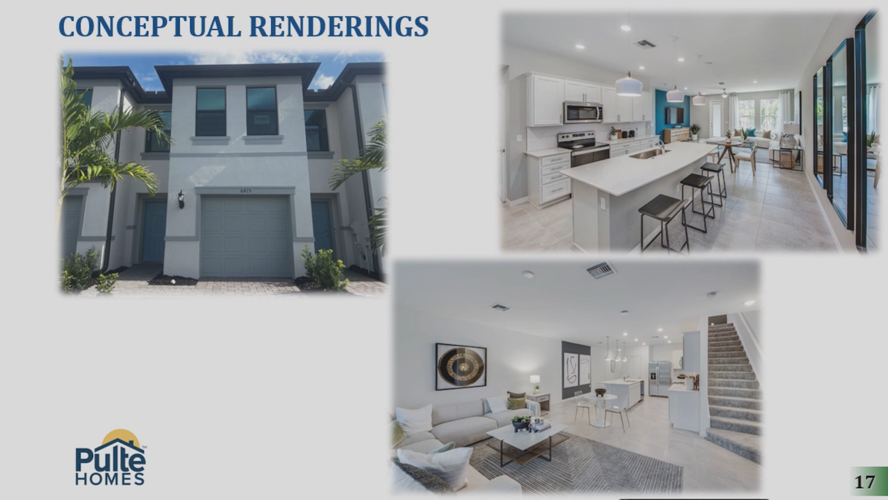
Conceptual renderings show the proposed residential development by Pulte Homes on a former citrus grove in East Naples, where plans call for 423 homes, including income-restricted townhouses.
“Justifying another one is not justified,” Hall said. “I’m fed up with increasing the density and building projects to get a token amount of public benefit with affordable housing. If this project was 50% affordable housing in this spot, I would turn it down because it’s not enough public benefit for me.”
Testimony showed market-rate homes would sell for $600,000 to $900,000, while income-restricted townhomes would likely sell for $350,000 to $375,000. Eligible buyers would earn no more than the county’s area median income of $113,600 for a family of four. Pulte Homes, the developer’s builder, would offer $2,000 in downpayment assistance through its Hometown Heroes program, which assists essential workers, such as teachers, medical workers, law enforcement officers, firefighters, military personnel and veterans.
No date was set for a new hearing, which will be advertised. Approval requires a supermajority vote of four of the five commissioners.
Developer enhanced project
The developer revised the proposal following an October Planning Commission hearing that resulted in a 2-2 vote due to member absences and produced no recommendation. The original proposal sought 450 homes but was reduced to 423 in November, including 63 affordable, income-restricted townhouses.
Ahead of the Jan. 13 hearing, the developer increased the number of affordable units to 85, all with downpayment assistance; offered to pay its share and the community’s share for a traffic signal; and agreed to purchase 135 transfer-of-development-rights credits, which fund conservation of other properties.

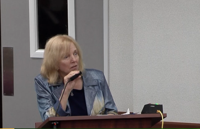
Land-use attorney Rich Yovanovich responds to public comments and emails on behalf of the developer, addressing environmental, traffic and planning concerns raised during the hearing.
As opposition mounted during the hearing, land-use attorney Rich Yovanovich further increased the offer to 95 affordable townhomes — all of the proposed townhomes — with downpayment assistance, reserved for households earning 100% or less of the area median income, down from the previously proposed 120% threshold.
Vice Chair Bill McDaniel Jr. made the motion to continue the hearing, saying he wanted additional exploration and a different approach.
“I don’t think it’s time to say no,” McDaniel said.

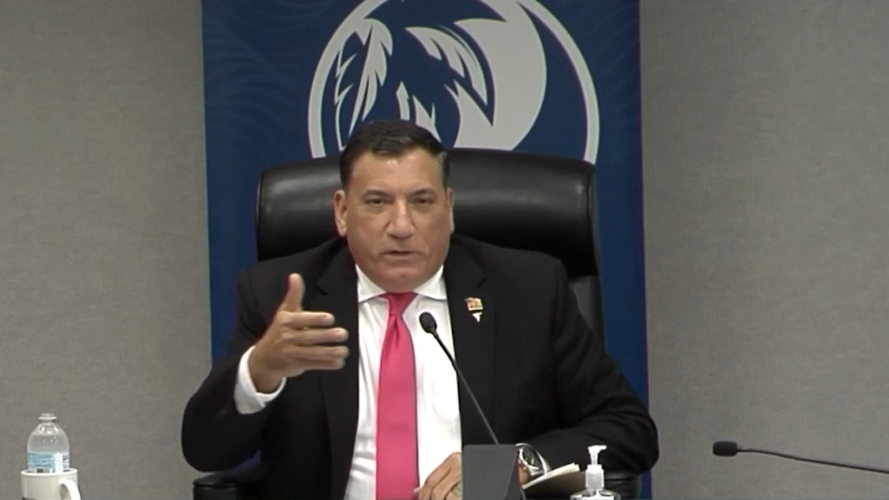
Commissioner Rick LoCastro, whose district includes the former citrus grove, speaks during the hearing and later offered to work with the developer, landowners and residents to explore alternatives.
Commissioner Rick LoCastro, whose district includes the grove, seconded the motion and offered to work with the developer’s attorney, landowners, Audubon and residents.
“I want to help find an answer that is the best possible solution, not only for your family, but this part of Collier County,” LoCastro said. “There are several things that were kicked around here that need to be vetted to see if there is another alternative.”
Yovanovich told opponents the site is not conservation land, is unsuitable for growing citrus and is not eligible for purchase under the county’s Conservation Collier program due to pesticide contamination that would require mitigation.

After the hearing, Verona Walk resident Chris Briggs, whose Change.org petition opposing the project garnered more than 2,700 signatures, praised Saunders and Hall for showing the “courage of their beliefs” by opposing the development. She said she hoped commissioners could negotiate a compromise similar to one reached in September, when the county spent $20.7 million — including $11.9 million in Conservation Collier funds — to purchase 2,247 acres of agricultural land near Lake Trafford.
“If he is able to effect a compromise that includes Conservation Collier, residents will sing his praises,” Briggs said of LoCastro. “He will be viewed as a hero by his constituents. But the compromise must include no residential building and preserve the land for posterity in conservation.”
Decades-old citrus stand
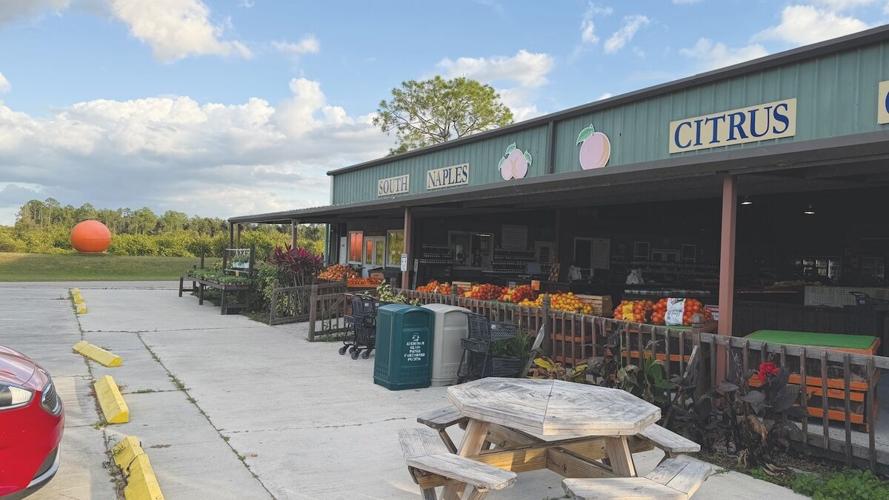
The retail nursery and former orange grove has operated on Sabal Palm Road since 1979 and is one of the last privately owned, nonpreserved properties on the road before it turns to gravel. Due to citrus greening disease, the site no longer grows citrus but continues to sell Southwest Florida produce.
Henry Jacobs, one of the owners, said his family purchased the land in 1978, cleared it and planted the first trees in 1980. Citrus production thrived for years, but in 2002, amid increased residential and commercial development nearby, the property was designated as environmentally sensitive, sending land in the county’s Rural Fringe Mixed-Use District.
“In 2014, the increasingly devastating effects of citrus greening disease became very apparent in Florida citrus groves,” Jacobs said. “Despite our best efforts, the trees began to decline and eventually die in significant numbers.”

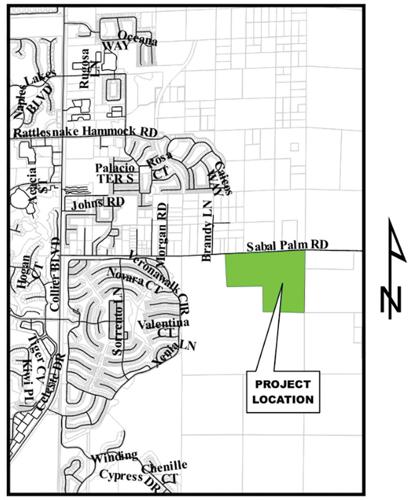
A development with 423 homes is being proposed for 169 acres about 1.4 miles east of Collier Boulevard, near the Verona Walk and Tamarindo communities.
After years of attempting to save the grove, the owners — now at or beyond retirement age — sought another use for the property.
“When a developer expressed interest and was willing to pursue on our behalf the rezoning process and expense needed for us to move on, we decided to move forward,” Jacobs said, adding that no one had expressed interest in purchasing the land for conservation.
The plans were submitted by SWJR Naples I LLC, led by Naples developer Jon Rubinton, whose projects include Mangrove Bay and Treviso. The proposed development would be about 1.4 miles east of Collier Boulevard near Picayune Strand State Forest and the Verona Walk and Tamarindo communities.
The petition seeks to amend the county’s growth management plan to rezone agricultural sending land to a residential subdistrict, allowing 2.5 units per acre, up from one home per 40 acres.

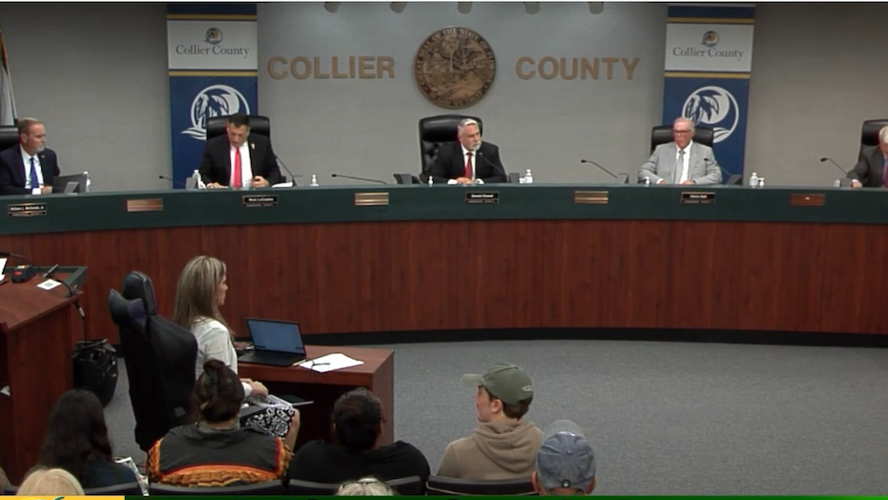
Commission chambers were filled with residents, advocates and stakeholders during a lengthy Collier County Board of County Commissioners hearing on the proposed East Naples development.
Standing room only
Commission chambers were packed, with about 75 speakers signed up. Roughly two dozen ceded time to Brad Cornell, policy director for Audubon of the Western Everglades and Audubon Florida. The Conservancy of Collier County also mobilized residents.
About three dozen speakers opposed the project, while eight supported it, largely citing affordable housing needs. Supporters included nurses, Greater Naples Chamber of Commerce, Naples Comprehensive Health, Physicians Regional Hospital, The Housing Alliance and United Way of Collier and the Keys.

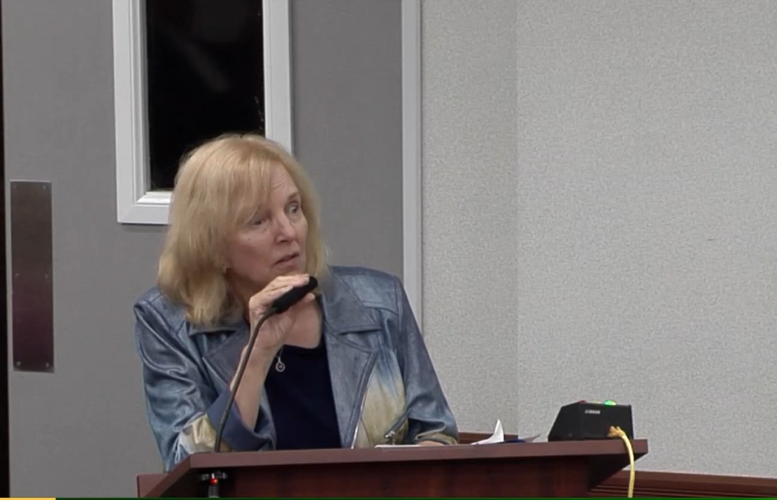
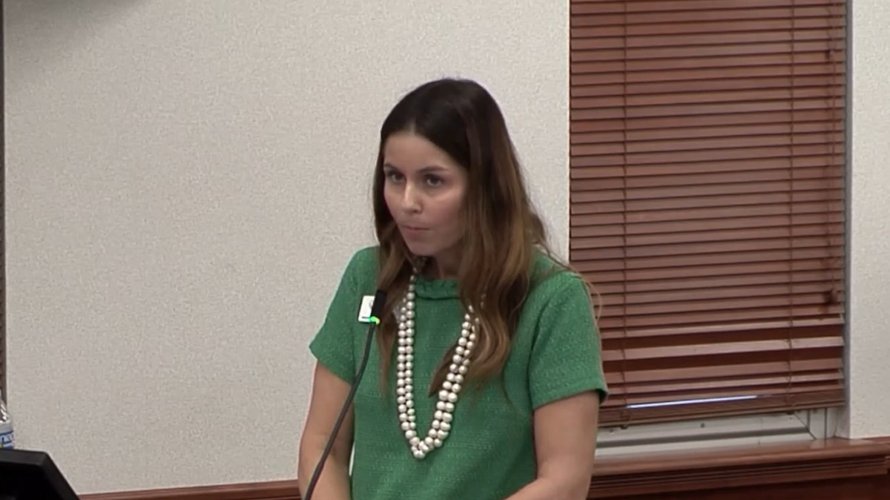
Stephanie Dixon, corporate governance and finance administrator for the Greater Naples Chamber of Commerce, speaks in favor of the project, emphasizing the role of housing availability in the local economy.
“The chamber has consistently advocated for expanding housing opportunities because our members know a strong local economy depends on employees being able to live in the communities they serve,” said Stephanie Dixon, the chamber’s corporate governance and finance administrator.
Michael Puchalla, CEO of The Housing Alliance, praised county efforts to expand affordable housing and noted the project’s 30-year affordability requirement.
“We’re very encouraged by a national developer wanting to come in and enhance our for-sale product,” Puchalla said.
County Planning and Zoning Director Mike Bosi and Housing Policy and Economic Development Director Cormac Giblin urged approval, citing the need for attainable housing. Opponents countered that approval would undermine the Rural Fringe Mixed-Use District.
“It would undermine the very foundation of the Rural Fringe Mixed-Use District program,” Verona Walk resident Susan Scalf said.

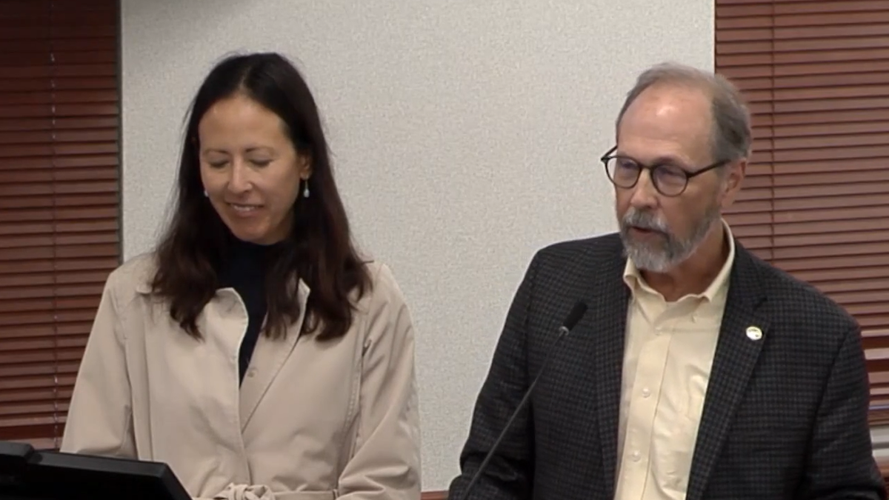
Audubon of the Western Everglades representatives Bridget Washburn and Brad Cornell urge commissioners to deny the development, citing environmental protection and Rural Fringe concerns.
Audubon’s Cornell urged denial, arguing the project would promote urban sprawl, violate state law and create wildfire risks.
“Agriculture was required to be protected in the final order,” Cornell said. “The landowner now could make a lot of money turning this into a mitigation bank.”
Yovanovich responded point by point, citing traffic, water management and fire-protection improvements, and noted the state Department of Commerce approved the rezoning
“We heard loud and clear that a 423-unit project is not going to get approved,” Yovanovich said, adding that further discussions could produce a compromise that avoids restarting the process.
(0) comments
Welcome to the discussion.
Log In
Keep it Clean. Please avoid obscene, vulgar, lewd, racist or sexually-oriented language.
PLEASE TURN OFF YOUR CAPS LOCK.
Don't Threaten. Threats of harming another person will not be tolerated.
Be Truthful. Don't knowingly lie about anyone or anything.
Be Nice. No racism, sexism or any sort of -ism that is degrading to another person.
Be Proactive. Use the 'Report' link on each comment to let us know of abusive posts.
Share with Us. We'd love to hear eyewitness accounts, the history behind an article.