








Florida enters each school year with thousands of teaching positions unfilled as districts work to recruit and retain educators. Teacher vacancies have declined, but education groups say budget cuts and staffing changes complicate the numbers.
A good teacher is hard to find. But, depending on how you look at it, a good teaching job is even harder to find.
The public education system in Florida often gets a bad rap; at times, deservedly so. Thousands of teaching vacancies sit open each year. The average teacher salary is among the lowest in the country.
But at least headway is being made. The state has poured millions this decade into raising starting teacher salaries, and those vacancies aren’t as bad as they once were — at least it appears that way on paper. Teachers say that’s only part of the solution. So, the question remains: Is Florida doing enough to recruit and retain teachers?

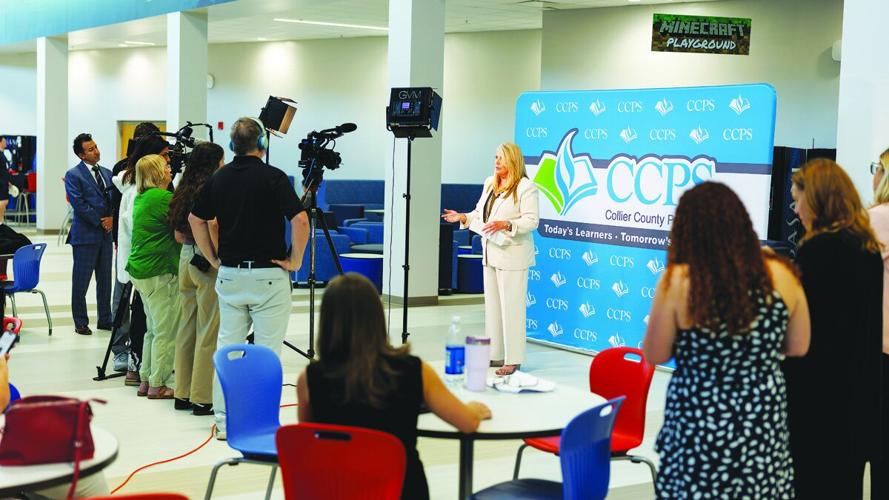
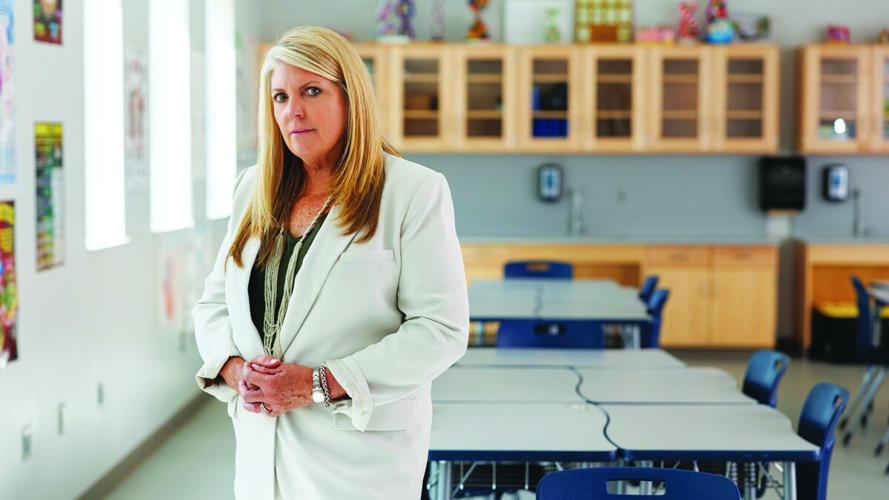
Superintendent Leslie Ricciardelli is leading efforts to strengthen teacher retention in Collier County Public Schools by easing workloads and addressing concerns raised through staff climate surveys.
Local Struggles
Collier County Public Schools is in an enviable position. Its average teacher salary is among the highest in the state. The district pays 100% of medical benefits. It’s a desirable teaching job. Vacancies still arise throughout the year, but toward the end of last school year, Superintendent Leslie Ricciardelli looked at district openings and saw 91 open positions with more than 735 qualified applicants.
“Over the last few years, we’ve had an influx of people coming, moving from other states,” she says. “The majority of people we’re hiring who are new to Collier are not new to the profession.”
Getting good teachers is one thing; keeping good teachers is another. Shortly after Ricciardelli started as superintendent, the district began climate surveys of its teaching staff to gauge morale. One of the biggest issues: too many responsibilities. Teachers reported feeling overloaded by nonteaching duties, from administrative work to lunch duty. Since joining the board in 2022, Kelly Mason said improving morale has been one of the biggest priorities. “Yes, we’re paying well for our teacher salaries,” she says, “but job satisfaction is a huge factor in everything.”

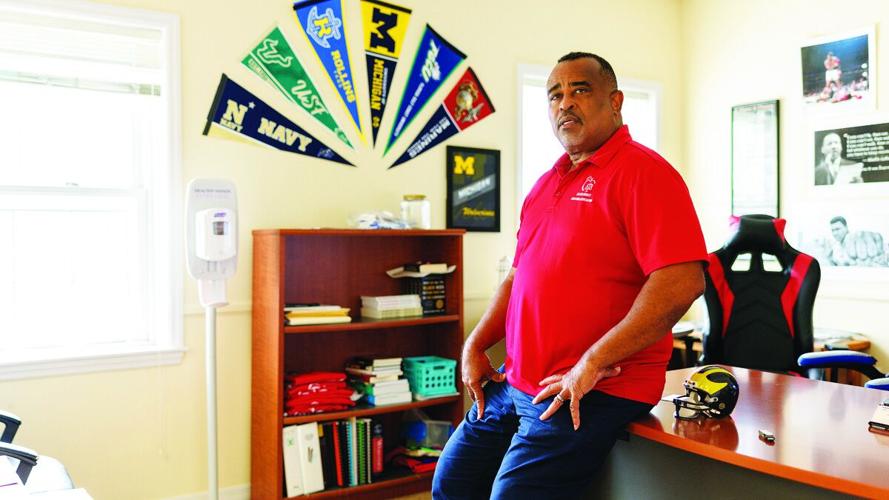
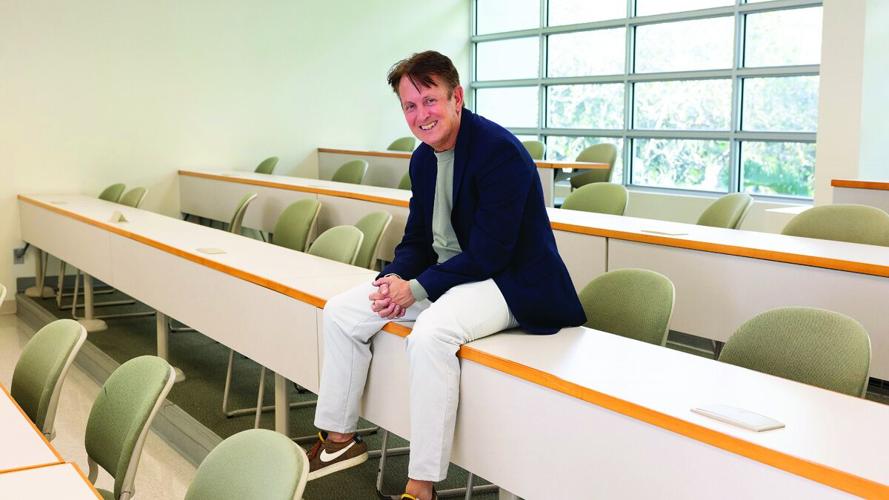
Collier County Education Association President Ken Mouton argues teacher pay has not kept pace with the area’s cost of living, contributing to educator turnover.
And teachers are still struggling, said Collier County Education Association President Ken Mouton. After a contentious debate, the district approved raises this year — but a lot less than what the union proposed. While the county boasts one of the highest average salaries in the state, pay still hasn’t kept up with the cost of living, forcing many to make a tough decision, according to Mouton.
“We’ve had a lot of teachers leave this year,” he says. “If you want to retain teachers, you have to pay them.”
The end of the school year was particularly stressful for Lee County teachers. The district is facing a $46.7 million deficit, and, like many other large districts in the state, is losing enrollment. About 275 teachers lost their positions, but the district says they’ll be put back into the hiring pool, making the situation more of a “realignment” than an outright slashing of jobs. Lee County teachers are already paid less than their peers in Collier or Charlotte, and the recent budget woes have left teachers shaken, said Teachers Association of Lee County President Kevin Daly. He doesn’t see a significant push to pay teachers more.
“I think it’s a priority issue,” he says. “Teacher and employee pay always seem to come at the end of the priority list.”

Collier County Public Schools Superintendent Leslie Ricciardelli says the district has attracted experienced educators from other states. Collier offers one of Florida’s highest average teacher salaries, but educators say pay and workload remain important retention issues.
Nationwide Shortages
To be clear, this isn’t just a Florida problem. The teaching shortage is a national concern, as hundreds of thousands of teaching positions remain vacant. In other cases, positions are filled by teachers not certified in the particular subject area. The Learning Policy Institute estimates that one in eight teaching positions are either unfilled or taught by an underqualified teacher.
Florida schools enter the year with thousands of unfilled positions, which is fairly typical in most states. Last academic year, about 2,260 positions were unfilled, a dramatic decline from the previous year’s 5,007 vacancies. Locally, school districts in Charlotte, Lee and Collier have also seen vacancies decrease over the last year. It may appear headway is being made, but the Florida Education Association casts doubt on how much progress those numbers actually entail.
“The decline in vacancies is driven by extensive budget cuts, which have led to districts cutting thousands of positions … and leaning on larger class sizes and uncertified educators,” according to a statement from the organization released last year.
The reasons for this shortage are varied. One reason: There just aren’t as many people interested in teaching. Education used to be one of the most popular majors at colleges. Nearly one-fifth of students graduated with a degree in education in 1970. Now, it’s only about 4%, according to the National Center for Education Statistics.
Teacher attrition before retirement is also a concern. More than half of teachers report feeling symptoms of burnout, compared to about 33% of other working professionals, according to a 2025 RAND survey.

Florida reported about 2,260 unfilled teaching positions last academic year, down sharply from the previous year. Education advocates say vacancies alone do not capture larger challenges involving class sizes, staffing and teacher qualifications.
Another major reason is teacher pay. The average teacher salary in the United States was $74,495 in 2024-25. On average, teachers earned 73.1 cents per dollar compared with professionals with similar experience and education in 2024, according to a study from the Economic Policy Institute. Back in 1996, that number was at 93.9 cents.
Florida doesn’t look too great when it comes to teacher pay. The average salary was $56,663, which ranked 50th in the United States, according to the National Education Association. Florida’s starting salary, however, ranks 19th nationally after increasing nearly 15% since the state’s 2020 push to raise beginning teacher pay.
In recent decades, Florida and several other states have been engaging in a “race to the bottom,” says Bruce Baker, professor and chair of the Department of Teaching and Learning at the University of Miami. Baker said the state’s “fiscal effort” — the share of its economy devoted to public education — has declined since the Great Recession and now sits well below the national average.
More of the burden to fund schools has been shifting onto local property taxes. “There’s an increased pressure to try to give teachers reasonable pay, but [districts] are not able to get there by way of raising local property taxes,” he says.
That helps explain why teacher salaries vary so widely from one district to another. Collier County School District, for example, had one of the highest average teacher salaries in the state for 2024-25 at $71,753, according to the Florida Education Association. Just north in Lee County, the average stood at $58,658.
Wealthier counties such as Collier generate more property tax revenue, giving them greater capacity to invest in schools.
Creating a Pipeline
Florida has tried several initiatives to make teaching more attractive, including the Florida Hometown Heroes Housing Program, which provides no-interest loans to help with down payments, and alternative certification pathways aimed at expanding the teaching workforce.
State leaders aren’t the only ones trying to expand the teacher pipeline. Districts have also become more creative, offering hiring bonuses and incentives for high-demand subjects while creating new pathways into the profession, such as Collier’s Grow 2 Teach program.
Colleges in the region have also played a part in growing the talent pool. Florida Gulf Coast University’s College of Education enrolls about 1,120 students, while Florida SouthWestern State College’s School of Education has about 200.
Even before graduating, students often gain classroom experience in local school districts through internships and other experiential learning opportunities. For example, the Student Teacher Advanced Recruitment, or STAR, program allows select seniors — typically five to 10 a semester — to serve as full-time paid teachers working under a supervising teacher at a school in the five-county area.
“The reason why we believe so strongly in teacher prep programs is because when somebody goes through an entire program such as ours, with all the coursework, all the internships, they feel more ready and tend to be more excited,” says Diane Kratt, assistant dean of enrollment and student services at FGCU. “Research does show that they tend to be more successful and then stay in the field longer.”

Low salaries and burnout remain major concerns for the teaching profession. Florida’s average teacher salary ranked 50th nationally, while educators nationally continue to earn less than similarly educated professionals.
Money Talks
Bottom line, if the salary and benefits aren’t there, teachers won’t be for long either. If teachers are going to get paid more, the state will have to take the lead in getting them there, said Baker of University of Miami. “It’s really got to come from Tallahassee,” he says. “They’ve got to more robustly fund the general school funding formula.”
Teachers’ unions have also criticized the state’s voucher program, which directs public funding toward private-school tuition. The Education Law Center and the Florida Policy Institute estimated that it costs the state around $4 billion annually. Critics argue the money would be better spent on public schools. “You show me a budget, and I’ll show you your priorities,” says Lee County’s Daly.
Collier County’s Mouton said he’s most concerned about the younger teachers in the system or the students contemplating whether to take that first teaching job. The passion may be there, but the paycheck often isn’t enough to cover rent, clothes, gas and groceries. “These young people, they’ve got pride,” he says. “They’re not going to put up with it. They will find another profession.”

Bruce Baker, professor and chair of the Department of Teaching and Learning at the University of Miami, says Florida must increase its financial commitment to public education if districts are to improve teacher compensation.
State of Florida vs. Unions
In May, Gov. Ron DeSantis visited Lee County for a bill signing ceremony that affected public sector unions, including teachers’ unions. The legislation requires 50% of a bargaining union (or total teachers) to vote to recertify. Previously, unions only needed the majority of those who voted to recertify.
Florida Republicans said the legislation is necessary to prevent a small minority of employees from representing the whole. This comes on top of a 2023 bill that required many unions to maintain at least 60% dues-paying membership to remain certified.
DeSantis also signed into law a bill that altered the definition of “educational emergency,” giving districts more leeway when it comes to placement of personnel and compensation in low-performing schools while bypassing collective bargaining requirements.
Proponents say it gives districts a better mechanism to help pay high-performing teachers — but unions say it’s a way to get around a collective bargaining agreement. The recent moves are part of a trend in recent years to undercut teachers’ unions, said Lee County’s Daly.
“They’re bureaucratic attacks to limit what we can do and how we can do it,” he says, “and that’s unfortunate, because we only ever advocate for a living wage, good health insurance, safe working conditions and a dignified retirement.”
High-Need Subjects
Some classes are taught by teachers who aren’t certified in the subject they teach. Each year, the Florida Department of Education identifies the state’s highest-need teaching fields. For 2025-26, it identified seven subject areas where schools struggle to find enough certified teachers and colleges aren’t producing enough graduates to meet demand.
Subject | Total Courses | Courses Taught by Noncertified Teachers in Subject Area | Percentage Taught by Noncertified Teachers |
|---|---|---|---|
English | 37,165 | 8,857 | 24% |
Exceptional Student Education | 57,504 | 11,994 | 21% |
English for Speakers of Other Languages | 3,952 | 1,046 | 26% |
Math | 32,970 | 5,741 | 17% |
Science - Physical | 3,661 | 750 | 20% |
Science - General | 11,634 | 2,072 | 18% |
Technology Education | 3,750 | 536 | 14% |
Open Teaching Positions
The Florida Education Association does a count of open teaching positions at the beginning of each school year and again at the midpoint. Locally and across Florida, there has been a steady decrease in open positions, although, as the FEA noted, the data does not account for positions that are cut or are filled with teachers uncertified in their subject area.
Area | Midyear 2025-26 | Beginning 2025-26 | Beginning 2024-25 |
|---|---|---|---|
Charlotte County | 6 | 5 | 21 |
Collier County | 16 | 31 | 73 |
Lee County | 34 | 92 | 272 |
Florida | 2,363 | 2,260 | 5,007 |
(0) comments
Welcome to the discussion.
Log In
Keep it Clean. Please avoid obscene, vulgar, lewd, racist or sexually-oriented language.
PLEASE TURN OFF YOUR CAPS LOCK.
Don't Threaten. Threats of harming another person will not be tolerated.
Be Truthful. Don't knowingly lie about anyone or anything.
Be Nice. No racism, sexism or any sort of -ism that is degrading to another person.
Be Proactive. Use the 'Report' link on each comment to let us know of abusive posts.
Share with Us. We'd love to hear eyewitness accounts, the history behind an article.