
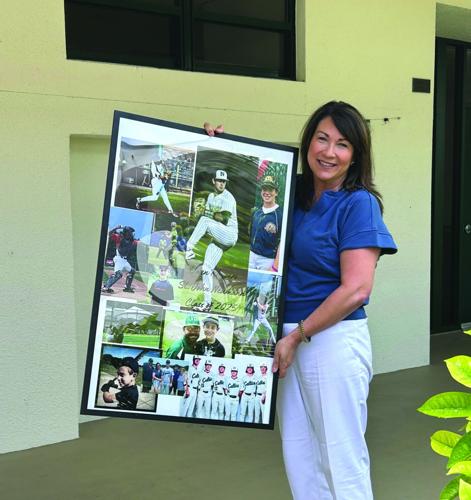



At the start of his junior year of high school, Owen Phyper was stalling out.
One of the top students in his class, Owen had taken almost all the advanced math and science courses his Highland County high school offered. He had to drive a half hour most days to take community college classes, said his mom, Brittany Phyper.
On the baseball diamond, Owen’s coach struggled to field a fall team, she said.
So in October 2023, on the advice of some of the families on Owen’s travel baseball team, the Phypers traveled nearly two hours to Collier County to check out St. John Neumann Catholic High School. They were impressed at what they found academically, culturally and athletically — the Golden Gate school is a perennial baseball powerhouse.
They knew they needed to make the change for Owen, Brittany Phyper said, but they weren’t sure how they could swing it financially. The private school’s tuition at the time topped $16,000 and Brittany’s husband’s family farming business was closing.
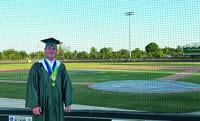
Then the Phypers learned about House Bill 1, the universal school-choice law passed earlier in 2023 that lifted income caps and made virtually every Florida student eligible for state scholarships to attend private schools. The Phypers applied for and received a scholarship, allowing Owen to attend St. John Neumann, where he excelled. He graduated fourth in his class and is now starting his tenure at the United States Naval Academy.
Owen Phyper is one of about 4,000 students who used state scholarships to attend Collier County private schools last year, according to data from Step Up For Students, the nonprofit that awards the bulk of the scholarships. About 1,000 more Collier students received Personalized Education Program scholarships for homeschooling expenses.
Supporters say that lifting the limits on school-choice scholarships greatly expanded education freedom in Florida.
Florida is offering “a preview of the future of public education for the rest of the country,” former Governor Jeb Bush wrote in the Tampa Bay Times.
Brittany Phyper called her son’s scholarship a “godsend.” Without it, she said, “there’s no possible way that we would have been able to afford [private school tuition].”
But critics say the scholarships are harming public schools, incentivizing students to leave them and subsidizing wealthy families who can already afford private school tuition.
HB 1 is a “money grab,” said Ken Mouton, Collier County Education Association president.
“What has happened to public schools [is] they’re taking that money and they’re basically giving it to private schools,” he told The Naples Press. “When you start siphoning money out of the public schools you impact teachers, you impact support staff, you impact the number of nurses, school psychologists.”
Some Florida school districts are seeing sharp drops in enrollment fueled by the universal school choice programs, Politico reported in June. For example, the school district in Orange County, which includes Orlando, is projecting 3,000 fewer students this coming school year, meaning $28 million less in state funding, according to the outlet.
In Collier, the effects of the universal school scholarships appear to be far less drastic. There is little evidence that the availability of the scholarships has led to a flood of students exiting the public school system. And according to data provided by Collier County Public Schools, state funding for the district has increased every year since HB 1 passed, even when subtracting out scholarship dollars — the school district received about $520 million in state money last year, up from $473 million in 2022-23.
Collier County Public Schools remains an A-rated district and is ranked sixth in Florida.
“We’re not seeing the students leaving in droves like other counties are dealing with,” said Kelly Mason, chair of the Collier County school board and one of the founders of Mason Classical Academy, a charter school. “I think people as a whole in this community are happy with our public school system.”
While she remains an advocate of education freedom overall, Mason said “there are some unintended consequences” that have come with the school-choice boom in Florida.
She worries about families, enticed by the prospect of state money, who jump into homeschooling unprepared. She worries about the influence sports recruiting is having on local teams. And she worries about the motivations of some for-profit organizations.
“What’s not a good thing is people making money off the schools and not producing quality education. They’re more concerned about the dollar signs than the kids,” she said.
Family benefits and school challenges
Michael Bussman, head of school at Royal Palm Academy in North Naples, said the state scholarships haven’t substantially changed the operations of his school, an independent Catholic institution that seeks to provide an education focused on virtue and morality.
Almost every student at Royal Palm who qualifies is now receiving a scholarship — the scholarships aren’t available for pre-K students — and he appreciates that their families are benefiting. Royal Palm’s tuition ranges from $18,750 to $19,800, depending on grade level, while the average Family Empowerment Scholarship is worth about $8,000, according to Step Up For Students. The school’s enrollment has hovered between 300 and 320 students before and after the passage of HB 1, Bussman said.
At the same time, Bussman said, Royal Palm has had to add two people to its staff to manage the additional paperwork, audits and extra parent communication that come with the scholarships. “There’s definitely challenges that come with it,” he said.
Bussman said he suspects that Royal Palm has enrolled students over the past two years who wouldn’t have been able to afford the tuition without the state help, though “it is a little invisible to us” because school leaders don’t grill families on their personal finances.
“I have families whose household incomes are a half a million dollars or more. I have families whose household incomes are $50,000 a year,” he said. “I don’t ask families, ‘How are you affording this?’”
Not all private schools accept the state scholarships; Community School of Naples in Collier and Canterbury School in Lee County are among the local schools that don’t. But during the last two years, 17 Collier County private schools and more than 40 Lee County schools have accepted scholarships.
First Baptist had 798 students on state scholarships last year, the most in Collier County, according to Step Up data, followed by The Village School of Naples, with 533 students receiving scholarships, and Saint Ann School, with 471 students receiving scholarships. It appears that most of those scholarships went to students who were already attending private schools or who weren’t previously enrolled in Collier public schools.
In an email to The Naples Press, Step Up For Students spokesman Patrick Gibbons said the consequences of public school students in Collier leaving for private schools have been “minimal.”
“In fact, fewer than 1% of Collier’s students made such a switch last year — just 288 out of over 47,000,” he wrote, adding that “some students leave private programs and return to public schools, which offsets this effect.”
In an email, Ryan Dupeé, head of school at First Baptist Academy, also downplayed the effect of the universal school vouchers at his school.
“First Baptist Academy,” he wrote, “has maintained a waitlist of families seeking high-quality, faith-based education, even before the expansion of Florida’s scholarship program through HB 1. The increased accessibility of state-supported scholarships … has allowed more families — many of whom were already making significant sacrifices to afford private education while still paying taxes — to consider FBA a viable option for their children.”
Neither Bussman at Royal Palm nor Dupeé at First Baptist said they are looking to expand their school due to increased demand because of the state scholarships.
Questions about accountability
Yesenia Pedraza, a Golden Gate Estates mom who homeschools her two elementary-school-aged daughters, said access to a state PEP scholarship has helped her and her husband “level up” their homeschooling game.
Pedraza and her husband started homeschooling during the COVID-19 pandemic and kept at it even after local schools reopened. They decided to homeschool to be more “present” with their girls while they are young, not because of any problems with local schools.
“I went through the CCPS school system,” Pedraza said. “I have nothing bad to say.”
The Pedrazas, who run a professional organizing and administrative support business, first received state scholarships for their girls last year.
In addition to paying for homeschool curriculums, testing and supplies, they used the state money to enrich their daughters through outside classes in subjects including physical education, cooking, pottery and sewing, Pedraza said. One of her girls has an interest in farming, she said, so she took a course in farm management at a local farm.
“PEP opened up the ability to try those different things and say, ‘Yes, it was great. Yes, we can continue.’ Or ‘No, you tried it, you didn’t like it. OK, what else are we exploring?’” she said.
Mason, the school board chair, said that while she remains a school-choice supporter, there may need to be more accountability, particularly for homeschool families. It’s great, she said, that there are more options now for families who believe homeschooling is best for them, “but there isn’t really any accountability metrics for those [homeschooled] students.”
Mouton, the teachers’ union president, has broader concerns about accountability. There are simply far fewer state requirements for private schools than public schools, he noted.
“If you’re saying, ‘OK, these public schools are not working for you, then you can go to a private school,’ I have a problem with that because you don’t know if a private school is functioning at a higher level,” he said.
Parents may “believe” that a private school is better but “there’s no accountability, there’s no checks and balances,” Mouton said.
That’s not true, said Gibbons, the Step Up For Students spokesman.
“Private schools participating in Florida’s scholarship programs must give scholarship students in grades 3-10 a state-approved nationally norm-referenced test each year, with results reported to the Florida Department of Education,” he wrote in an email.
Bussman, at Royal Palm, said that critics seemingly don’t trust good people to make good decisions for their kids.
“I have families that have four kids here,” he said. “Are you telling me that a family that’s writing a check for $80,000 isn’t going to make darn sure that that is a good education that their kids are getting?”
It comes down to a philosophical belief about the nature of tax dollars, Bussman said.
“That money belongs to us, as citizens,” he said. “These are taxpaying citizens that are being given some element of choice in how their tax dollars are being spent. I’m for that.”
Despite some concerns, Mason said increased competition can incentivize public schools to improve. Over the last couple of years, she said, Collier public schools have reintroduced phonics and novel studies programs, added an advanced elementary math program, taken steps to do more workforce education and raised teacher pay.
“If we were starting to lose kids in droves and they’re all exiting and going to private or charter or home school, then we need to take a look at what are we doing, what are we not doing and how can we do better,” she said. “And that’s where I say the free market in education in some ways is a good thing. It makes us all better and have higher standards.”
(0) comments
Welcome to the discussion.
Log In
Keep it Clean. Please avoid obscene, vulgar, lewd, racist or sexually-oriented language.
PLEASE TURN OFF YOUR CAPS LOCK.
Don't Threaten. Threats of harming another person will not be tolerated.
Be Truthful. Don't knowingly lie about anyone or anything.
Be Nice. No racism, sexism or any sort of -ism that is degrading to another person.
Be Proactive. Use the 'Report' link on each comment to let us know of abusive posts.
Share with Us. We'd love to hear eyewitness accounts, the history behind an article.