





Two new artificial intelligence technologies at Naples Comprehensive Health can help detect heart attack risks up to 10 years before symptoms appear, a breakthrough doctors call “a game changer” in preventive cardiology.
NCH and Stamford, Connecticut-based Caristo Diagnostics announced Nov. 5 that NCH Rooney Heart Institute has become the first hospital in the U.S. to use both CaRi-Plaque and CaRi-Heart, two AI-powered imaging technologies already used in Europe.
NCH and Caristo said the collaboration represents a major advance in using AI to prevent heart disease, moving the focus from treating heart attacks after they occur to preventing them altogether.
Collaboration plans will be presented by NCH cardiologists at the American Heart Association Scientific Sessions on Nov. 8 in New Orleans, said to Dr. Dee Dee Wang, section head of cardiac imaging at NCH Rooney Heart Institute.
“This NCH-Caristo collaboration represents a new paradigm in cardiovascular medicine,” she said. “Doctors are used to responding to cardiac events after they happen. Caristo has the first clinically validated AI solutions that let us prevent heart attacks a decade before they occur.”
Wang said she and the NCH team will be sharing at the AHA sessions how the technologies can be adapted in U.S. health care systems.
“We are showing how we can adapt, and together as a (medical) community move forward the needle and innovation to help prevent heart attacks and identify who’s at risk before they even have the first cholesterol build-up in the blood vessels,” Wang said, adding that physicians will also discuss how to apply the technology in everyday practice to help patients of all ages.

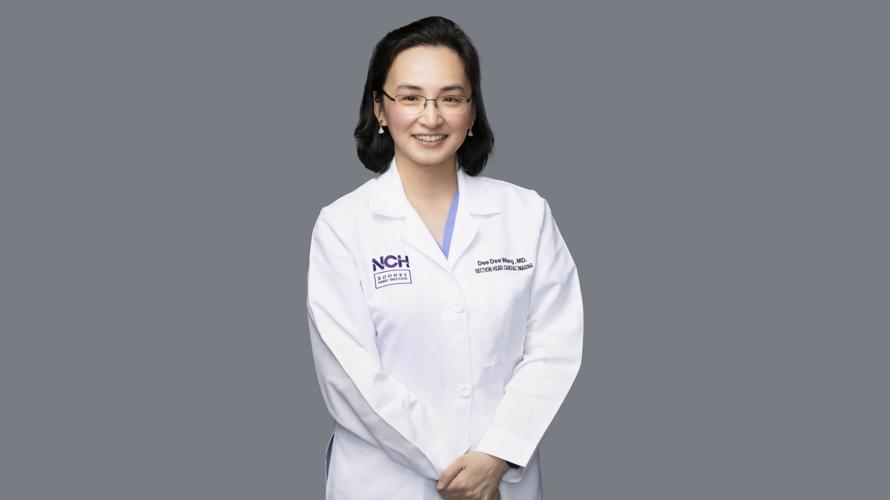
Dr. Dee Dee Wang, section head of cardiac imaging at NCH Rooney Heart Institute, calls the new artificial intelligence-powered technologies "a game changer" in preventive cardiology.
AI identifies plaque, inflammation
Current clinical pathways, according to NCH and Caristo, often fail to identify high-risk patients by missing inflammatory disease activity and relying on plaque assessment alone.
Wang said that in the past, cardiologists assumed patients were at low risk of heart attack if CT scans showed no cholesterol buildup or blockages.
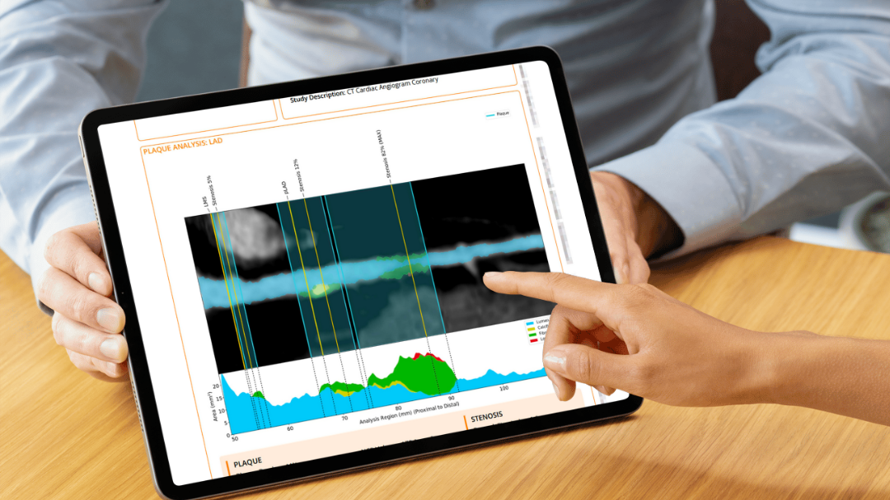
She said CaRi-Plaque technology identifies cholesterol buildup in a blood vessel, while CaRi-Heart detects inflammation around the vessel.
“What we’re learning about inflammation is it’s not good enough to just not have any plaque in your blood vessels,” she explained. “It’s important to not have any inflammation, and that in itself is an independent risk factor that can be used to tailor medication regimens specifically for a person instead of treating as a population-based sample.”
Caristo said its FDA-cleared CaRi-Plaque technology analyzes coronary CT angiography scans — the first-line test for patients with chest pain — to identify high-risk plaque that may lead to future heart attacks.
The company said its CaRi-Heart, currently under FDA review, is widely used in Europe and is “the only technology in the world able to detect and quantify coronary inflammation, an early driver of heart disease, without waiting for patients to develop visible plaque.”

CaRi-Plaque is one of two artificial intelligence-powered imaging-based technologies that can identify and predict risk of heart attack 10 years before symptoms.
Preventive heart health service
NCH said that under the Caristo collaboration, every NCH Rooney Heart Institute patient who qualifies for plaque analysis will have their CCTA scan analyzed by CaRi-Plaque.
The health system said it will also use CaRi-Heart in a research program, allowing physicians to integrate inflammation-based risk scores into treatment plans and outcomes studies.
Both diagnostic tools will be covered by insurance, said NCH Director of Marketing and Communications Shawn McConnell.
NCH said it will launch a self-pay preventive heart health service Dec. 15 for people who want to take a proactive approach before experiencing any cardiac symptoms. The program will allow anyone concerned about their heart health to enroll in the NCH-Caristo initiative.
NCH is ranked among the nation’s top 50 hospitals and one of the top three in Florida for cardiac care by Healthgrades. Construction is underway on the $295 million R.M. Schulze Family Heart and Stroke Critical Care Center, an almost 200,000-square-foot facility that will house the Rooney Heart Institute and Wingard Stroke Institute when completed in 2027.
(0) comments
Welcome to the discussion.
Log In
Keep it Clean. Please avoid obscene, vulgar, lewd, racist or sexually-oriented language.
PLEASE TURN OFF YOUR CAPS LOCK.
Don't Threaten. Threats of harming another person will not be tolerated.
Be Truthful. Don't knowingly lie about anyone or anything.
Be Nice. No racism, sexism or any sort of -ism that is degrading to another person.
Be Proactive. Use the 'Report' link on each comment to let us know of abusive posts.
Share with Us. We'd love to hear eyewitness accounts, the history behind an article.