
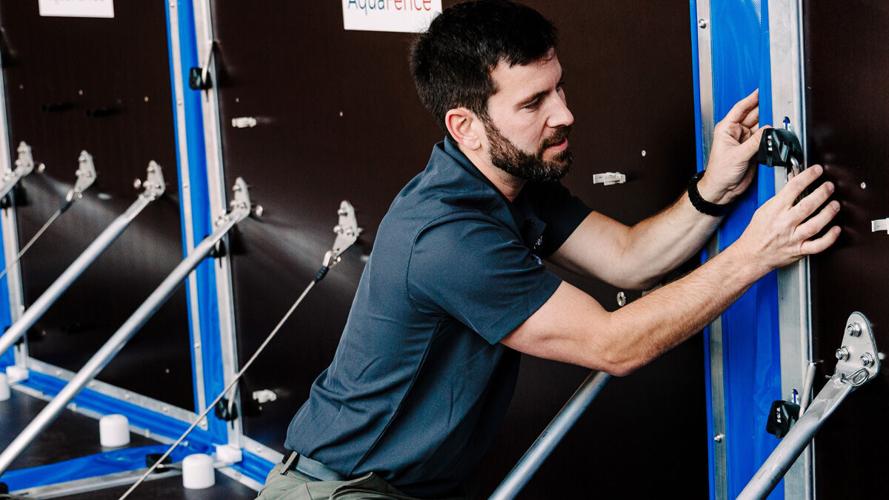
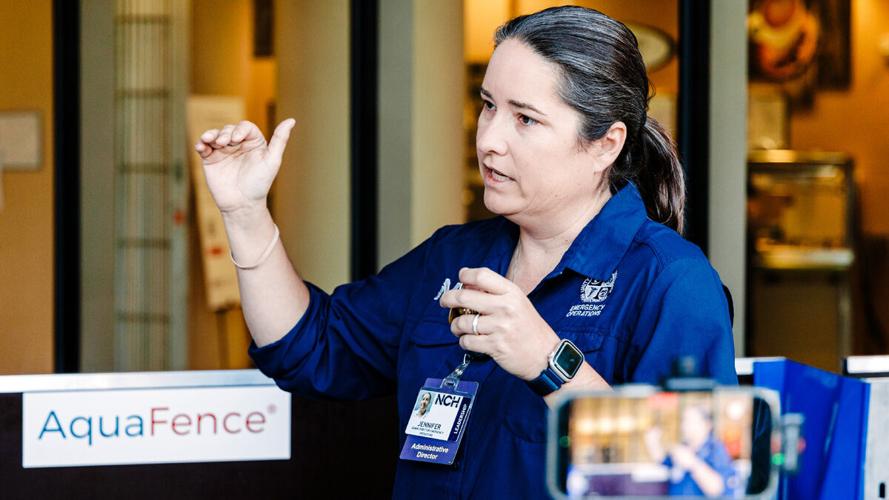
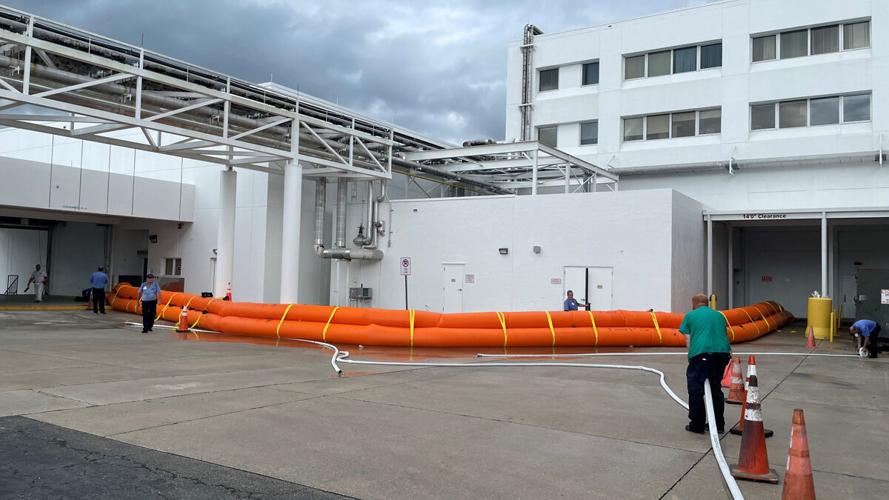

Erik Flood, vice president of operations at AquaFence, secures a panel of the company's flood protection system during a demonstration at NCH North Naples Hospital.
As the 2026 hurricane season begins, Southwest Florida hospitals and healthcare providers are preparing for the next major storm with plans designed to keep patients safe, protect critical infrastructure and ensure uninterrupted care during a disaster.
While hurricane preparedness is important for all residents and businesses, hospitals face unique challenges because they must continue operating while safeguarding patients, staff and essential medical services.
With uninterrupted patient care as the top priority — and with the impacts of hurricanes Ian and Milton still top of mind — hospitals plan for worst-case scenarios, including water pressure issues or power outages that could impact lifesaving equipment and technologies.
How hospitals prepare
Depending on their flood zones and how they fared during recent storms, some Southwest Florida hospitals are implementing protections ranging from flood mitigation systems to water pumps while also focusing on safely staffing their facilities, planning for fuel needs in case of outages and ensuring adequate supplies for the duration of a major storm.

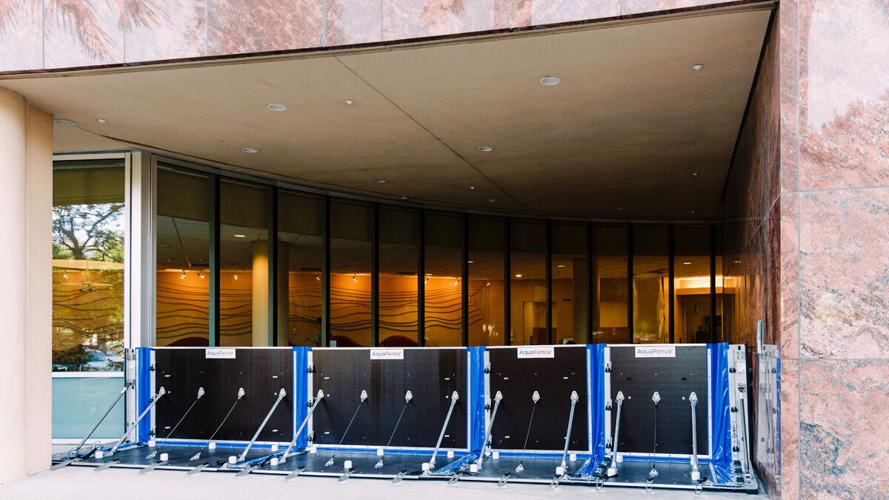
AquaFence flood barrier panels line the exterior of NCH North Naples Hospital during a pre-hurricane season demonstration of the protection sytem.
NCH
Collier County’s largest healthcare system, nonprofit Naples Comprehensive Health, escaped major flood inundation during the storm surge from Hurricane Ian — but just barely — on its downtown campus, which is about a mile from the Gulf. Its North Naples campus, off Immokalee Road and Goodlette-Frank Road, also was at risk from the Gulf surge because of its proximity to Wiggins Pass and tributaries that run behind the property.
Jennifer Smith, administrative director of emergency operations for NCH, said the system recently contracted with Tampa-based AquaFence to install flood panels as part of a mitigation program before the start of the 2026 hurricane season.

Jennifer Smith, administrative director of emergency services for NCH, explains how the new storm surge barriers will be installed at the downtown and North Naples campuses in the event of a major storm or hurricane.
Smith said NCH started talks with AquaFence in 2021 and decided to seek about $800,000 in state funding to install flood protection systems at individual entry points on its downtown and North Naples campuses.
During a pre-hurricane season demonstration at NCH North, Smith said flood panels would be installed around hospital tower entry points to protect critical infrastructure.
“In this building, our operating rooms, radiology and kitchen are on the first floor, so taking water into here, even a little bit, would be catastrophic for us,” Smith said outside the main lobby of the North Naples campus. “The goal is to keep out as much as possible, so we’ve strategized to protect all the entrances.”
She said installation of the system would begin about 72 hours before landfall to ensure crew safety.
Physicians Regional
Corporately owned Physicians Regional is Collier County’s second-largest healthcare system, with inpatient hospital campuses on Pine Ridge Road, Collier Boulevard and Creekside Boulevard in North Naples.
Although none of Physicians Regional’s campuses flooded during Hurricane Ian, the health system evacuated patients from its Creekside campus, which houses musculoskeletal surgery and inpatient rehabilitation services, to its Pine Ridge campus as a precaution.
CEO Scott Lowe said the system is fortunate both in terms of flood-zone location and the construction of its facilities.
“All three of our hospitals were built post-Hurricane Andrew, so they are built to hurricane standards up to category 5 level,” Lowe said. “So, from a physical plant perspective, we’re in really good shape.”
When it comes to storm preparation, Lowe said staffing and supply levels are among the most important elements.
“I think the biggest thing is people,” Lowe said. “It’s getting the right people on-site before the storm and making sure we have all the right resources.”
Physicians Regional ensures physicians in critical specialties, including general surgery, vascular care and cardiology, are on-site before hazardous conditions develop so emergency cases can be handled without requiring staff to travel during dangerous weather, he said. The health system activates its Team A staffing plan before roads become unsafe and then shelters in place during the storm.

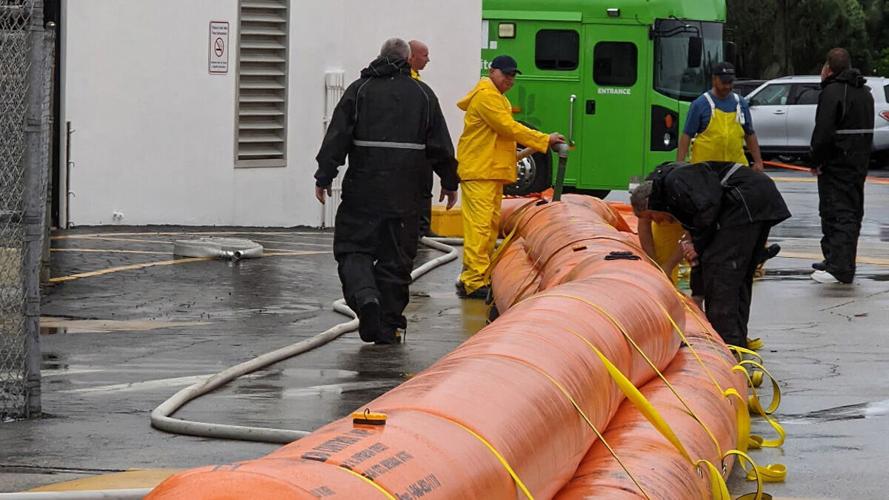
A crew deploys part of a Tiger Dam flood barrier system at Lee Health's Lee Memorial Hospital before Hurricane Ian in September 2022.
Lee Health
Fort Myers-based Lee Health is one of the largest healthcare systems in the state, with six inpatient facilities in Lee County, several of which are in flood zones.
Tashawna Gaines, director of emergency management for Lee Health, said the system deployed Tiger Dam water-filled flood barrier systems, manufactured by Louisiana-based U.S. Flood Control Corp., as part of its flood mitigation plan during Hurricane Ian and will do so again this hurricane season.
“We have a very comprehensive hurricane preparedness effort year-round at Lee Health,” Gaines said. “Our goal is to ensure that we can continue to provide safe and uninterrupted care to our community regardless of weather conditions or any hazards that we may face.”

A crew installs part of a Tiger Dam flood barrier system at Lee Health's Cape Coral Hospital before Hurricane Ian in 2022. Lee Health also deployed the water-filled flood barriers at Lee Memorial and the Healthpark and Golisano Children's Hospital campuses.
Gaines said the system operates on a 96-hour sustainability plan during major disasters to protect key infrastructure and ensure adequate backup power, fuel, medical supplies and staffing.
“That means we can independently run our facilities unassisted for 96 hours,” Gaines said. “That is how we prepare and look at our resources, especially for our supply chain and pharmacy items, making sure that we have sustainability for any type of hazard.”
Like Physicians Regional, Lee Health activates a Team A staffing plan before hazardous weather arrives. The team remains in the hospital throughout the storm after wind speeds reach thresholds that trigger bridge closures and the suspension of emergency medical services and fire services, at which point facilities enter lockdown mode for safety.
How other providers prepare
It’s not just hospitals that take extra measures to ensure patient, staff and community safety when weather disasters strike. Outpatient clinics and residential assisted-living facilities must plan for a wide range of issues before, during and after a major storm.

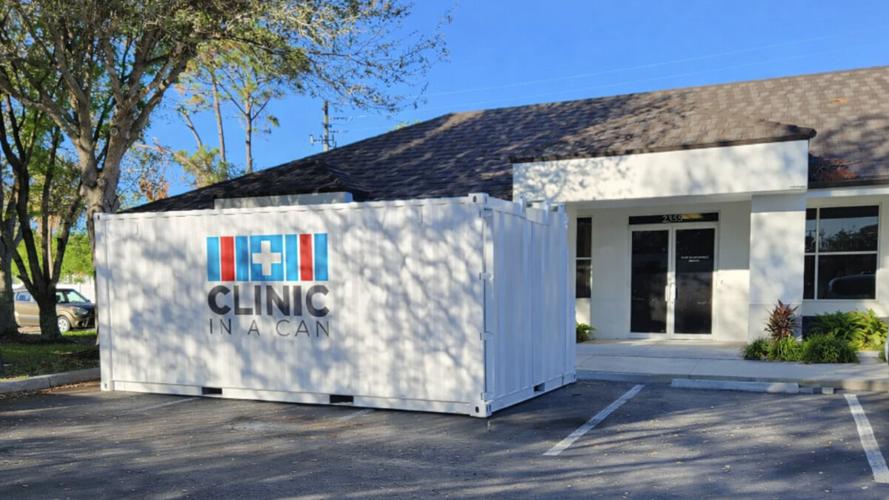
Healthcare Network deployed a "Clinic in a Can" when its East Naples clinic experienced flooding during Hurricane Ian. The climate-controlled repurposed shipping container was equipped to provide basic primary care services for patients with transportation barriers or difficulty accessing care elsewhere.
Healthcare Network
Immokalee-based Healthcare Network operates 15 outpatient clinics throughout Collier County, providing primary care and a variety of other services in areas that often lack access to other medical care.
Gabrielle O’Boyle, vice president of marketing and communications, said that while Healthcare Network’s clinics are not open during major storms, the system prepares well in advance for everything from power needs to patient and staff communications and supply deliveries to ensure clinics can reopen as quickly as possible.
“Our priority is getting healthcare services back up and running as quickly and safely as possible for the community we serve,” O’Boyle said.
The system also prepares ways to continue serving patients if a clinic is damaged in a storm.
During Hurricane Ian, the Friendship Health location in East Naples experienced flooding. To continue serving patients after the storm, Healthcare Network deployed a Clinic in a Can — a repurposed, climate-controlled shipping container equipped with an exam table, sink and other equipment and supplies needed to provide primary care services.
Healthcare Network also deploys its three mobile health units and a dedicated outreach van to storm-affected communities, providing access to medical care and essential supplies. The units have been used to administer tetanus vaccinations, treat minor injuries, provide behavioral health services, connect residents with primary care and distribute necessities, such as diapers, baby formula and bottled water.
“This allows us to respond to both the immediate and longer-term needs of the community as it recovers,” O’Boyle said.
Moorings Park Communities
Moorings Park has three locations in Naples offering a continuum of care, including independent living, assisted living and memory care. Its original campus off Goodlette-Frank Road also offers skilled nursing.
The three locations — the others at Grey Oaks and Grande Lake — are all in different flood zones, according to Vice President of Strategic Development Eric Dumont, but none require flood mitigation systems, such as panels or dams.
“All of our buildings are required to be built above flood elevation, so our first floors are pretty much 10 to 15 feet up and are unoccupiable areas used for parking and storage,” Dumont said. “All livable or occupied spaces are on floors above that, so we really don’t have a need for flood mitigation when it comes to flood gates or dams or things of that nature.”
Dumont said all Moorings Park buildings meet state requirements established after Hurricane Irma in 2017 for emergency power and air conditioning needs, with a redundant backup generator system in case primary generators fail.
He said Moorings Park views investing in higher-quality hurricane-resistant products and construction as key to long-term preparation and resilience.
“One thing we’ve learned (from Ian) when we look at design aspects is that it’s better for us to make the investment up front in our buildings with higher-quality hurricane-type products and construction types,” Dumont said. “For example, when we build a building, we’re looking at everything from closures to windows to doors, and really high impact and what those top-quality products will do for us.
“Because we’ve done that, we’ve positioned ourselves really well to handle those storms in the future.”
(0) comments
Welcome to the discussion.
Log In
Keep it Clean. Please avoid obscene, vulgar, lewd, racist or sexually-oriented language.
PLEASE TURN OFF YOUR CAPS LOCK.
Don't Threaten. Threats of harming another person will not be tolerated.
Be Truthful. Don't knowingly lie about anyone or anything.
Be Nice. No racism, sexism or any sort of -ism that is degrading to another person.
Be Proactive. Use the 'Report' link on each comment to let us know of abusive posts.
Share with Us. We'd love to hear eyewitness accounts, the history behind an article.