
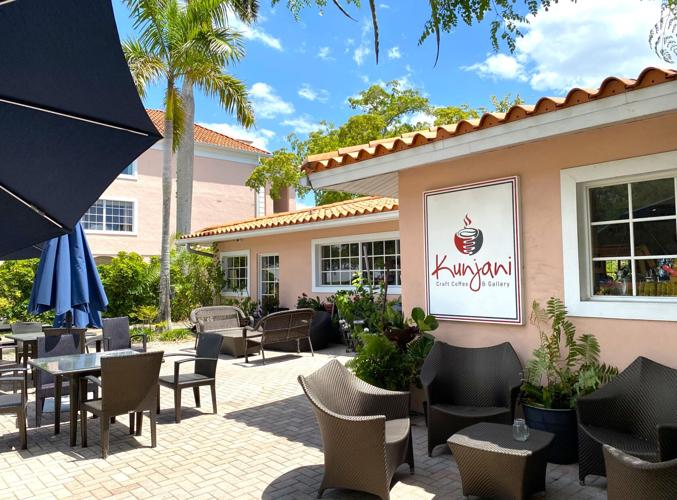




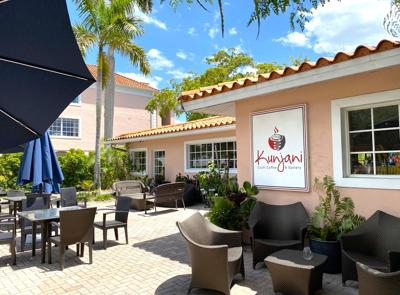


After 10 years in a quaint pink building on Seagate Drive, the bustling Kunjani Craft Coffee & Gallery founded by a mother and daughter is closing on Sunday, but will sell roasted coffee beans online — continuing its nonprofit mission of helping the people of Zimbabwe.
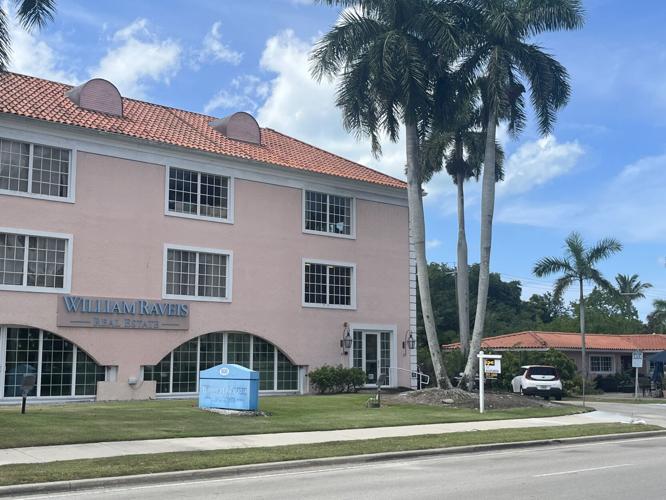
Through Investment Properties Corp. of Naples, landowner Charles Ashby of VIP Realty Group is selling for $7.5 million the quarter-acre property at 780 Seagate Drive, and 800 Seagate Drive next door, a three-story pink office building on nearly a half-acre occupied by William Raveis Real Estate, the sales listing shows.
Stephanie Bunnett, who founded the Naples coffee shop with her mother Nicola, announced the news on Facebook, thanking customers for their loyalty and friendship but noting it’s just an end to the physical shop.

The 1960s era building housing Kunjani Craft Coffee & Gallery, a 1,525-square-foot space at 780 Seagate Drive, is listed for sale.
“It is not the end for Kunjani,” Bunnett said. “Over the past few years, our roasting business has grown exponentially, and we’ve been able to ship thousands of bags all over the nation and even to different parts of the world. For this reason, we will be transitioning to a fully online model and focusing on that roasting business, and more importantly, our work that we do with different charities around the world to bring clean water specifically to places in Africa.”
The online business will allow customers to sign up for a subscription to get coffee beans shipped or delivered locally, door-to-door.
The Bunnetts left Zimbabwe in 2007 and were granted political asylum here. They left a country where people were starving, food was scarce, there was no running water, and electricity was unreliable. Nicola initially operated an art gallery on Fifth Avenue South for more than eight years while her daughter and son Jeffrey went to school. Years later, after Stephanie learned the coffee trade at Starbucks, they decided to open Kunjani when they couldn’t find a homey coffee shop.
The chaos of their native country prompted them to base the business on kindness, love and gratitude. The name means “How’s it going?” in Xhosa, their native language, a common greeting. Kunjani reminds them of the home they lost.

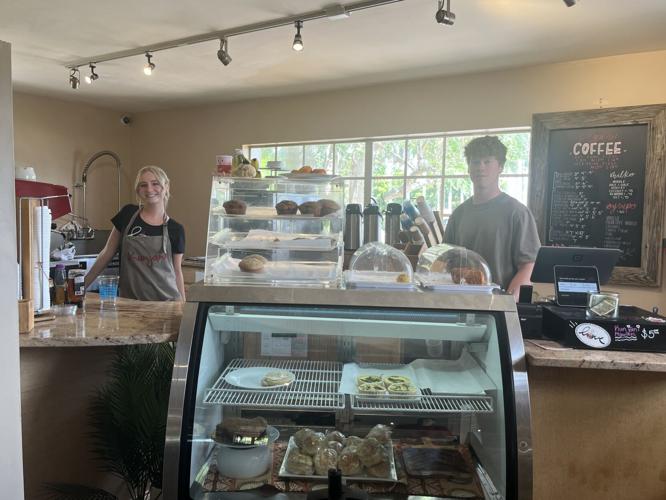
Kunjani employees Cora Thayer and Declan Flavin take a short break after brewing several Americanos and cappuccinos.
Their intent was to purchase art from disadvantaged African artists – mostly women – create a café with a homelike atmosphere and establish their nonprofit Kunjani Project to bring water to natives of Zimbabwe, who walk miles for water.
They supported artists and local businesses, such as Mikkelsen’s Pastry Shop in North Naples, which supplies their pastries and baked goods, and local organic roasters Perla and Black Tulip, but eventually began roasting their own organic beans in small batches.
The little house shaded by trees across from Waterside Shops quickly became a popular meeting place for coffee, meet-ups and events on the city’s northernmost edge. The founders didn’t pay themselves a salary and instead invested their revenues into buying inventory, growing the business and changing lives for the better.
Although coffee is one of the most consumed beverages worldwide, more than 80% of the 12.5 million coffee farming families live below the poverty line. As a result, Kunjani sources its coffee beans from trusted import partners to ensure they meet the shop’s sustainability, transparency and quality standards. Kunjani pays its farm partners above fair-trade prices and donates an extra 20 cents to partners for each pound the shop roasts.
To be good for the planet, they use a zero-emission, electric, small-batch coffee roaster, compostable cups, provide discounts to customers filling reusable tumblers, and turn all kitchen and bean roasting waste into rich soil for local food producers.

Two pink 1960s-era buildings housing, from left, William Raveis Real Estate and Kunjani Craft Coffee & Gallery are up for sale, prompting Kunjani to switch to an online model for its retail roasted beans and nonprofit.
Rather than paying themselves a salary, they invested revenues into buying inventory, growing the business and changing lives for the better. Eventually, Stephanie took over.
Employees call it the best job they’ve ever had. They praise their boss’ kindness and mentorship. For Cora Thayer, an entrepreneurship student at FGCU, becoming a barista turned into a coffee passion and she plans to open her own coffee business.
“It has taught me a lot about coffee and what I want to do in my future,” Thayer said. “Stephanie is the best boss I’ve ever had. She is so caring, so sweet. It’s such a community here.”
Declan Flavin calls Stephanie a super-multitasker who juggles family and a thriving business.
“When workers couldn’t make their shifts, she’d come in with her two young kids and make drinks with a baby hanging on her,” Flavin said. “She’s super nice, super engaging and really accommodating. She created a real home environment and a big sense of community. That’s why people are going to miss it. It’s everything you could ask for in a café.”
(0) comments
Welcome to the discussion.
Log In
Keep it Clean. Please avoid obscene, vulgar, lewd, racist or sexually-oriented language.
PLEASE TURN OFF YOUR CAPS LOCK.
Don't Threaten. Threats of harming another person will not be tolerated.
Be Truthful. Don't knowingly lie about anyone or anything.
Be Nice. No racism, sexism or any sort of -ism that is degrading to another person.
Be Proactive. Use the 'Report' link on each comment to let us know of abusive posts.
Share with Us. We'd love to hear eyewitness accounts, the history behind an article.