
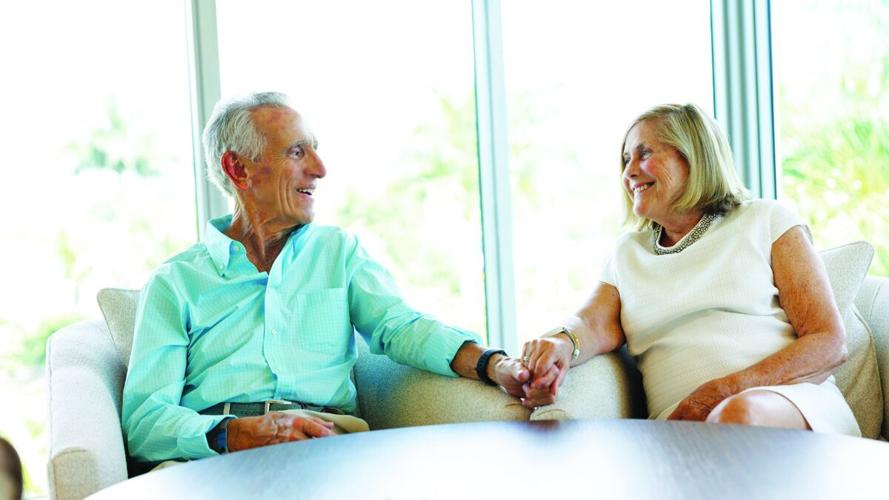


George and Lynne Schnyder, married for 61 years, say the compassionate, personalized care at GardenView has brought peace of mind following Lynne’s Alzheimer’s diagnosis.
When GardenView at Moorings Park Grande Lake opened in Naples in fall 2025, it became the first residential assisted living model in the country built around an ambient artificial intelligence platform designed to help keep residents safe, cared for and connected.
According to a 2024 University of South Florida article, ambient AI is a subset of artificial intelligence that “focuses on the creation of intelligent systems that can solve problems in real time and at scale.” USF said it can be a powerful tool in healthcare settings because it can help provide personalized experiences for patients.
In an assisted living setting, this can mean a system that recognizes a resident’s individual ID fob at different access points, or notices changes in sleep or walking patterns.
GardenView, a $50 million facility adjacent to the Grande Lake independent living community, consists of 23 suites designed as private condominiums, each featuring advanced technologies that Moorings Park said set the facility apart from other assisted living environments.
Inside the units, smart lighting embedded in the floor can detect when a resident gets up at night, providing soft illumination while also notifying the nearby nursing station. Wearable devices and in-suite monitors can track location, fall risks and health metrics, while voice-activated speakers provide two-way communication with nursing teams on each floor.
Dan Lavender, CEO of Moorings Park, said the technologies in use at GardenView are changing the model for the future of aging.
“We all expect for technology to become more and more a part of taking care of seniors,” Lavender says during an interview in one of the light-filled common areas at GardenView. “I think what we’re doing right here is one giant leap in the direction of what the future is.”
Lavender said the goal is to anticipate challenges residents may face, allowing staff to provide more hands-on care because AI-powered technology assists with basic monitoring.
“We’ve had one resident here who has an issue with falls, as you often have in an assisted living facility,” he says. “What the AI has been able to learn is that rather than waiting for the fall to occur, we can judge even movement inside the bed, and … we can dispatch staff — rather than to pick them up off the floor — to recenter them in the bed before they fall out.
“That’s the kind of thing that this technology is going to allow us to do that’s going to change senior care.”

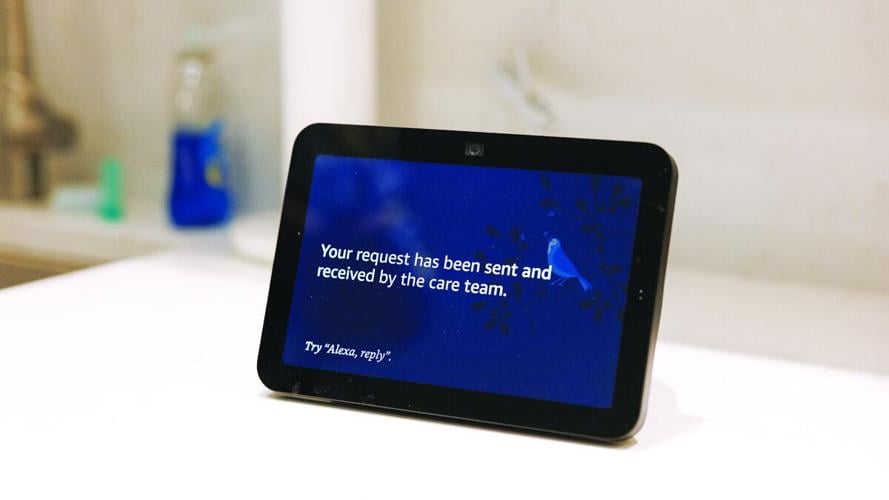
A voice-activated smart display at GardenView at Moorings Park Grande Lake allows residents to communicate directly with caregivers. The ambient AI system is designed to improve safety while supporting personalized assisted living.
When Data Meets Caregiving
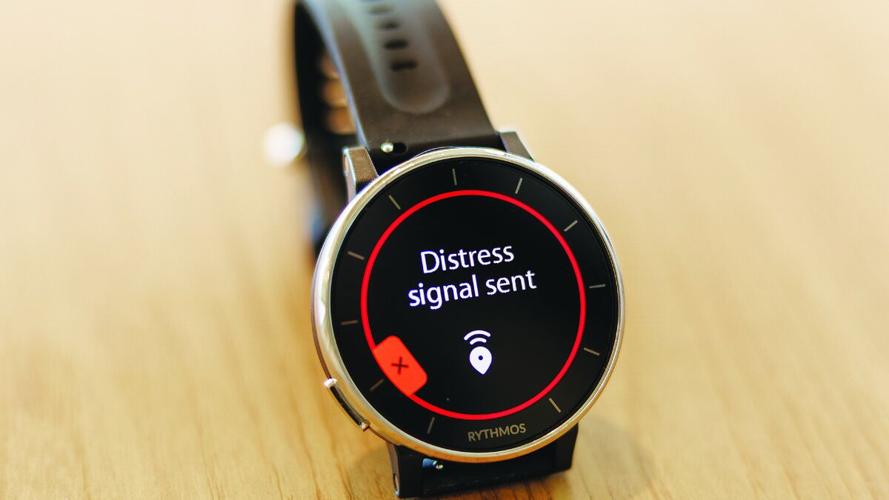
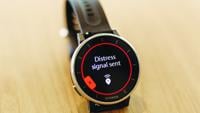
With safety being a top priority in the assisted living setting, each GardenView resident wears a Rythmos by Intrex smartwatch or fob that identifies accessible areas based on cognitive level so that, for example, someone with memory issues cannot board an elevator unaccompanied.
Lavender said the wearable devices — which, like the Nobi smart-lighting system, are compliant with Health Insurance Portability and Accountability Act privacy standards — can also help nursing staff detect changes that may indicate an issue that needs addressing.
He used the number of steps walked each day by a resident as an example.
“If you’re getting 7,000 steps every day and all of a sudden you’re getting 4,000, something may be going on,” Lavender says. “It’s going to give us the information to say, ‘Hey, can we talk about this change in behavior?’ Is something happening to their knees? Are they tired? And we’re also tracking sleep, another piece that we’ll be looking at over time.”
While wearable technology provides an additional level of monitoring, experts caution that increased oversight should not come at the expense of privacy or personal autonomy.
The emergence of AI offers tremendous opportunities in senior care, but also raises important questions about consent and transparency, said Brenda Hage, director of the School of Nursing at Florida Gulf Coast University and an adult-gerontology primary care nurse practitioner.
“There is tremendous opportunity with AI, and I think it has the potential to improve quality of life, safety and efficiency in older adult care,” Hage says. “But we have to be very transparent about what those technologies are doing, and patients must have the right to refuse them, because some people may not be comfortable with that level of intrusion into their daily lives.”
At GardenView, Lavender said residents, along with their caregivers or healthcare proxies, are fully informed about the technology and that no one has refused it since the facility opened.
He said people choosing to live there are more receptive to the technology.
“This has not been an issue with any of our residents,” Lavender says. “The residents that are choosing to move there are embracing this to help them, and we haven’t gotten any people saying, ‘I moved in here, but I really want some of this data turned off for privacy’s sake.’”

A Rythmos wearable device used at GardenView at Moorings Park Grande Lake can send distress alerts, track resident location and help caregivers monitor health and safety through an ambient AI platform.
Keeping Human Connection Front and Center
As exciting and innovative as the technology may be, Lavender said the human element remains the focal point of care at GardenView.
“The technology is in the background, and the human connection is front and center,” he says, citing the “best friends” approach developed by memory-care experts and authors Virginia Bell and David Troxel.
“We train our caregivers not only to care for the resident, but to know their stories; to understand them,” Lavender says. “What did they do when they were 40 or 50 or 60? What are their triggers? Because if you have short-term memory losses, you still have excellent long-term memory.
“[Caregivers] have to think like you’re their best friend and you have to know their history so you can engage them in conversation. That approach, which we are big believers in, talks about the philosophy of person-centered care, and it isn’t just about putting all the technology around you. It’s about having the relationship; the technology is just here to help.”
George Schnyder, whose wife, Lynne, is a GardenView resident, said the personalized care Lynne receives is more important to him than the advanced technology in use.
The Schnyders, who have been married 61 years, moved to Moorings Park Grande Lake — across the street from GardenView — two years ago after selling their home in Naples. Lynne, who was diagnosed with Alzheimer’s disease, became a GardenView resident when it opened in November 2025, and George said his peace of mind comes from the human element of her care.
“Do I have peace of mind knowing that if Lynne falls, someone will be right there because of the technology?” Schnyder asks. “Of course I do, but what gives me more peace of mind is that someone checks on Lynne every two hours. Whether it’s day or night, someone checks in on her to make sure she’s okay.
“What’s really important to me is the caring of the nurses; that’s what makes the difference.”
(0) comments
Welcome to the discussion.
Log In
Keep it Clean. Please avoid obscene, vulgar, lewd, racist or sexually-oriented language.
PLEASE TURN OFF YOUR CAPS LOCK.
Don't Threaten. Threats of harming another person will not be tolerated.
Be Truthful. Don't knowingly lie about anyone or anything.
Be Nice. No racism, sexism or any sort of -ism that is degrading to another person.
Be Proactive. Use the 'Report' link on each comment to let us know of abusive posts.
Share with Us. We'd love to hear eyewitness accounts, the history behind an article.