




If you’re stressed trying to get an appointment with a doctor, you’re not alone.
Florida is facing a physician shortage. So is the rest of the country. But Florida’s situation comes with distinct challenges: The state’s population has surged since the COVID-19 pandemic, and it remains especially attractive to older residents, who typically require more frequent medical care.
So if patients feel strained, imagine how doctors feel.
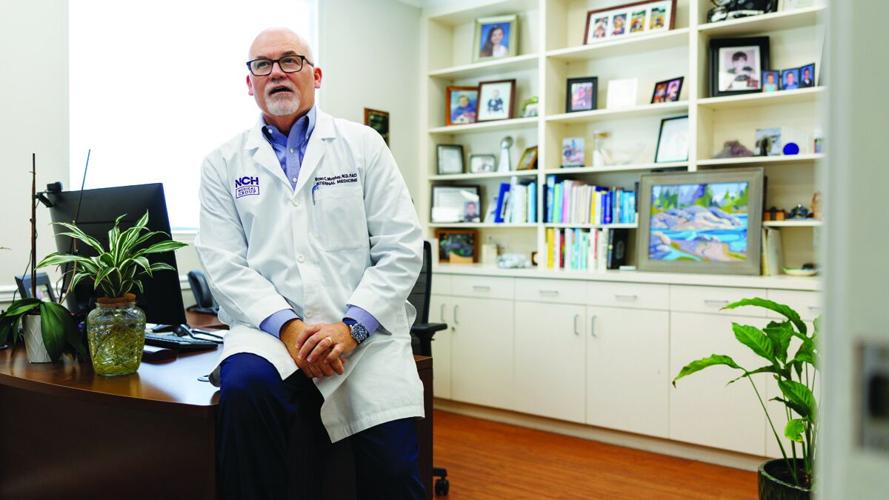
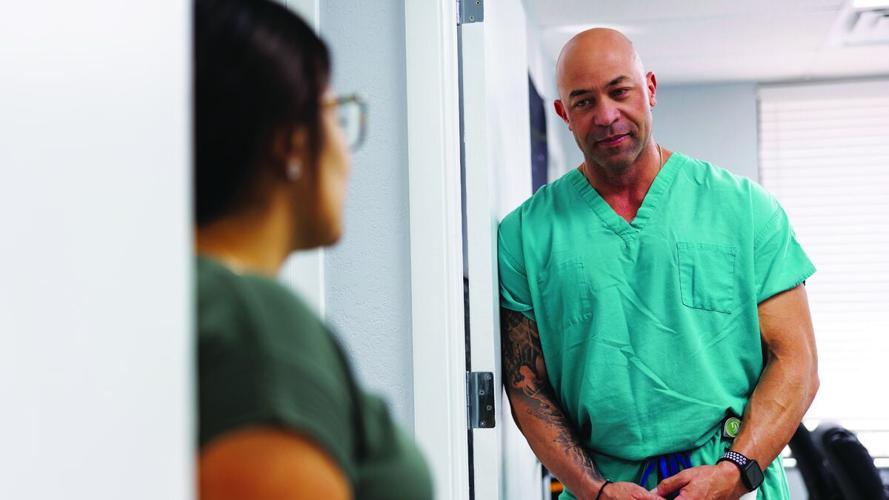
The pressures of the profession are leaving many physicians overwhelmed. Caring for patients is what draws many into medicine, but keeping up with demand may be what drives some away. “Physicians by nature are giving,” says Dr. Bryan Murphey, president of the NCH Medical Group and ambulatory chief medical officer. “They want to help; they want to do more. But before they really know it, they may burn themselves out.”
Florida’s physician shortage is part of a national crisis, but its effects are especially acute in Southwest Florida. Rapid population growth, an aging demographic and uneven access to care — particularly in rural communities — are stretching providers thin and testing the region’s ability to meet rising demand.

Nearly half of physicians report burnout symptoms, according to Stanford Medicine — a reality Dr. Bryan Murphey confronts while overseeing 240 doctors at NCH Medical Group.
A nationwide shortage
The physician shortage is steadily worsening. The Association of American Medical Colleges estimates the United States is short about 64,000 doctors, a problem exacerbated by elevated retirement rates during the pandemic. By 2036, that shortfall is projected to grow to as many as 86,000 physicians.
Florida, already one of the nation’s fastest-growing states, is expected to continue attracting retirees in the years ahead. More than 20% of the state’s residents are age 65 or older, a share projected to increase and further strain the health care system.
Florida has about 25 physicians per 10,000 residents, according to the most recent Florida Health annual report. That figure varies widely by region; Collier County exceeds the state average for doctors per capita, for example. In some rural areas, including Glades County, the total number of physicians can be counted on one hand.
Pending retirements may further intensify the shortage. Nearly one-third of Florida’s doctors are older than 60, according to the Florida Health report. Within the next five years, nearly 1 in 10 doctors plans to retire.
Practicing medicine is inherently stressful, even without the added pressure of increased patient loads. About one-third of U.S. physicians are considering leaving the profession or reducing their hours, according to a 2024 survey by the American Medical Association. The leading reason: burnout.
That strain can be profound. About 45% of doctors reported experiencing at least one symptom of burnout in a 2023 survey conducted by Stanford Medicine. Managing stress and avoiding burnout has become an essential part of the profession, said Murphey, who oversees about 240 physicians within NCH Medical Group.
As demand grows, so does pressure for doctors to see more patients — a dynamic that can lead to rushed appointments and potential declines in care quality. Murphey said he closely monitors physician workloads to avoid overload. “We really try to respect work-life balance,” he says.

Drawn to the Florida Heartland during his residency, Dr. Shaun Nazar provides wide-ranging care in Hendry County, where family physicians often bridge critical gaps in mental health services.
Life at rural hospitals
The physician shortage is especially acute in rural communities.
Hendry County, for example, has a population roughly one-tenth that of neighboring Collier County and a rate of just 7.5 doctors per 10,000 residents, among the lowest in Florida. Nationwide, nearly 100 rural hospitals have closed over the past decade, according to the American Hospital Association. Hendry County Regional Medical Center, located in the heart of Clewiston, serves as the community’s primary hub for medical care.
Dr. Shaun Nazar never expected to practice medicine in Hendry County. A Michigan native, he attended medical school at Midwestern University in Glendale, Arizona, and assumed he would settle in a larger market. That changed during his residency at Lakeside Regional Medical Center in Belle Glade, where he discovered an affinity for the Florida Heartland. “Such nice people, a wonderful community,” he says.
The Florida Rural Health Association recognized Nazar as a 2025 Rural Health Hero for his dedication to underserved communities. He underscores the importance of rural medicine while acknowledging its challenges. Mental health resources, for example, are scarce in Hendry County: The most recent Florida Health report lists zero practicing psychiatrists in the county.
As a family medicine physician, Nazar often becomes a de facto mental health provider for patients. While he has training in this area, complex cases require referrals to specialists in coastal communities. “You have to be a jack of all trades,” he says. “But you can’t do everything.”
Despite the heavy workload, physicians, including Nazar, find rural practice deeply rewarding — once they undertake it. Chief of Staff Dr. Barry Davis frequently recruits doctors to Hendry County, a task he admitted can be difficult as many physicians are hesitant to relocate to rural areas.
What keeps Davis there is the depth of patient relationships. “It’s not just a job. It’s a relationship,” he says. “You don’t just see a patient, you end up seeing their family, you end up seeing their friends. If you want to have an impact, if you want to actually see that impact, come to a rural setting.”
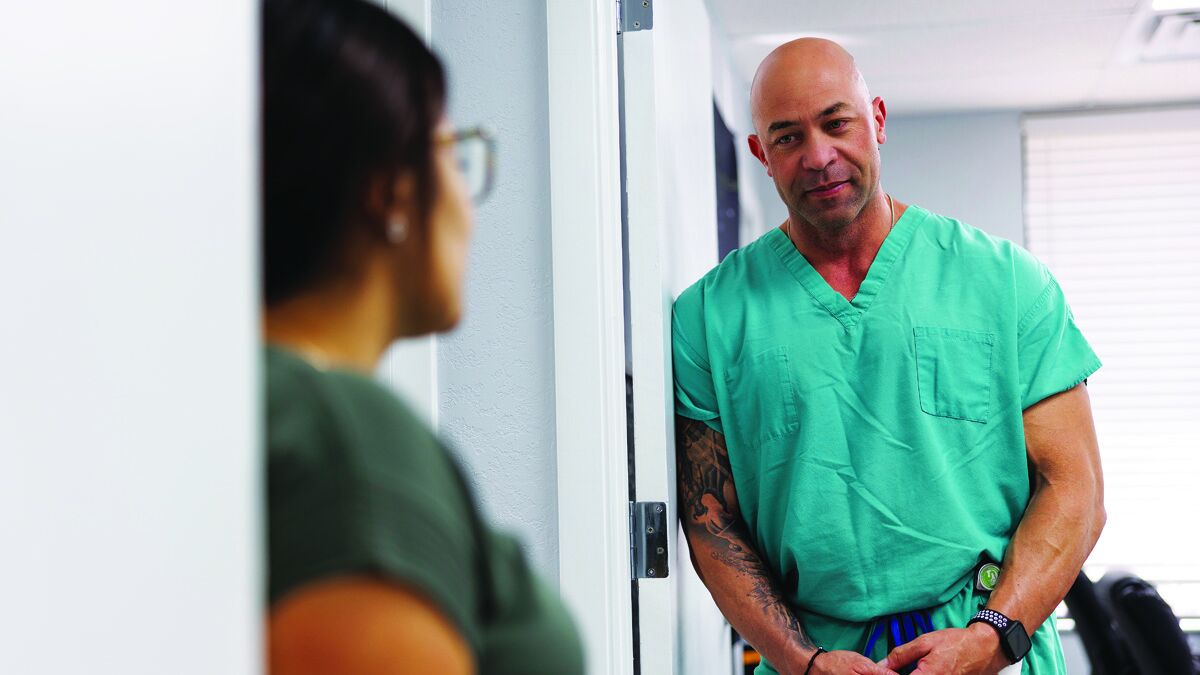
Tasked with attracting doctors to a rural market, Dr. Barry Davis emphasizes the professional fulfillment that comes from sustained community impact.
Solutions
Efforts to address the physician shortage span a range of strategies, from expanding telemedicine to training more nurse practitioners. One solution is straightforward in theory: Train more doctors. In practice, it’s far more complicated.
Roughly 45 years ago, a federal report projected a surplus of physicians, prompting policies to limit the number of residency slots nationwide. Residency — the post-medical school training period — typically lasts three to seven years, depending on specialty.
Most residency funding comes from Medicare. In the mid-1990s, the number of Medicare-funded graduate medical education slots was capped. According to groups such as the American Medical Association, that funding has not expanded sufficiently to meet today’s workforce needs.
Congressional action to expand Medicare funding remains uncertain, leaving states and health systems to pursue alternative solutions. In Florida, legislation enacted in 2024 as part of the Live Healthy Act committed more than $1 billion to expanding the health care workforce, including funding for 500 new residency slots statewide.
In Southwest Florida, medical education opportunities are expanding. Construction is scheduled to begin this year on the Naples College of Osteopathic Medicine in southern Collier County. Set to open in 2028, the four-year school is expected to enroll about 400 students, many of whom would train at NCH hospitals.
Local hospital systems have also built graduate medical education programs. NCH launched its internal medicine residency in 2017 and a transitional-year residency in 2021, along with several fellowship programs. Lee Health, in partnership with Florida State University, offers residencies in family medicine, internal medicine, obstetrics and gynecology, and a transitional-year program.

Recognizing the pressures of long hours and student debt, Lee Health’s Dr. Alfred Gitu integrates stress-management training into residency programs to safeguard the next generation of physicians.
Resident physicians help address staffing needs and serve as a future recruitment pipeline. In Florida, about 65% of residents ultimately practice in the state, according to the Association of American Medical Colleges.
From the perspective of Lee Health Chief Academic Officer Dr. Alfred Gitu, recruiting physicians becomes easier when hospitals train them. “We know these are the right people,” he says.
Gitu works with residents early to help prevent burnout. Residents often log long hours for relatively modest pay while managing student loan debt, so — recognizing the risk of unhealthy habits — Gitu integrates stress-management training into the curriculum.
“[Doctors] are the ones who are taking care of our community,” he says. “We tell them, ‘You are the No. 1 patient. Before you take care of others you have to take care of yourself.’”
Dr. Rebekah Bernard knows burnout firsthand. After years working within large health care organizations locally, she felt trapped in a cycle of high-volume patient care and mounting bureaucracy. The profession she once viewed as her dream job left her disillusioned.
She chose a different path.
Bernard founded Gulf Coast Direct Primary Care in Fort Myers, operating under a direct primary care model in which patients pay a monthly fee for primary care services, often without involving insurance. She calls it “blue-collar concierge.”
While patients still see specialists when needed, the model allows Bernard to spend more time with each patient. She works independently, outside hospital systems, and finds the work more fulfilling. It remains demanding, but she no longer feels burned out.
“Ask any doctor, we love working with patients,” she says. “That’s why we do this.”
Bernard has since written books and speaks frequently to doctors about burnout and physician autonomy. She tells young physicians that feeling overwhelmed is common, and that it doesn’t mean they’ve chosen the wrong profession.
“Don’t be overwhelmed by the challenges,” she tells medical students. “Be inspired to find the solutions. If your heart is into it, if you really want to be a doctor, do it. You will never be happy if you don’t pursue it.”
There is no single fix for the physician shortage, and no quick relief. But across Southwest Florida, hospitals, educators and physicians are experimenting with new models, new pipelines and new ways of practicing medicine, all aimed at ensuring that caring for the community doesn’t come at the cost of losing the caregivers themselves.
(0) comments
Welcome to the discussion.
Log In
Keep it Clean. Please avoid obscene, vulgar, lewd, racist or sexually-oriented language.
PLEASE TURN OFF YOUR CAPS LOCK.
Don't Threaten. Threats of harming another person will not be tolerated.
Be Truthful. Don't knowingly lie about anyone or anything.
Be Nice. No racism, sexism or any sort of -ism that is degrading to another person.
Be Proactive. Use the 'Report' link on each comment to let us know of abusive posts.
Share with Us. We'd love to hear eyewitness accounts, the history behind an article.