
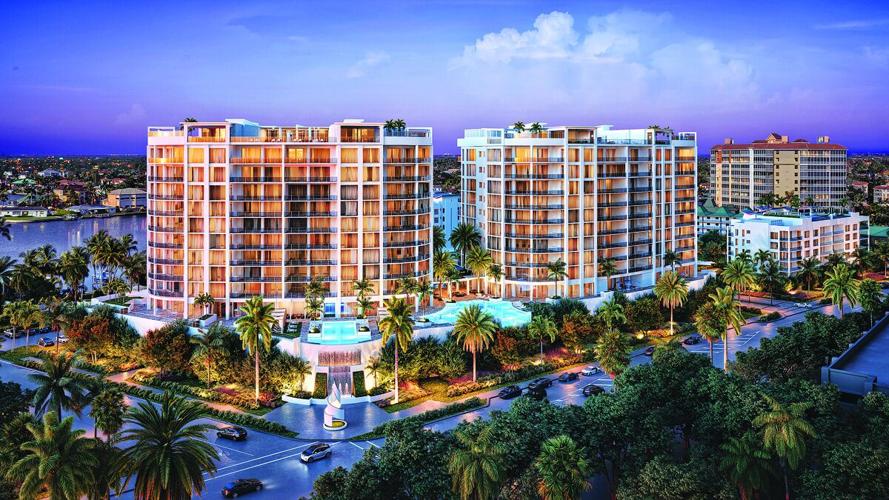



The rise of branded luxury residences reflects a strategic partnership where hotel operators expand their global footprint with minimal risk while developers command premium pricing.
Last November, the redeveloped Naples Beach Club opened as a Four Seasons Resort boasting 220 overnight accommodations and 153 private residences. Meanwhile, two Ritz-Carlton branded residential projects continue construction in Southwest Florida: the 128-unit Ritz-Carlton Residences Naples, a five-building complex sitting on a 6-acre site along the Gulf; and the 224-unit Ritz-Carlton Residences Estero Bay, featuring dual 22-story towers within a 500-acre nature preserve in Bonita Springs. What are the motivating forces behind these partnerships between luxury hotel operators and residential real estate developers?
The simple answer is that the alliances allow the hotel parent companies to expand their luxury brands in premier markets by leveraging their reputations, as well as their core competencies, with very little financial risk. For the residential real estate developers, the partnerships allow them to secure premium pricing for the residential units without the need to acquire the human capital or create the operational infrastructure necessary to deliver the resort-style amenities offered to buyers. Most importantly, in a world where the term “luxury” has become ubiquitous, the developers are able to instantly define the level of service, attention to detail and uncompromised quality that will be delivered to buyers within these luxury-branded residential developments.
Since hotel brands divested their real estate holdings, beginning with Marriott International in the early 1990s, most hotel operators and franchisors have pursued an asset-light strategy, controlling their branded hotel properties through management contracts and franchise agreements without holding title to the underlying real estate assets. This split allowed hotel parent companies, such as Marriott, Hilton, Hyatt, IHG and others to shed their debt and create an organizational culture that, as Marriott says on its website, “puts people first.” The hotel parent companies of today are fee-driven companies that typically capture between 12% and 15% of the revenue generated by their branded hotels through licensing, management, reservations (sales), marketing, guest loyalty, purchasing and other fees; they are not burdened with the need to raise the capital or accumulate the debt necessary to finance the development of the hotel real estate, leaving this task to commercial real estate developers.

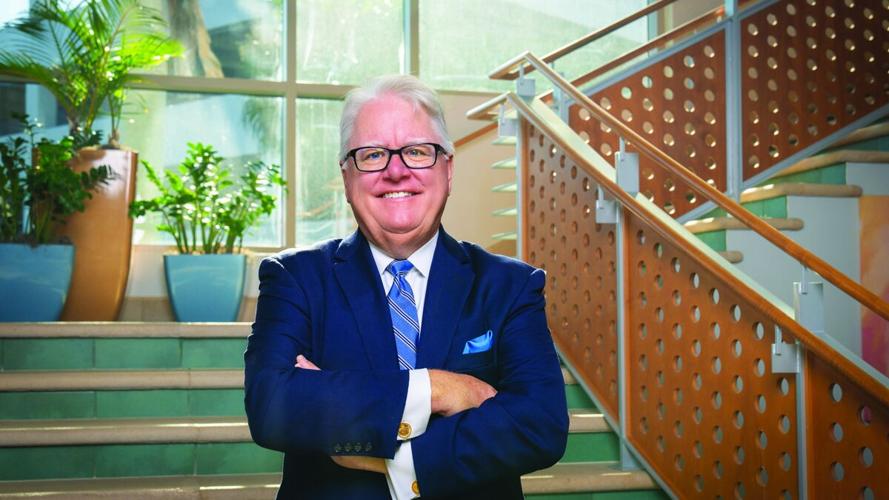
Michael Collins, Ph.D., is an associate professor in the School of Resort & Hospitality Management in the Lutgert College of Business at Florida Gulf Coast University.
The best-performing hospitality brands, such as Four Seasons and Ritz-Carlton, are recognized as employers of choice in the hospitality industry with strong reputations for providing industry-leading service levels, training and career opportunities. This enables them to attract and retain exceptional employees in a high-turnover industry despite challenging labor markets. With luxury hotel operators providing the human capital and operational support necessary to operate the private dining rooms, spas and other amenities offered by luxury residential communities, potential buyers pay a premium price for their residential units, confident of the level of service that will be delivered in resort-style amenities embedded within the community. Meanwhile, commercial real estate developers focus on financing, constructing and marketing the sale of the residential units without the burden of managing day-to-day hospitality operations.
This approach, common in the hotel industry for more than two decades, has spilled over to the luxury residential real estate development industry — as seen in Marriott’s 2024 annual report. In it, the company explains the symbiotic and lucrative partnership with developers who “construct and sell the residences, with limited amounts, if any, of our capital at risk.” By eliminating that risk, Marriott is able to continue to expand and bring in revenue for its shareholders. At the end of 2024, Marriott was a partner in 137 residential properties worldwide, including 72 in the United States. While this represents a small proportion (1.5%) of its total portfolio of 9,266 branded properties (9,129 hotels), these multimillion-dollar residential units attract high-profile buyers that are likely to be loyal guests at Marriott’s 500+ luxury hotels worldwide. Marriott’s association with these exceptional, high-end residential developments also enhances consumers’ perceptions of the respective luxury brands. Therefore, look for this trend to continue since it represents a win for all stakeholders: the luxury brands, developers, buyers … and Southwest Florida.
Michael Collins, Ph.D., is an associate professor in the School of Resort & Hospitality Management in the Lutgert College of Business at Florida Gulf Coast University.
(0) comments
Welcome to the discussion.
Log In
Keep it Clean. Please avoid obscene, vulgar, lewd, racist or sexually-oriented language.
PLEASE TURN OFF YOUR CAPS LOCK.
Don't Threaten. Threats of harming another person will not be tolerated.
Be Truthful. Don't knowingly lie about anyone or anything.
Be Nice. No racism, sexism or any sort of -ism that is degrading to another person.
Be Proactive. Use the 'Report' link on each comment to let us know of abusive posts.
Share with Us. We'd love to hear eyewitness accounts, the history behind an article.