





Healthcare systems in Southwest Florida are placing greater emphasis on medical service lines so residents — full-time or seasonal — don’t need to travel for access to medical excellence. From cardiac care to orthopedic surgery, and from children’s care to cutting-edge cancer treatment, the message from providers is clear: You can stay here for world-class service.
This is especially true for women’s health services, with both Naples Comprehensive Health in Collier County and Lee Health in Fort Myers steadily expanding treatment offerings aimed at reducing barriers to care for women.
Most recently, NCH announced a “transformational” gift from philanthropist Julia Van Domelen to establish the Van Domelen Institute & Pavilion for Women and Children. In 2025, NCH also established the Southwest Florida Gynecologic Oncology practice focused on cancers of the female reproductive system.
In late 2024, Southwest Florida Proton opened in Estero, offering advanced treatment options for multiple types of cancer, including those affecting women.
As care options for women expand across the region, so, too, does the number of female physicians in leadership roles helping shape those services.
Gulfshore Business spoke with three healthcare leaders about how technology is helping overcome barriers to care for women, and how the profession has evolved for women physicians.
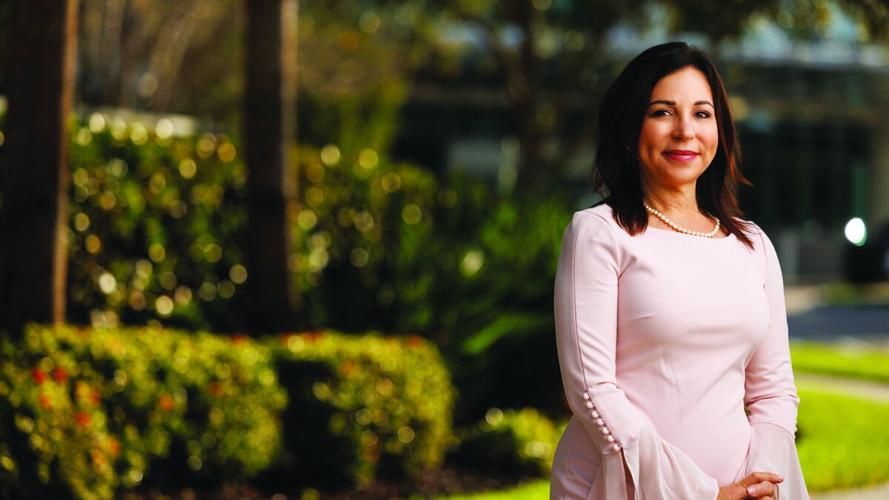
At Fort Myers-based Lee Health — one of the state’s largest healthcare systems — Dr. Cherrie Morris, vice president and chief physician executive for women’s services, focuses on bringing all of the system’s women’s health services under one umbrella.
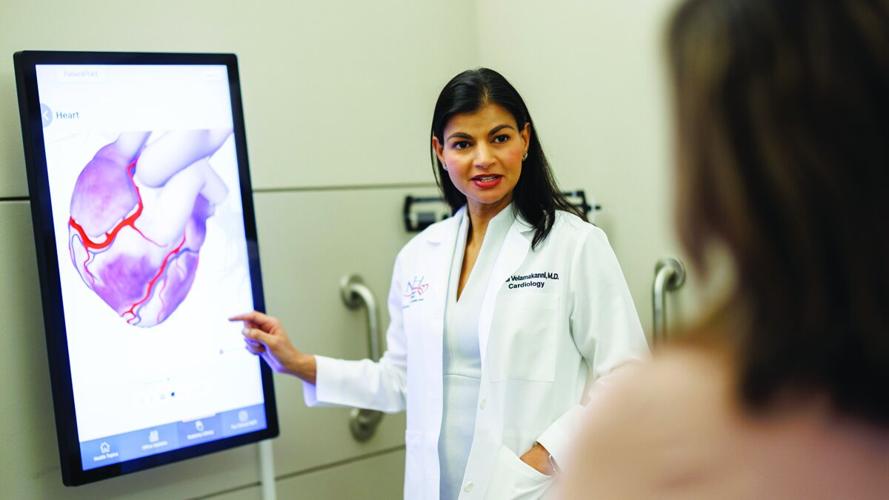
At NCH, the largest healthcare system in Collier County, Dr. Shona Velamakanni is a noninvasive cardiologist at the NCH Rooney Heart Institute and medical director of the institute’s echocardiography laboratory. She also helped start a society of women physicians at NCH, formed in 2019 as a networking and mentoring group for physicians practicing within the system.
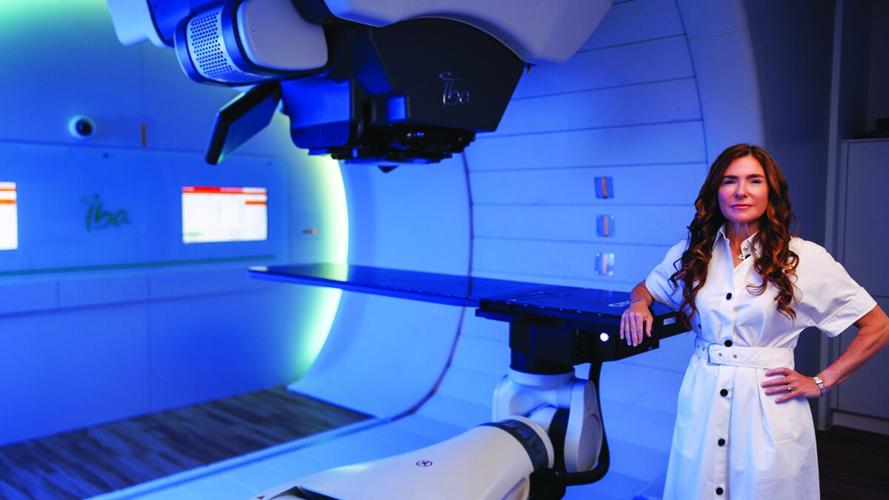
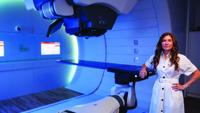
At Southwest Florida Proton in Estero, the first cancer-treating proton beam radiation center on Florida’s Gulf Coast, Dr. Shannon MacDonald serves as medical director, one of fewer than 10 women in that role among the 47 proton centers in the United States.

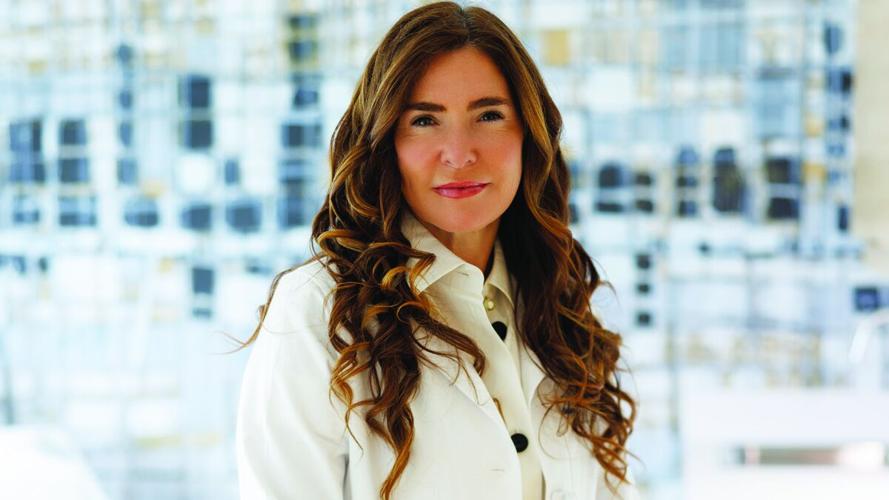
At Lee Health, Dr. Cherrie Morris is helping reshape women’s health services — reducing barriers to care while guiding systemwide growth.
Overcoming barriers to healthcare for women
According to Morris at Lee Health, one of the most common barriers to healthcare for women is a practical one: time.
Women often put their own healthcare last because they don’t want to take time away from caring for their families or from work, said Morris, who has been with the system since 1998.
Morris said some women postpone necessary procedures such as hysterectomies because of those concerns, but advances in minimally invasive and robotic surgery have dramatically shortened recovery times and reduced pain compared with procedures performed decades ago, making it easier for many women to move forward with treatment.
“And it’s really incredible to be able to offer that to patients.”

At NCH, Dr. Shona Velamakanni is helping close gaps in women’s heart health, combining clinical expertise with a focus on research and innovation.
Addressing women’s heart health
Heart disease remains the No. 1 killer of women, and Velamakanni at NCH Rooney Heart Institute said advances in technology — including artificial intelligence — and a shifting focus in research are helping reduce some barriers to cardiac care for women.
“Research in terms of women’s heart disease has lagged way behind men,” Velamakanni says. “One of the benefits that we’ve now had over time is that we’ve had more women who are principal investigators leading clinical trials, who are researching questions that haven’t been investigated before.”
Velamakanni, who has been in her role at NCH since 2010, said AI has also made clinicians more efficient.
She said AI is helping physicians analyze larger volumes of data and identify patterns that may lead to better diagnoses and treatment decisions. The increased research focus is also helping physicians better understand the factors contributing to heart disease in women.
“We’ve always known that heart disease is the No. 1 killer of women, but then what’s the underlying contributing factor? Why is it happening, and what can we do to help gear our treatments and strategies toward women?
“We’re better at recognizing risk factors that are specific to women,” Velamakanni says. “We’re better at figuring out what testing modality might be better to help restratify them. We’re also better at talking to women … and advocating for them.”

Dr. Shannon MacDonald, medical director at Southwest Florida Proton, is advancing cancer care with technology that helps preserve fertility and improve outcomes for women.
Preserving fertility during cancer treatment
On the cancer treatment front, Southwest Florida Proton’s MacDonald, who was appointed medical director in January 2025, said one concern when treating pelvic cancer in women is preserving fertility and sexual function for women of childbearing age — a factor that can become a barrier to care.
MacDonald said proton therapy can offer significant benefits for cervical, endometrial or vaginal cancers involving soft tissue or bone.
“One important thing to think about for any cancer that’s in the area close to the ovaries — and this might be for tumors at the bottom part of the spinal column or when we need to treat the entire spine — you can completely spare the ovaries [with the proton beam] for a woman of childbearing age and there will be no risk of infertility,” MacDonald notes. “Sometimes we take pieces of ovaries for younger children before they start radiation therapy, and this is something you just don’t need to do [with proton therapy] because there’s no dose to the ovaries.”

Dr. Shannon MacDonald leads one of the region’s most advanced cancer treatment centers, combining innovation with a collaborative approach to care.
Evolving roles and leadership styles
All three leaders said much has changed for women in the medical field since they began practicing medicine.
Morris recalled that there were only about 10 female physicians in Fort Myers when she joined Lee Health in 1998 in her OB/GYN practice, and they would meet as a group for burritos and margaritas once a month to compare notes and socialize.
“We formed those relationships and supported each other, and that was important,” she says. “And my practice partner and other physicians along the way really coached me into doing leadership roles.”
She said it was a difficult decision to eventually leave her practice to become a full-time administrator, but she realized she was ready for a different role.
“I loved doing surgery, and I loved delivering babies; I loved everything I did,” Morris says. “So, it was a hard decision, but I thought this would be a really good step in my career and a way to make an impact a little differently and more globally.”
When Velamakanni finished her cardiology training, she said, only 5% of all cardiologists in the state of Florida were women. That number is now up to 14%, she said, and 30% of the NCH medical staff are women.
Velamakanni said that with support from system administration, she helped start a society of women physicians at NCH in 2019 to network; provide mentorship on issues including professional burnout; and focus on women’s health needs in the community that weren’t being addressed.
She said the group also advocates for identifying gaps in care and recruiting physicians to help address those needs.
“We know that happier physicians lead to happier patients because they have better care,” she says.
MacDonald said she has seen more women entering her field of radiation oncology, and that schedules may be easier — for both male and female physicians — to balance with other obligations.
While most leadership roles in hospitals are still held by men, she said it is valuable to have female leadership “because we have different leadership styles.”
For MacDonald, leadership also means modeling a collaborative approach to decision-making.
She cited Jacinda Ardern, former prime minister of New Zealand, as a “wonderful role model for a leader.”
“She had a very collaborative leadership style, a lot of kindness and humility,” MacDonald says. “And that’s the kind of leader I hope I am and envision myself as being.”
(0) comments
Welcome to the discussion.
Log In
Keep it Clean. Please avoid obscene, vulgar, lewd, racist or sexually-oriented language.
PLEASE TURN OFF YOUR CAPS LOCK.
Don't Threaten. Threats of harming another person will not be tolerated.
Be Truthful. Don't knowingly lie about anyone or anything.
Be Nice. No racism, sexism or any sort of -ism that is degrading to another person.
Be Proactive. Use the 'Report' link on each comment to let us know of abusive posts.
Share with Us. We'd love to hear eyewitness accounts, the history behind an article.