
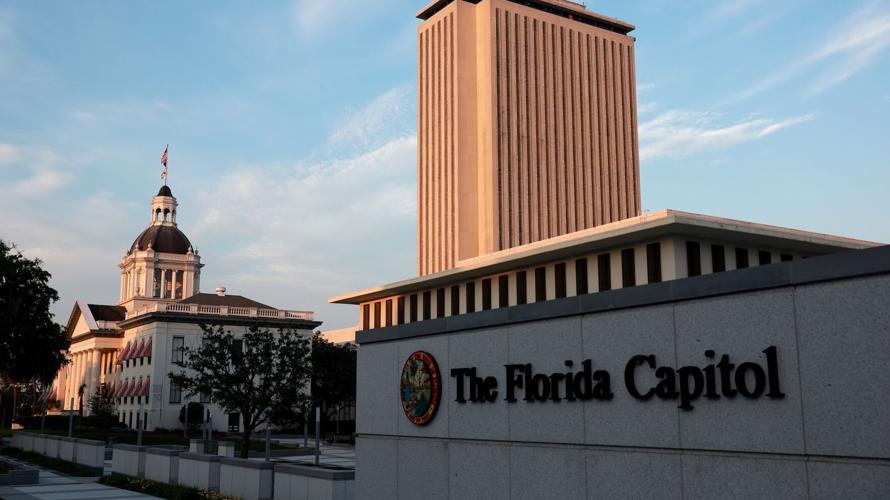



The Florida House and Senate approved a proposed constitutional amendment June 2 that would increase the state's homestead exemption and place new limits on local property tax revenue. The measure now heads to voters on the Nov. 3 ballot.
The Florida Association of Counties went on the offensive against a proposed constitutional amendment that would eliminate most property taxes, even before the Legislature voted to place the measure on the Nov. 3 ballot.
The Florida House and Senate approved the amendment June 2, sending it to voters for consideration in November. The House voted 75-26 and the Senate voted 30-9, with support coming largely from Republicans and opposition largely from Democrats. The measure will require approval from at least 60% of voters to pass.
The association on June 1 updated county officials and media members on the status of the proposal and its potential consequences as lawmakers debated last-minute changes to the legislation.
“We know this is a tax shift. They’re framing it as a tax cut, but our small businesses, all businesses, they’re going to feel the pain. Renters, they’re not going to get an exemption,” said Jeff Scala, deputy director of public policy for the Florida Association of Counties.
The amendment would raise the homestead exemption from $50,000 to $150,000 on Jan. 1, 2027, and to $250,000 in 2028, with future increases tied to inflation. People moving to Florida after Dec. 31, 2026, would have to wait five years before becoming eligible for the exemption. The annual assessment cap on nonhomesteaded properties, including second homes, businesses and apartment buildings, would be reduced from 10% to 5%.
Lawmakers made several changes before approving the proposal. They removed a provision sought by Gov. Ron DeSantis that would have applied the exemption to school property taxes, meaning homeowners would continue paying taxes that support public schools. They also removed language creating a trust fund intended to help local governments offset revenue losses.
Supporters said the amendment would provide property tax relief for homeowners, while opponents warned it could force local governments to cut services or shift costs through higher fees and assessments.

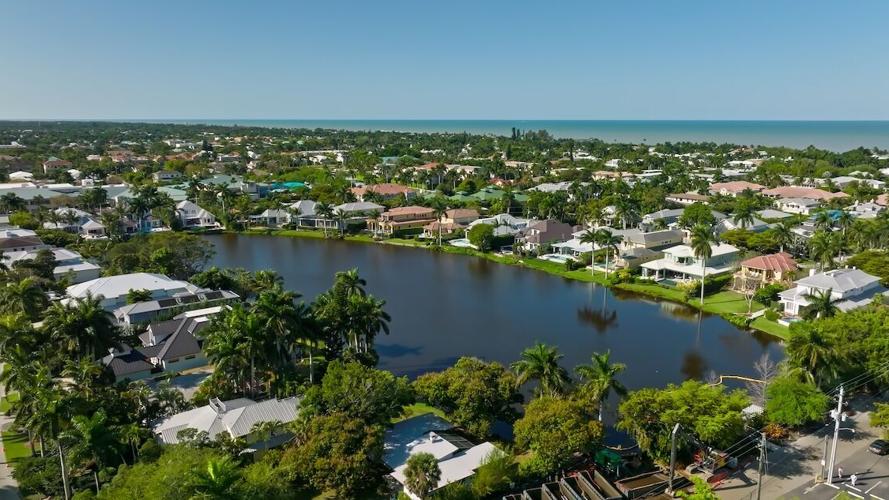
An aerial view shows a residential neighborhood in Collier County near the Gulf.
Under the proposal, local governments would be able to use property tax revenue only for law enforcement, emergency services, fire protection, flood control and environmental projects, road construction and maintenance, debt payments and employee retirement benefits. An amendment added June 1 also would allow counties to use property tax revenue to fund constitutional officers’ offices, such as tax collectors.
According to the Florida Association of Counties, property tax revenue could not be used to maintain parks, operate libraries, fund animal shelters or support similar services.
According to estimates from the Florida Association of Counties, Charlotte County would lose $59.2 million in property tax revenue next fiscal year and $104.7 million in the second year, when the homestead exemption rises to $250,000. Collier County would lose $62.9 million in the first year and $121.4 million in the second.
Lee County would lose $129.7 million next year and $240.8 million in the second year.
The Lee County Board of County Commissioners voted June 2 to send a letter to Florida Senate President Ben Albritton and House Speaker Daniel Perez urging lawmakers to preserve local fiscal home rule and oppose proposals that significantly reduce local property tax revenue without providing recurring replacement funding.
In the letter, commissioners said Lee County's projected revenue losses would create a nearly $198.8 million gap between revenues and expenditures by fiscal year 2028-29, before accounting for growth and inflation. They warned that cuts of that magnitude could affect public safety, transportation infrastructure, parks, libraries, emergency management, flood mitigation and hurricane recovery efforts. Commissioners also argued the proposal could increase pressure on businesses, renters and nonhomesteaded property owners while making it more expensive for local governments to borrow money for infrastructure projects.
Lee County Commissioner Brian Hamman participated in the association’s Zoom briefing June 1.
He said he understands why voters may be attracted to the amendment but has concerns about several provisions.
“The biggest problem I have with this bill right now is the fact that it restricts and prohibits us from funding county departments that are critical to everyday life here in Lee County, Florida,” Hamman said.
He cited libraries and animal services as examples.
(1) comment
Florida Counties needs to learn how to do more with less money! Start treating your budgets (out tax dollars) like we treat our budgets at home. No waste, fraud or abuse. No excess spending. County tax revenues have doubled since 2016 and the population only grew 23%....where are all of those tax dollars going??
Welcome to the discussion.
Log In
Keep it Clean. Please avoid obscene, vulgar, lewd, racist or sexually-oriented language.
PLEASE TURN OFF YOUR CAPS LOCK.
Don't Threaten. Threats of harming another person will not be tolerated.
Be Truthful. Don't knowingly lie about anyone or anything.
Be Nice. No racism, sexism or any sort of -ism that is degrading to another person.
Be Proactive. Use the 'Report' link on each comment to let us know of abusive posts.
Share with Us. We'd love to hear eyewitness accounts, the history behind an article.