

With the 2026 hurricane season approaching, Southwest Florida homeowners are weighing options to protect their properties from potential storm surge and other high-water events.
After experiencing major storm surges in recent years, many Naples and Collier County homeowners in flood-prone areas are considering flood panel systems as one way to help protect their residences. However, they must be mindful of the permits required before installing this type of protection.
Both the city of Naples and Collier County allow the use of flood panels on existing residential buildings in accordance with specific guidelines and after completing a permitting process.
In Naples, permitting is required to avoid having the city suspended from the National Flood Insurance Program, which, according to the city, could lead to the loss of flood insurance discounts for all residents and the potential inability for property owners to obtain flood insurance.
As residents prepare, neither the city nor the county has plans for pre-hurricane season public preparedness meetings. However, in November 2025, the city hosted a residential flood panel forum to offer guidance on using the protective systems.
Due diligence for systems, contractors
At the November forum, city of Naples building officials urged caution when installing flood panels that can make homes watertight. Hydrostatic and hydrodynamic pressure from deep water can push against panels and potentially dislodge homes from their foundations. Additionally, when panels block doorways or windows, occupants may not be able to exit if necessary.
City building official Steve Beckman said it is important to work with reliable products and a licensed contractor experienced in addressing those engineering and life safety issues.
“Do your due diligence, ask for references, check with neighbors and do some research,” Beckman said. “These products run the gamut. There are companies that have been in business for a long time, that have certifications and third-party testing, and then there’s some that decided to start making them in the garage yesterday. So, do your homework and really look to see what’s out there.”
Beckman also urged residents not to start work without permits and not to make a final payment until the system has been inspected and approved.

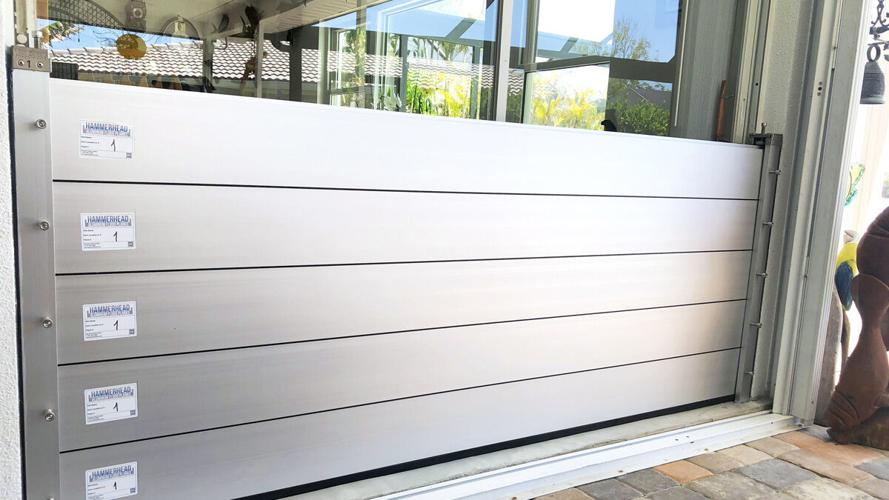
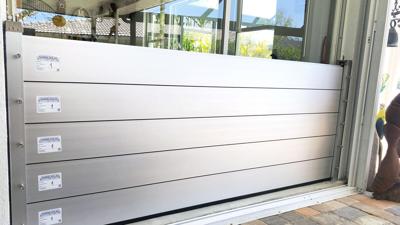
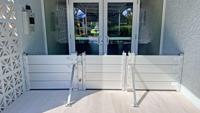
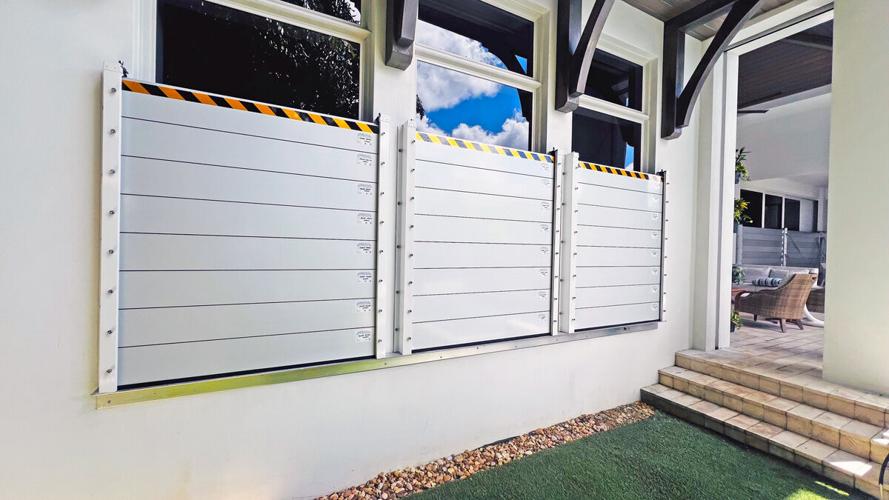
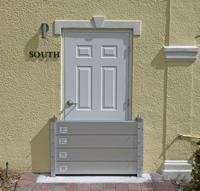
A Garrison Hammerhead flood panel system is installed at a Naples residence. Homeowners are increasingly considering the systems as hurricane season approaches.
The city’s floodplain coordinator, Bob Dorta, said at the forum that residents should exercise caution because any changes to a building can affect insurance coverage.
“Check with your insurance company before you get involved in this,” Dorta said.
Arnon Rosan, president and CEO of Garrison Flood Control Systems LLC, said due diligence is important because Southwest Florida has become “the Wild West for flood protection, and it’s to the great detriment of homeowners.”
He said Garrison, which has its headquarters and fabrication plant in Pompano Beach, subjects all its products to rigorous testing and engineering analysis.
“When it comes to permitting, particularly in Naples, they’re very serious about looking at the base engineering for the product itself,” Rosan said.
The company has installed about 6,000 flood systems across the country, with about 4,500 of those residential and about 3,000 installs in Florida, including along the Gulf Coast.
Rosan said the company has installed a variety of its U.S.-made Hammerhead aluminum flood panel systems in Naples and Collier County, which are designed to serve as temporary protection during high-water events. The panels are planks inserted into posts affixed on either side of the area being protected, he said.
While no system can promise 100% protection during a high-water event, Rosan said Garrison’s goal is “to mitigate anywhere between 95% or higher of what could potentially be catastrophic damage.”
“One thing we tell people is that we’re not putting their house in a (plastic) bag,” he said. “We are really mitigating the bulk of the water that’s coming in. We’re giving you advice on how to prevent water from backflowing in, and we’re even providing you with an option of pumps to help capture should there be any leakage, but nothing is 100% foolproof.”
As for cost, Rosan said a flood panel system could range from $15,000 to $60,000 for a typical home.
Rosan said the Garrison team has developed extensive expertise in navigating Naples’ permitting process.
“We typically take charge of the permit process,” he said. “We dispatch the engineer to review the homeowner’s property, provide a quote and create technical shop drawings for every job; those are a requirement as part of the submission package.
Gallery: Flood panels gain traction before hurricane season
As hurricane season nears, Southwest Florida homeowners are turning to flood panel systems to reduce storm surge risk.
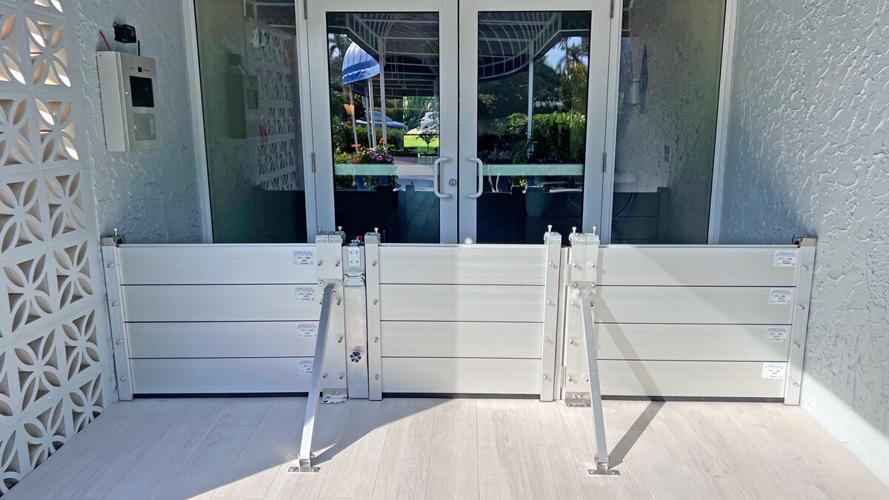
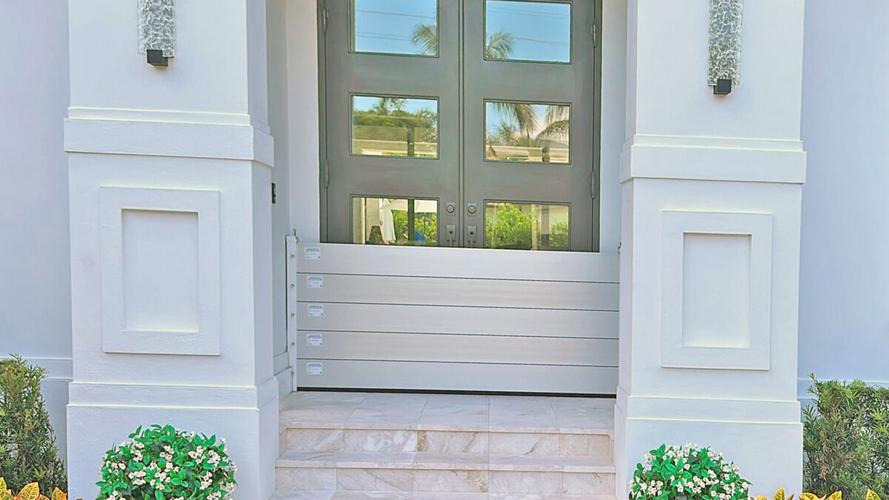
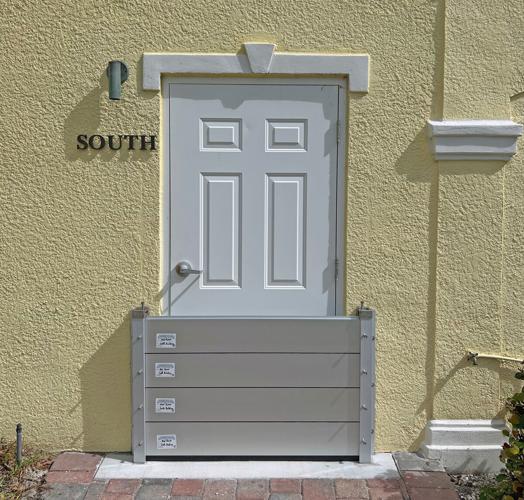
A Garrison Hammerhead system is installed at a Naples condominium entrance to help guard against storm surge. Condo associations are among those exploring flood mitigation options.
“We get an engineer or records letter for them, and we help them find their elevation certificate, which we’re going to need in order to process the permit application.”
Rosan advised homeowners considering a flood panel system to confirm that any contractor is properly licensed and will secure the necessary permits in Naples or Collier County. He also recommended verifying that flood barriers have been tested and that engineering documentation is available. In addition, he said homeowners should not rely solely on barriers at openings but also assess other potential weak points in the home, including plumbing, wall outlets and vents.
Garrison has a variety of flood control resources available at garrisonflood.com, along with testing and engineering reports for its Hammerhead system.
The city of Naples guidelines for the voluntary use of flood panels on residential buildings can be found by clicking here.
County permitting requirements for flood panels can be found by clicking here.
(0) comments
Welcome to the discussion.
Log In
Keep it Clean. Please avoid obscene, vulgar, lewd, racist or sexually-oriented language.
PLEASE TURN OFF YOUR CAPS LOCK.
Don't Threaten. Threats of harming another person will not be tolerated.
Be Truthful. Don't knowingly lie about anyone or anything.
Be Nice. No racism, sexism or any sort of -ism that is degrading to another person.
Be Proactive. Use the 'Report' link on each comment to let us know of abusive posts.
Share with Us. We'd love to hear eyewitness accounts, the history behind an article.