




Jerry Presseller, president of the nonprofit Society of St. Vincent de Paul’s Sacred Heart Conference, worries that if the federal government shutdown continues, already strained food banks in Charlotte County will face overwhelming demand.
“We average 65 to 75 families a day, and last year we served 40 to 45 families a day. Our demand for food has grown about 30% in one year,” Presseller said.
Inflation and rising grocery costs have pushed more families to rely on food pantries across the county over the past year. A prolonged shutdown could deepen the crisis, especially if Supplemental Nutrition Assistance Program, or SNAP, and Women, Infants and Children, WIC, benefits are interrupted. Many families who depend on those programs may have no choice but to turn to food pantries.
The shutdown entered its second day Oct. 2, with President Donald Trump, his Republican allies in Congress and Democrats showing no signs of compromise. Senators recessed until Oct. 3 for the Yom Kippur holiday, ensuring the first shutdown since 2019 will stretch at least another day, though many fear it could last much longer.

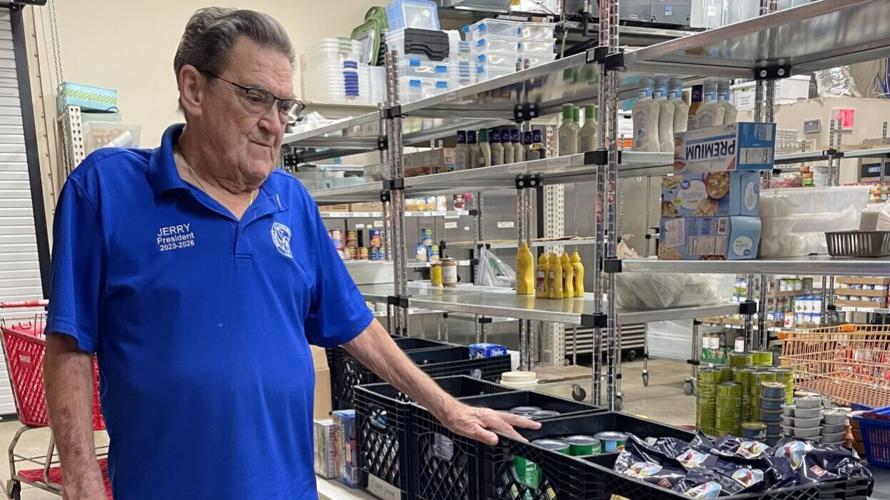
Sparsely stocked shelves reflect the strain on food banks in Charlotte County as more families seek assistance.
At the heart of the standoff are Democratic demands to restore funding to Medicaid and the Affordable Care Act after recent cuts, which the Congressional Budget Office projects could leave more than 10 million Americans without health insurance. Republicans, who control the House, are pushing to maintain current funding levels. Meanwhile, Trump has threatened widespread layoffs of federal workers during the shutdown, adding new uncertainty for government employees and families who rely on federal benefits.
In addition to food assistance, St. Vincent de Paul also helps residents pay utility bills, rent and mortgage payments when faced with shutoffs or eviction. The nonprofit provides free clothing and furniture to those in need.
Presseller pointed out how little government aid stretches. A senior living alone receives a minimum of $23 per month in SNAP benefits, issued through an EBT card. St. Vincent de Paul doubles that amount, providing $46 worth of food. Larger families receive more, but the need still often outpaces resources.
Presseller, who helped found the Punta Gorda Farmers Market in 2008, has volunteered with St. Vincent de Paul for a decade. Under his leadership, the food pantry transitioned to a Choice Pantry model last year. Instead of receiving pre-packed groceries, clients now receive points and shop the aisles with a volunteer until their quota is met. Each item is assigned a point value, giving families more control over what they take home and cutting down on waste.

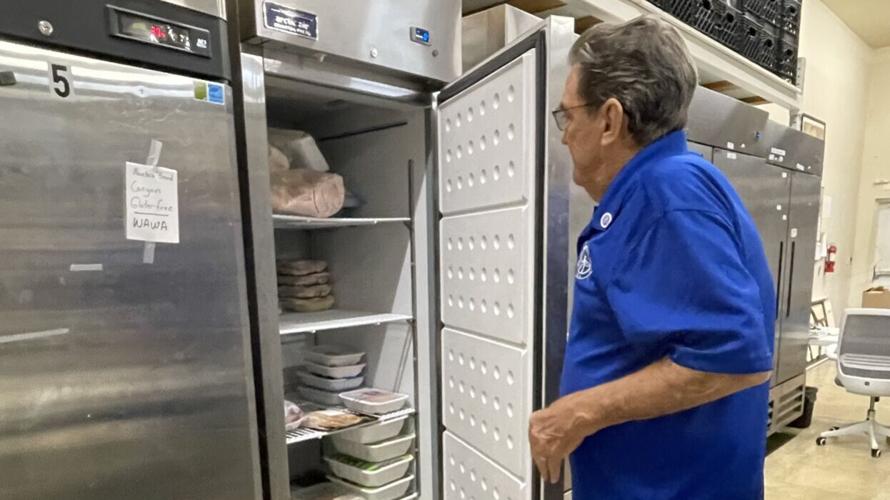
Freezers at the St. Vincent de Paul food pantry are labeled to organize perishable food items as volunteers work to meet rising demand.
Even with the new system, shelves that once overflowed are now sparse. Presseller pointed to high storage racks once filled with boxes of food but now lined with empty crates.
To meet the shortage, the pantry launched a food drive, calling on local churches and neighborhoods to donate nonperishable goods. One donor recently contributed $750 worth of food. In addition, area churches have organized their own collection efforts.
In May, the U.S. Postal Service’s annual food drive netted 60,000 pounds of food countywide. Typically, St. Vincent de Paul’s share lasts until October, but this year it was gone by August.
Cash donations are also critical, Presseller said, because they allow the nonprofit to continue helping families pay essential bills.
The potential impact of the shutdown on SNAP and WIC programs remains uncertain. The Department of Agriculture has some emergency funds that could temporarily extend WIC, which supplies baby formula and a monthly allowance for fresh produce. During the 2018-19 shutdown, SNAP benefits were issued early to cover the following month, but WIC faced possible disruptions.

Shelves at the St. Vincent de Paul food pantry in Charlotte County are no longer stocked from top to bottom as demand has surged.
Some local food pantries stock baby formula and diapers, but demand could spike quickly if federal programs stall.
Presseller, calling it an “all hands-on-deck effort,” said food banks are preparing for the worst while hoping lawmakers resolve the budget impasse quickly.
The last government shutdown, from Dec. 22, 2018, to Jan. 25, 2019, lasted 35 days — the longest in U.S. history. If the current stalemate drags on beyond October, Charlotte County’s food banks may once again be forced to fill the gap.
(0) comments
Welcome to the discussion.
Log In
Keep it Clean. Please avoid obscene, vulgar, lewd, racist or sexually-oriented language.
PLEASE TURN OFF YOUR CAPS LOCK.
Don't Threaten. Threats of harming another person will not be tolerated.
Be Truthful. Don't knowingly lie about anyone or anything.
Be Nice. No racism, sexism or any sort of -ism that is degrading to another person.
Be Proactive. Use the 'Report' link on each comment to let us know of abusive posts.
Share with Us. We'd love to hear eyewitness accounts, the history behind an article.