
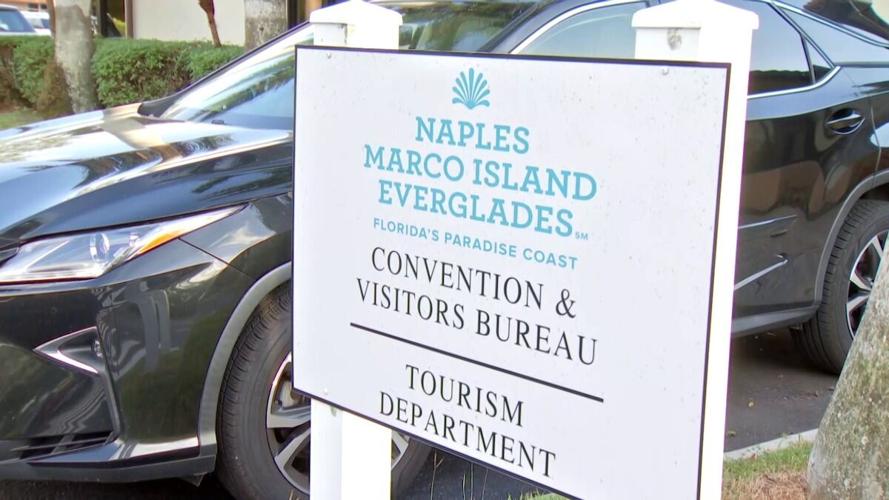




The operations model could be changing for the Naples, Marco Island, Everglades Convention and Visitors Bureau, Collier County’s destination marketing organization responsible for promoting tourism to the area.
At a Dec. 12 meeting, the Tourist Development Council will vote on a recommendation to convert the CVB from a county government entity into a standalone 501(c)(6) nonprofit.
The recommendation stems from a feasibility study conducted by former Collier Tourism Director Jack Wert and his company, Wert Marketing Group LLC, after County Manager Amy Patterson commissioned the review in February.
County officials didn’t respond to requests for details on the study’s associated costs.
An executive summary of the Dec. 12 agenda item, prepared by Tourism Director Jay Tusa and Arts and Culture Manager John Melleky, recommends that the TDC accept the study’s results.
If the TDC votes to support the change, the recommendation would move to the Board of County Commissioners in early 2026.
The CVB is asking the TDC “to accept the CVB Government Restructure study report and its recommendation to privatize the marketing, promotion, group sales and event functions currently performed by the Tourism Division.”

Jack Wert
The summary explains that the county manager’s office hired Wert’s firm to evaluate other governance structures for the tourism division that might improve efficiency, create more flexibility and strengthen its marketing impact.
The CVB is currently funded through Tourist Development Tax revenue collected from overnight lodging stays, and that funding source would remain in place under the proposed nonprofit model. Those dollars would continue supporting tourism marketing, sales efforts, promotions and funding programs for meetings, sporting events, arts and cultural activities, and noncounty museum grants.
The study also states that the new structure could allow the CVB to pursue additional funding sources through supplemental programs or other revenue mechanisms.
Under the proposed nonprofit model, the TDC would retain its advisory role to the county commission, and the county would continue to administer TDT funds for “tourism-related activities, such as beach renourishment and maintenance, beach park facilities, the Paradise Coast Sports Complex and county museums.”
The summary says the nonprofit model is “the most widely used structure for destination marketing organizations due to its flexibility, industry engagement model and ability to raise supplemental private dollars.”
Tusa and Melleky noted that Wert’s report found nearly 85% of DMOs nationwide operate as nonprofits, while just over 15% operate as governmental units. In Florida, almost half operate as nonprofits, “with the creation and conversion trends favoring that governance model.”
According to the CVB summary, the study concluded that moving the tourism division to a nonprofit could offer benefits such as improved efficiency, reduced legal, financial and administrative burdens on county staff and continued transparency and accountability through existing county reporting, marketing decision-making practices and nonprofit financial disclosures.
Along with support from the county’s Productivity Committee, Tusa and Melleky said the BCC’s priority-based budgeting consultant, ResourceX, also supports the transition.
The proposed change comes during a soft year for tourism, as Collier — like many destinations — experienced flat visitation overall and double-digit declines in international travel for most months, driven by economic and geopolitical uncertainty.
With those declines in mind, county commissioners approved an additional $5 million for tourism promotion at their Sept. 23 meeting, increasing the advertising budget to $11 million for fiscal year 2025–26. The funding comes from Tourist Development Tax reserves, not county tax dollars, including $18 million designated for marketing and advertising.
Several CVB partners from the tourism and hospitality industries are expected to speak in support of the transition at the Dec. 12 meeting.
(0) comments
Welcome to the discussion.
Log In
Keep it Clean. Please avoid obscene, vulgar, lewd, racist or sexually-oriented language.
PLEASE TURN OFF YOUR CAPS LOCK.
Don't Threaten. Threats of harming another person will not be tolerated.
Be Truthful. Don't knowingly lie about anyone or anything.
Be Nice. No racism, sexism or any sort of -ism that is degrading to another person.
Be Proactive. Use the 'Report' link on each comment to let us know of abusive posts.
Share with Us. We'd love to hear eyewitness accounts, the history behind an article.