





Tourism in Collier County was a mixed bag in 2025, with some lows definitely mixed in with the highs.
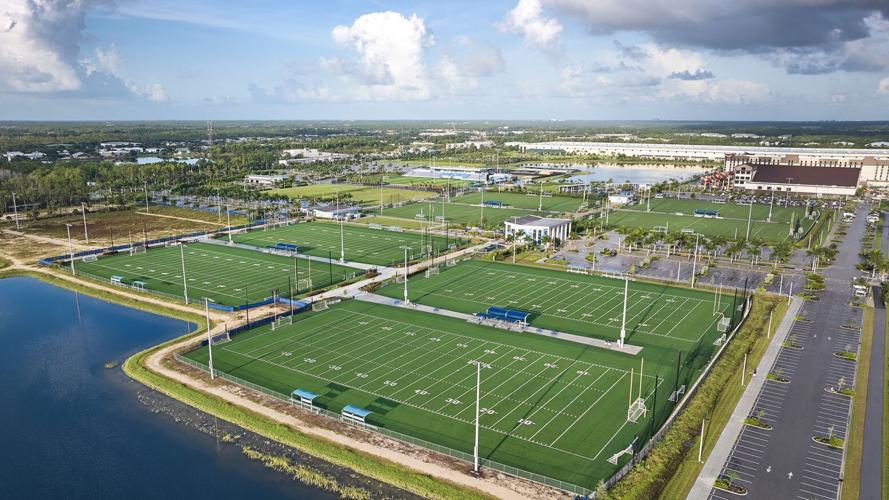
On the high side, the Paradise Coast Sports Complex in East Naples helped drive the economic benefits of sports tourism to almost $57 million from 33 qualified events during the 2024-25 fiscal year.
The sports complex drew more than 719,000 visits, with about one-third traveling from outside the region, staying two to four days and spending about $150 per day on lodging, according to data from the Naples, Marco Island, Everglades Convention and Visitors Bureau.
This represented a 12% increase year-over-year and 83% growth over three years. The complex welcomed nearly 195,000 unique visitors, averaging about 3.7 visits per person, according to the CVB.
In his quarterly presentation to the Collier County Board of Commissioners in late October, CVB Tourism Director Jay Tusa said that the PCSC ranked No. 22 statewide among 164 Florida sports venues in overall visitation, according to Placer.ai, an analytics company that collects geolocation data from mobile devices to generate foot-traffic insights and other location-based analytics.
“This reinforces its role as a regional hub for sports and recreation,” Tusa told the commissioners.
Commissioners had already expressed support for helping PCSC expand and grow as part of the tourism landscape. In July, commissioners voted unanimously to ask voters for a 1% tourist tax hike to fund the final phases for the complex, promote it and fund other tourism-related needs.
Phase 4 would add 11 multipurpose fields, restrooms and other facilities, and Phase 5 would include an indoor-sports fieldhouse for volleyball, basketball, ping pong, pickleball and other sports.
In the Nov. 3 general election, voters will be asked to increase the county’s tourism bed tax — Tourist Development Tax — by a penny, to 6 cents. If voters pass it, Collier will join 12 other Florida counties bringing in the maximum TDT imposed on visitors who lease rentals of six months or less, including hotels, Airbnbs, mobile homes, recreational vehicle parks and campgrounds. Because the state Department of Revenue found Collier qualifies as a high-impact tourism county, it can boost its 5-cent bed tax by a further penny.
In December, commissioners voted to spend $150,000 to educate voters regarding the November referendum.

The indoor water park at Great Wolf Lodge South Florida features 12 slides, a wave pool and a 300,000-gallon tipping bucket.
Great Wolf Lodge: something to howl about
Another high for Collier tourism was Great Wolf Lodge, which exceeded expectations in its first year of operations.
Great Wolf officials told The Naples Press in October that the 500-suite resort had served more than 500,000 guests during its first year, with 80% of those families traveling from outside Collier and Lee counties.
Alp Erol, assistant general manager of Great Wolf Lodge South Florida, said more than 6.5 million rides were taken on the resort’s 12 water slides, while the water park’s “tipping bucket” drenched visitors below with 300,000 gallons of water. He said 36,000 trips were taken on the indoor Adventure Park’s SkyRail zip line, and on the food and beverage side, more than 99,000 chicken tenders and 87,000 scoops of ice cream were served since the resort launched in late September 2024 at 3900 City Gate Blvd. N., near Collier Boulevard and I-75 (near PCSC).
The resort employs nearly 700 people, mostly full-time.

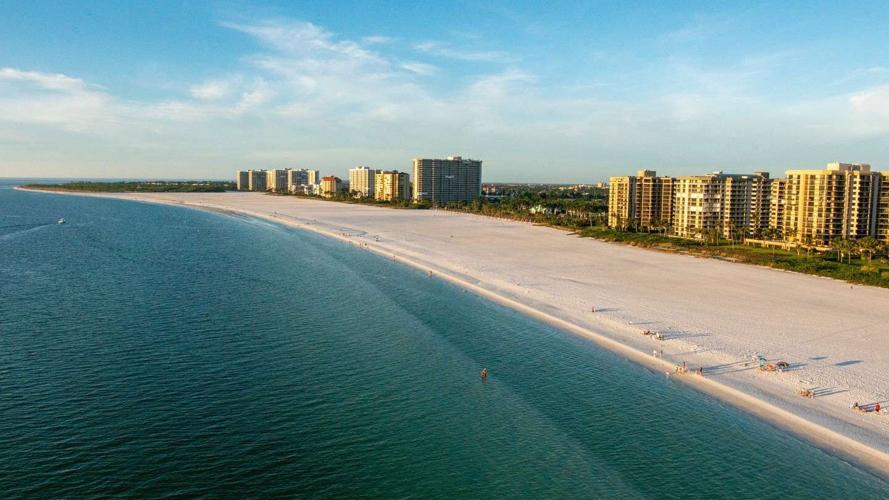
Beachfront condominiums line Marco Island’s shoreline, a key driver of Collier County tourism.
International visitors: nothing to shout about
On the low side, Collier County saw significant declines in international tourism during the 2024-25 season, punctuated by big decreases in Canadian visitors.
In February, tourism saw its first year-over-year declines of the season, with economic and border concerns — including tariffs — prompting a 23% decrease in Canadian visitors, usually a top market.
The trend continued through much of the season with softness in the market from European and Canadian visitors in particular, but with moderate increases in domestic visitors helping offset the international decline.
In his October report, Tusa told commissioners that tourism continues to be the county’s strongest economic driver despite a decrease in international visitors.
“We’re flat, but a lot of destinations are down or way down,” Tusa said. “So, I’ll take flat over down or way down.”
Promotional budget increased
Despite the market softness, the CVB’s initial promotion and advertising budget for the 2025-26 fiscal year was slated to be scaled back from $11 million to $6 million, which reflected the county’s “flat funding” policy that maintains previous base levels and excludes temporary boosts.
An additional $5 million in 2024 came from a one-time stimulus approved by the county to help the tourism industry recover from hurricanes Helene and Milton.
At a July meeting of the county’s Tourist Development Council, local business leaders expressed concerns about decreasing spending at a time when tourism was experiencing big drops. One local leader said business along Fifth Avenue South “fell off a cliff” this year.
Ultimately, in September the county approved the $11 million advertising and promotion budget as recommended by the TDC.
Tusa told the commissioners that the tourism climate has shifted and the extra funding was needed to “catch up” with demand created by more than 1,000 new hotel rooms added in recent years, plus another 600 opening in 2025.
He said global economic factors are outside local control, underscoring the need for continued competitive marketing to sustain tourism.
Funds for advertising and promotion come from the Tourist Development Tax and not property taxes. In December, Tusa told the TDC that TDT revenue had reached more than $49.8 million during the year to date.
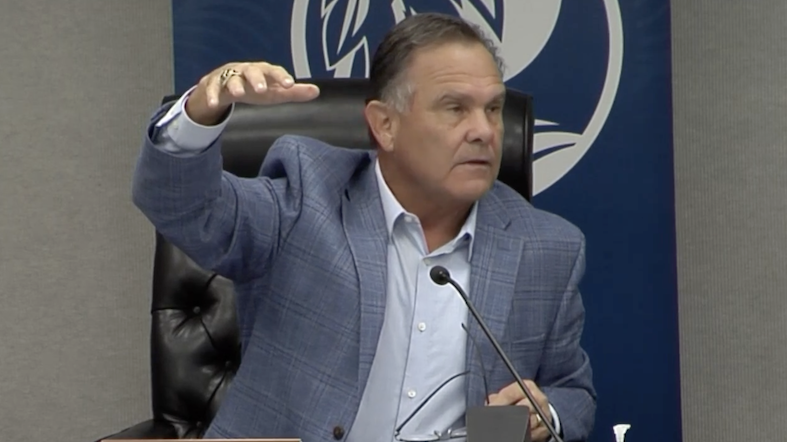
Tourist Development Council member Bill Kramer speaks during the Dec. 12 meeting, which advanced a proposal to transition the Naples, Marco Island and Everglades Convention and Visitors Bureau into a 501(c)(6) nonprofit.
Change in structure?
As 2025 drew to a close, the CVB was moving one step closer to a change in governance structure that would see it adapt from a county government division to a 501(c)(6) nonprofit.
The Tourist Development Council voted in December to accept the findings of a county-commissioned feasibility study and forward its recommendation to county commissioners for their consideration early in 2026.
Proponents of the change said the proposed nonprofit structure improves efficiencies, flexibility and responsiveness.
The change in governance also would expand funding opportunities for the CVB, which is currently funded through the TDT. That funding would remain in place under the proposed nonprofit model, according to the study, but the new structure would also allow the tourism division to pursue additional revenue through supplemental funding programs.
John Mullins, director of communications, government and public affairs for the county and the county manager’s office, said any further action depends on direction from the county commission.
“Should the board authorize the next steps, and once we have their input, we’ll start developing these components and ultimately return to the TDC for your review and recommendations on what’s presented,” Mullins said.
(0) comments
Welcome to the discussion.
Log In
Keep it Clean. Please avoid obscene, vulgar, lewd, racist or sexually-oriented language.
PLEASE TURN OFF YOUR CAPS LOCK.
Don't Threaten. Threats of harming another person will not be tolerated.
Be Truthful. Don't knowingly lie about anyone or anything.
Be Nice. No racism, sexism or any sort of -ism that is degrading to another person.
Be Proactive. Use the 'Report' link on each comment to let us know of abusive posts.
Share with Us. We'd love to hear eyewitness accounts, the history behind an article.