
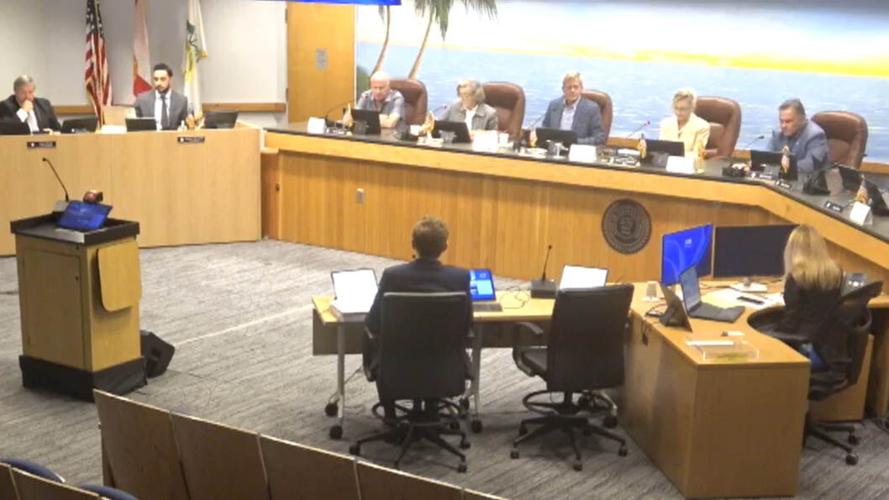


Naples City Council holds its final budget hearing Sept. 16. Council approved a $294.1 million fiscal 2026-27 budget and set the citywide property tax rate at 1.29 mills, up from 1.23 mills this year.
Naples City Council approved a $294.1 million budget, raising taxes slightly to cover increased police and fire personnel, rising union salaries and uncertainty over November’s property tax amendment.
At its final budget hearing Sept. 16, Council voted to increase this year’s 1.23 millage rate to 1.29 mills to generate $2.23 million more in operating revenue, including $1.15 million for public safety. There was no change from the first budget hearing Sept. 8.
The fiscal year 2026-27 budget is up $53.1 million from this year’s $241 million budget. The fiscal year begins Oct. 1.
During a presentation, City Finance Director Stefan Massol noted increases were needed to keep pace with the cost of goods and services, add fire and police personnel and cover negotiated union salary increases and benefits for the last year of the city’s three-year collective bargaining agreements. The Naples Police Department will receive $750,000 more, while an additional $400,000 was allotted for the Naples Fire-Rescue Department and its equipment.
“Those costs continue to rise and, therefore, the level of funding must be there to sustain those costs,” Massol said.
Increases also are required to maintain sufficient fund balance reserves to accommodate future economic conditions, he said, as well as continued emphasis on street repaving and other infrastructure. The city’s budgeting also has included a larger share of telecommunications services tax revenue.
The millage rate is the amount of property tax charged per $1,000 of taxable property value. A homeowner with $1 million in taxable property value will see city property taxes rise $60 to $1,290, while a resident with $5 million in taxable property value will pay $6,450, a $300 increase over this year.
Council set the aggregate millage rate at 1.3074 mills and the aggregate rollback rate at 1.2253 mills, the ad valorem tax rate that would bring in the same amount of taxes as last year, excluding the value of new construction. A millage rate above the rollback rate is considered a tax increase. The aggregate rate is a combination of the city’s general fund and the East Naples Bay and Moorings Bay taxing districts.

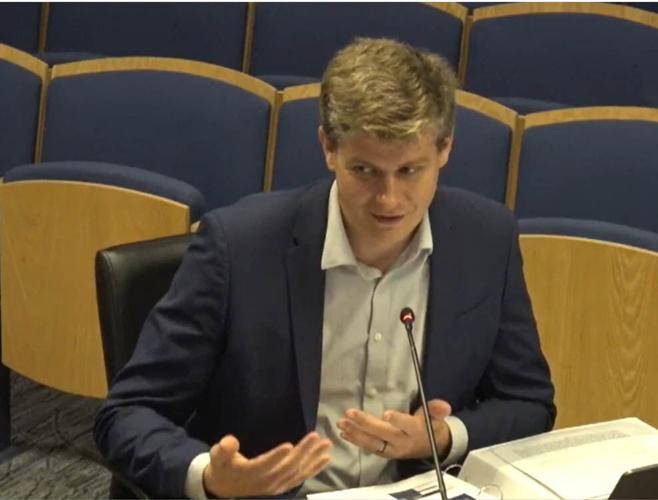
Naples Finance Director Stefan Massol discusses the city’s fiscal 2026-27 budget and property tax rates during the Sept. 16 final budget hearing. City Council approved a $294.1 million budget and increased the citywide millage rate from 1.23 to 1.29 mills.
The city’s taxable value rose 4.26% to $42.7 billion this year.
“You can see a slowing in the taxable value trend, really over the last three years,” Massol said. “While we are still in positive territory, you don’t have to look too far back to see there were many years of negatives following the Great Recession, so we have to be mindful of that possibility in planning our reserves.”
Across Florida, governments are ensuring budgets can withstand uncertainty over the property tax amendment voters will decide in November that could drastically reduce funds local governments rely on.
If passed, the amendment would increase nonschool property tax exemptions for primary homes from $25,000 to $150,000 in 2027 and $250,000 in 2028, with annual inflation adjustments beginning in 2029. It also would reduce the annual assessment cap on nonhomestead property from 10% to 5%.
Florida residents who qualify for a homestead exemption by Dec. 31, 2026, would be eligible for the increased exemption. Those who become residents after that date would receive the existing exemption when they qualify and become eligible for the increased exemption beginning in their fifth year.
The amendment also would place restrictions on how counties and municipalities use property tax revenue, while allowing it to fund public safety, infrastructure and several other specified government purposes.
Council also unanimously adopted a $400,015 budget for the East Naples Bay Taxing District and set its millage rate at 0.5000 mills. It set the Moorings Bay Taxing District budget at $46,250, with a 0.0125 millage rate.
No residents or businesses spoke during the public hearing.
(0) comments
Welcome to the discussion.
Log In
Keep it Clean. Please avoid obscene, vulgar, lewd, racist or sexually-oriented language.
PLEASE TURN OFF YOUR CAPS LOCK.
Don't Threaten. Threats of harming another person will not be tolerated.
Be Truthful. Don't knowingly lie about anyone or anything.
Be Nice. No racism, sexism or any sort of -ism that is degrading to another person.
Be Proactive. Use the 'Report' link on each comment to let us know of abusive posts.
Share with Us. We'd love to hear eyewitness accounts, the history behind an article.