




Southwest Florida conservation groups are celebrating a federal appeals court decision that preserves federal oversight of permits for development in sensitive wetlands.
In late March, the U.S. Circuit Court of Appeals in Washington, D.C., ruled that wetlands permitting authority should remain with federal regulators rather than the state of Florida.
Conservancy of Southwest Florida, Center for Biological Diversity, Defenders of Wildlife, Sierra Club, Florida Wildlife Federation, Miami Waterkeeper and St. John’s Riverkeeper were represented in the case by Miami-based nonprofit environmental law firm Earthjustice.
Conservation groups argued the state would fast track development that could threaten habitats of endangered species, including the Florida panther.
The court found the U.S. Environmental Protection Agency violated federal law in 2020 by allowing Florida to assume control of wetlands permits from federal agencies, including the Army Corps of Engineers. The late-March ruling upholds a previous decision issued in 2024.
Earthjustice Senior Attorney Christina Reichert said in a press announcement that the government had “tried a reckless scheme to fast track the destruction of wetlands under section 404 of the Clean Water Act.”

A Florida panther moves through natural habitat in Southwest Florida. Conservation groups warn weakened wetlands protections could threaten endangered species like the panther.
“The appeals court confirmed that the government can’t take shortcuts around our bedrock federal environmental laws,” Reichert said.
Amber Crooks, senior environmental policy advisor with Conservancy, said the decision reinforces key environmental protections at a time when development pressures on wetlands are increasing.
She referred to environmentally sensitive wetlands as “liquid gold,” emphasizing their critical role in supporting wildlife, as well as storing and filtering water.
Crooks said the ruling ensures the Army Corps of Engineers will continue to serve as the permitting authority for dredge and fill permits under Section 404 of the Clean Water Act.
“Practically, also, this means that all of the federal protections that exist, such as the National Environmental Policy Act, the Endangered Species Act and other federal laws will now be part of the decision-making process,” Crooks said. “Whereas, when the state of Florida had assumed the program, they did not have to be beholden to the federal laws in the same manner.”
Crooks said Conservancy’s objective with the lawsuit was about having the right standards in place.
“The program that the state of Florida had put together and that ultimately the EPA approved had so many fatal flaws in terms of the stringency for issuing a permit in wetlands, but also about the wildlife component, which was a big point in the case,” Crooks said. “The case is about having the highest standards in place and affording the wetlands these federal protections that were not being applied when the state had the reins.”

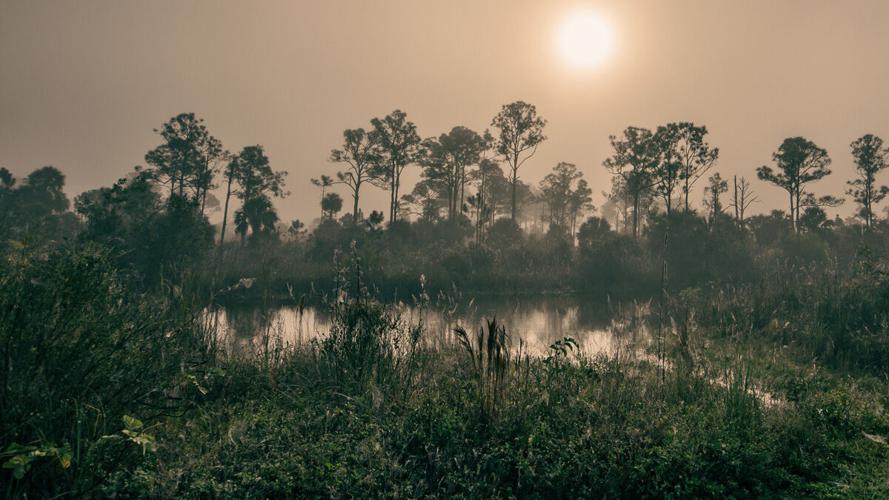
A view of Southwest Florida wetlands shows the ecosystem’s role in storing and filtering water. Conservationists call wetlands “liquid gold” for their environmental benefits.
The appeals court agreed, finding that the state’s permitting program “enabled Florida and the recipients of its permits to evade the (Endangered Species Act) exacting procedures for protecting listed species.”
The Florida Department of Environmental Protection, which had become the state’s main permitting entity, said it is “disappointed by the court’s ruling and is reviewing the decision to determine next steps,” according to a written response from Alexandra Kuchta, FDEP communications director.
While environmental groups praised the ruling, Crooks said Conservancy expects the state to appeal. Florida has 90 days to seek review from the U.S. Supreme Court.
(0) comments
Welcome to the discussion.
Log In
Keep it Clean. Please avoid obscene, vulgar, lewd, racist or sexually-oriented language.
PLEASE TURN OFF YOUR CAPS LOCK.
Don't Threaten. Threats of harming another person will not be tolerated.
Be Truthful. Don't knowingly lie about anyone or anything.
Be Nice. No racism, sexism or any sort of -ism that is degrading to another person.
Be Proactive. Use the 'Report' link on each comment to let us know of abusive posts.
Share with Us. We'd love to hear eyewitness accounts, the history behind an article.