

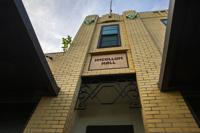


Fort Myers Community Redevelopment Agency is rebooting plans to restore historic McCollum Hall to a modern version of its glory years, between its opening in 1938 and the early 1970s, when a Black arts renaissance swept the U.S. along with civil rights upheaval.
A 15-page study on McCollum that the CRA generated through an artificial intelligence program examined both the economic feasibility and cultural importance of restoring the old Art Deco music, shopping and entertainment center in the Dunbar community along the Dr. Martin Luther King Jr. Boulevard corridor.
It found that McCollum is ripe for revival as a modern business and entertainment hub wired for the internet age. It also stated that its developers have an ethical mandate to weave the hall’s history into their plans, such as exhibits that pay homage to the realities of its segregation-era roots.
“The analysis demonstrates that such a project is not only commercially viable but also represents a profound opportunity for cultural and community revitalization,” reads the AI report “The Hall Revitalization: A Feasibility Analysis for McCollum Hall, Fort Myers, Florida.”
It highlights McCollum’s role in the Black arts movement, bringing famed jazz and blues musicians to Fort Myers on the Chitlin’ Circuit. Due to its architectural and cultural significance, McCollum was placed on the National Register of Historic Places in 2022.
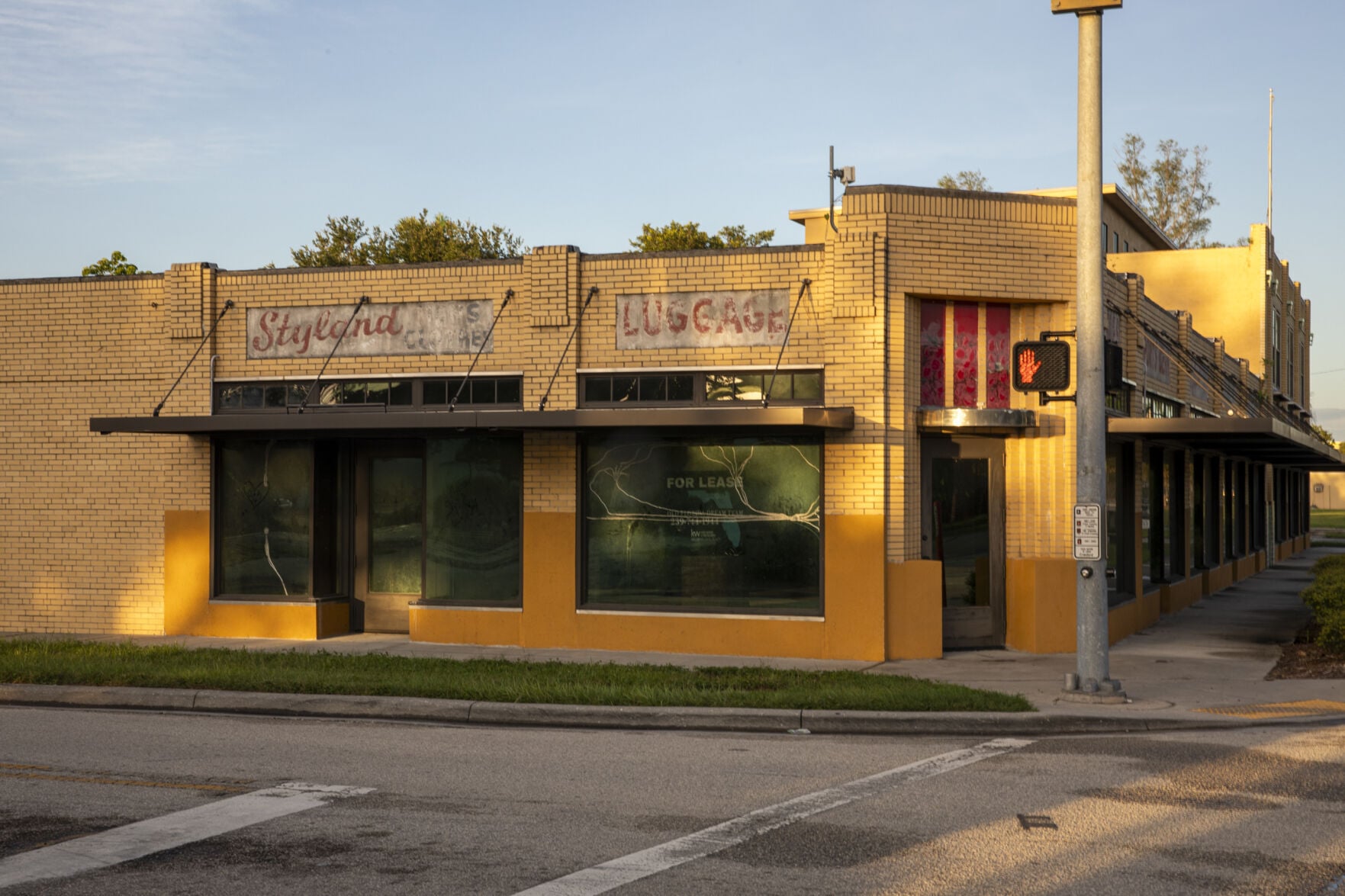
McCollum Hall, built in 1938 in the Dunbar community, is set for a new chapter blending cultural preservation with modern redevelopment.
The latest efforts to bring McCollum back to life come after the CRA and city of Fort Myers earlier this month dropped private development firm Alexander Goshen from the project. Miles Alexander, the firm’s principal, said that he will challenge the decision in court.
Now the CRA and city are planning to complete the restoration, which has come in starts and stalls, since the CRA acquired the property in 2008.
The AI report suggested the city work with a private developer like Goshen to help leverage diverse funding sources. But the CRA has already tried and failed several times to work with a private developer.
CRA spokesperson LaShaun Collier declined to comment on the specifics
of the AI-generated report, noting that the document does not represent any official plans.
It was generated for purposes of discussion as the CRA moves forward with a series of planned meetings in September and October to officially restart development efforts.
“The AI-generated report is one such tool: a draft exploration, not a consultant study or official plan,” Collier wrote in an email. “The goal was to help inform (the CRA Board of Commissioners) discussions and provide context on potential opportunities.
“The final direction of McCollum Hall will be guided by a structured public process, including three community meetings scheduled in September and October. We believe the voices of residents, along with professional expertise, are essential in determining how this historic property can best serve our community in the future.”

Inside McCollum Hall, sunlight shines through the vacant space as officials consider new uses for the historic venue.
The next CRA Board of Commissioners meeting is scheduled for Sept. 17 after its meeting on Aug. 27 was canceled.
This month the CRA also debuted a new website that will provide dates of public workshops and other information related to the restoration. Workshops are currently scheduled for Sept. 16 online at 11:30 a.m., Sept. 30 at the Quality of Life Center at 6 p.m. and Oct. 9 at Mt. Olive A.M.E Church at 6 p.m.
The AI report offered specific points on how to develop McCollum for maximum commercial and cultural impact.
Along with a restaurant and co-working space, it suggested building interpretive displays and design elements that offer moments of cultural reflection. One such feature could emphasize the rope line that was once intended to divide races in the Hall’s upstairs room.
“The history of the rope line offers a sensitive and poignant design element that can confront the past rather than erase it,” the report reads, calling it “a critical detail that must be acknowledged.”
The development effort also may face challenges such as installing new heating and air conditioning in the old building and meeting the rules and regulations for historic restorations.
The report outlined the trajectories of analogous revival projects throughout the U.S., including Hippodrome Theater in Richmond, Virginia, and Cook County Hospital in Chicago. It showed how McCollum could reopen in four or five years after several phases of development are complete.
(1) comment
Since it is an HISTORIC SITE and needs reviving BACK TO ITS HISTORY.BUT AS USAL THEY DON'T WANT TO HAVE THE ORIGINAL FAMILY MEMBERS.. INPUTS.. NOR FROM COMMUNITY MEMBERS EITHER..AS USAL THE CITY OF FT MYERS HAS THE FUNDING TO ACCOMPLISH THAT PROJECT.. BUT THEY WILL NOT DO IT BECAUSE IT IS IN THE DUNBAR COMMUNITY.
AND THEY WANT THEIR INVESTOR TO HANDLE IT AND THIS IS VERY INSULTING .
DUE TO THE FACT WE HAVE . PROMINENT BLACKS IN OUR NEIGHBORHOOD. NOT TO MENTION. THE OLDER PEOPLE 60 yrs of age need some where to go and be entertained.like we use to PLAY POOL AND DANCES AND JUST A PLACE TO COME TOGETHER AND HAVE A GREAT TIME WITH NO DRAMA..WE DO MOT WANT TO GO DOWNTOWN FT MYERS TO ENJOY OURSELVES. IF YOU GO BACK TO THE EARLY 80 'S THERE WERE ALWAYS NIGHTCLUBS ON MLK. NOW THEY ARE TRYING TO ERASE. ALL THE HISTORY..STOP PUTTING US LAST AND DEGRADING..DUNBAR FOR PROFIT
Welcome to the discussion.
Log In
Keep it Clean. Please avoid obscene, vulgar, lewd, racist or sexually-oriented language.
PLEASE TURN OFF YOUR CAPS LOCK.
Don't Threaten. Threats of harming another person will not be tolerated.
Be Truthful. Don't knowingly lie about anyone or anything.
Be Nice. No racism, sexism or any sort of -ism that is degrading to another person.
Be Proactive. Use the 'Report' link on each comment to let us know of abusive posts.
Share with Us. We'd love to hear eyewitness accounts, the history behind an article.