
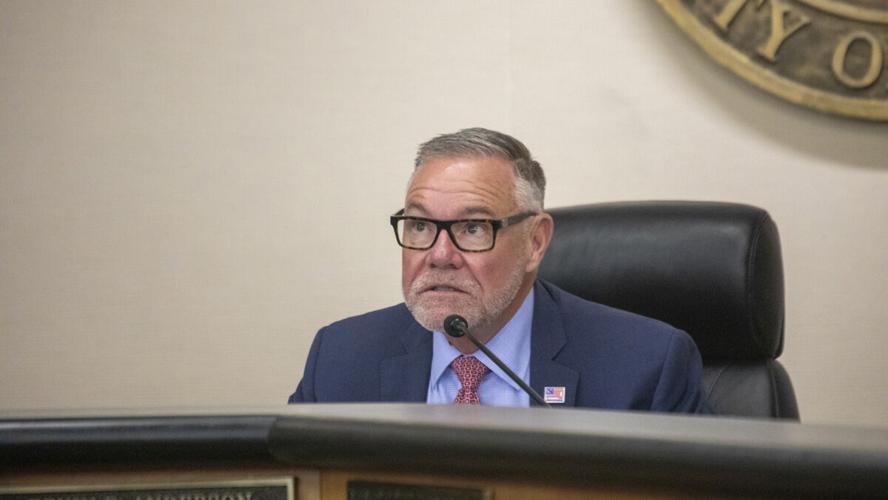




Fort Myers Mayor Kevin Anderson said the city's proposed fiscal 2027 property tax rate is intended to provide flexibility as council finalizes the budget. The final millage rate will be adopted after public hearings in September.
Fort Myers could raise its property tax rate by as much as 12.5% this year — although the final increase could be lower.
Fort Myers City Council voted 5-2 on Aug. 3 to set the city’s not-to-exceed millage rate at 7.3112 mills, up from 6.5 mills last year.
Council can still vote to lower the rate before adopting the fiscal year 2026-27 budget during public hearings in September. By law, however, it cannot raise the rate any higher.
Homeowners will see the not-to-exceed rate on their Lee County Truth in Millage notices, which are set to be mailed this month. The final rate will appear on tax bills in November.
One mill equals $1 per $1,000 of taxable property value. If council adopts the highest rate, the owner of a home with a taxable value of $100,000 would pay $731.12 in city property taxes, up from $650 last year.
Council also voted Aug. 3 to set a not-to-exceed 10% increase in the fire assessment fee, from $218 to $239.80, down from the 30% increase previously under consideration. Solid waste and stormwater management fees would remain the same or decrease from last year.

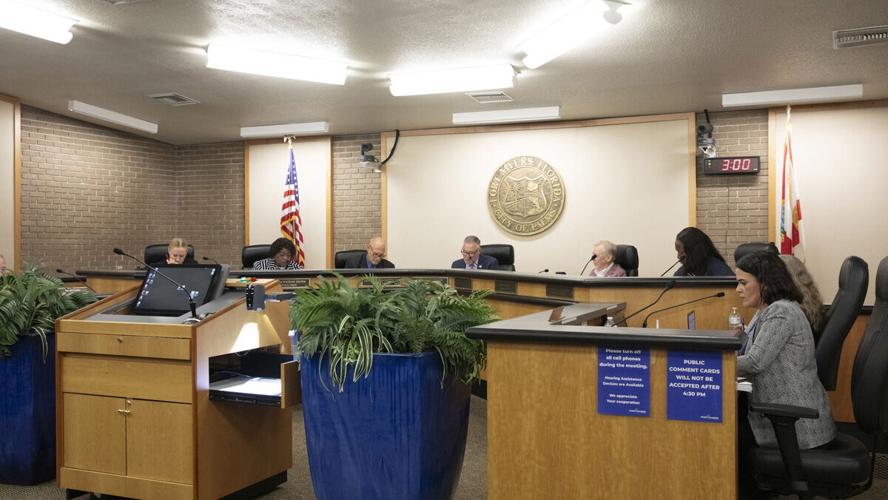
Fort Myers City Council meets Aug. 3 to establish a not-to-exceed property tax rate and begin final budget planning for fiscal 2027. The new fiscal year begins Oct. 1.
Council members said they approved the higher not-to-exceed rate to provide flexibility during budget planning in a year of flat projected revenues and rising expenses, while emphasizing they still intend to pursue the lowest possible rate before final adoption. The new fiscal year begins Oct. 1.
“This is just a flexibility move at the moment,” Mayor Kevin Anderson said.
If approved, it would mark the city’s first property tax increase after a decade of steadily lowering rates. Following the Great Recession, which began in December 2007, the city raised rates sharply, Financial Services Director Christine Tenney and other officials recalled. The city also cut wages, eliminated fire department positions and restricted police hiring.
This year’s potential increase would be less than half the size of the hike approved after the Great Recession, Tenney said.
“For the last 10 years we’ve got that down, we’ve made a lot of progress,” she said. “But here we are again today.”
Maintaining last year’s 6.5-mill rate — or even adopting the rolled-back rate of 6.6465 mills, which is designed to generate the same amount of property tax revenue as last year — would leave the city with a budget gap as it moves forward with capital projects, including a new police headquarters.
Among other capital projects, council members also agreed Aug. 3 to move forward with a $45 million bond issue, part of the $75 million in general obligation bonds voters approved in 2024 to fund parks and recreation improvements.

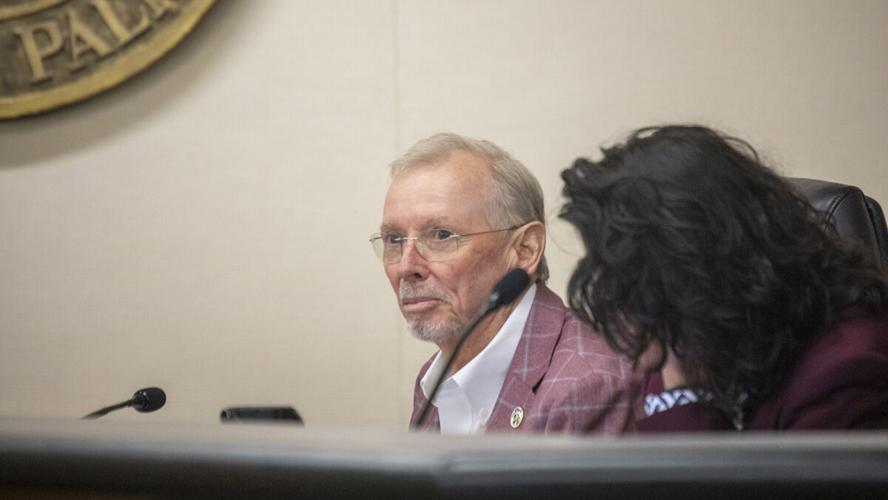
Fort Myers Councilman Fred Burson voted against the proposed fiscal 2027 property tax ceiling. He argued the higher rate shown on TRIM notices could influence voters ahead of the November election.
Council members Terolyn Watson and Fred Burson cast the dissenting votes on the 7.3112-mill not-to-exceed rate. Burson argued that seeing the proposed increase on TRIM notices could drive homeowners to support Amendment 3, a controversial property tax measure on the November general election ballot.
“They’ll all go to the polls hellbent on voting for it,” Burson said, adding that he believes raising taxes discourages growth.
Amendment 3 would increase the homestead exemption on nonschool property taxes to $150,000 in 2027 and $250,000 in 2028. It also would impose new restrictions on local property-tax revenue and require residents arriving after Jan. 1, 2027, to wait five years for the increased exemption.
Local government officials across Florida have warned the amendment could significantly reduce general fund revenue, forcing communities to offset the loss through higher fees, service cuts, reserve funds or a combination of those measures.
The amendment must be approved by at least 60% of voters casting ballots on the measure to take effect.
(0) comments
Welcome to the discussion.
Log In
Keep it Clean. Please avoid obscene, vulgar, lewd, racist or sexually-oriented language.
PLEASE TURN OFF YOUR CAPS LOCK.
Don't Threaten. Threats of harming another person will not be tolerated.
Be Truthful. Don't knowingly lie about anyone or anything.
Be Nice. No racism, sexism or any sort of -ism that is degrading to another person.
Be Proactive. Use the 'Report' link on each comment to let us know of abusive posts.
Share with Us. We'd love to hear eyewitness accounts, the history behind an article.