
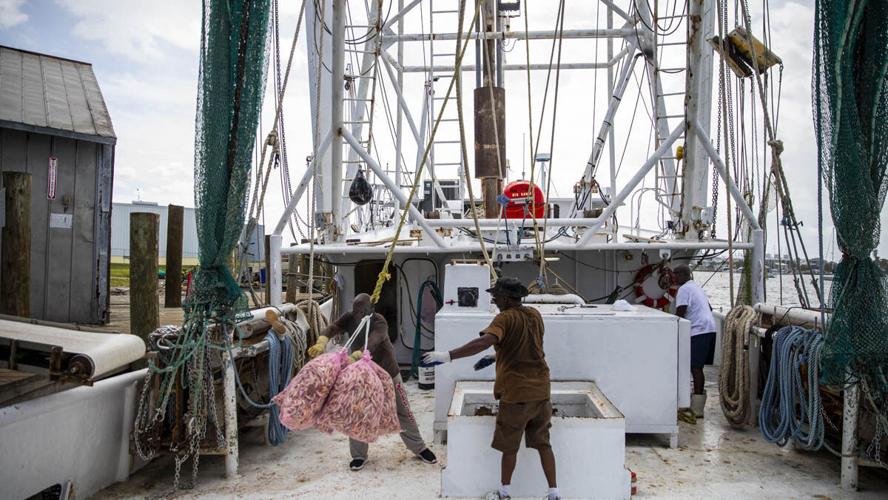

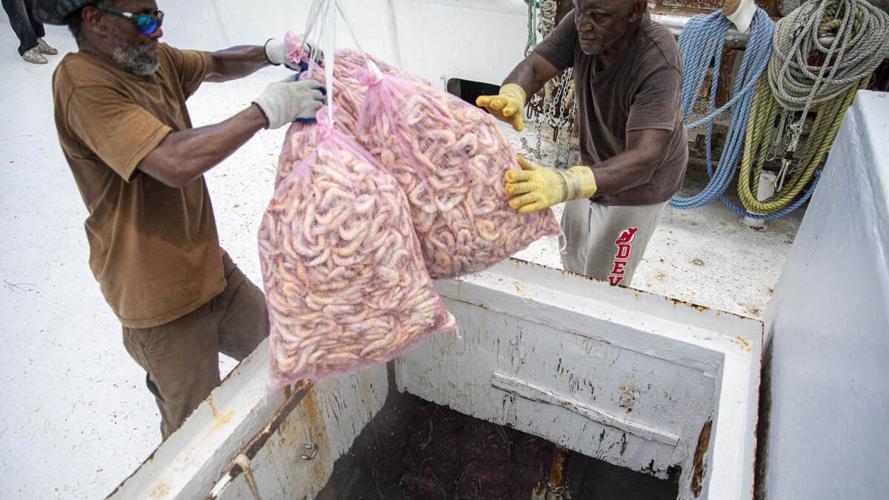
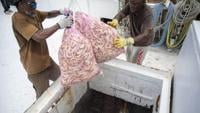

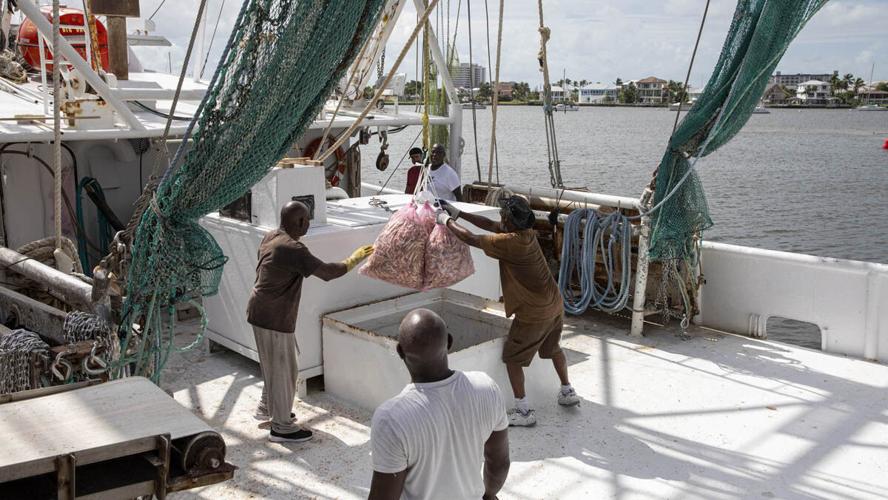
Crew members unload Gulf pink shrimp from the Big Daddy on San Carlos Island on Sept. 10. The vessel returned with about 55,000 pounds of shrimp after a 24-day trip to fishing grounds more than 100 miles offshore between Key West and the Dry Tortugas.
The Big Daddy shrimping vessel arrived at its San Carlos Island port Sept. 9, ready to unload 55,000 pounds of Gulf pink shrimp.
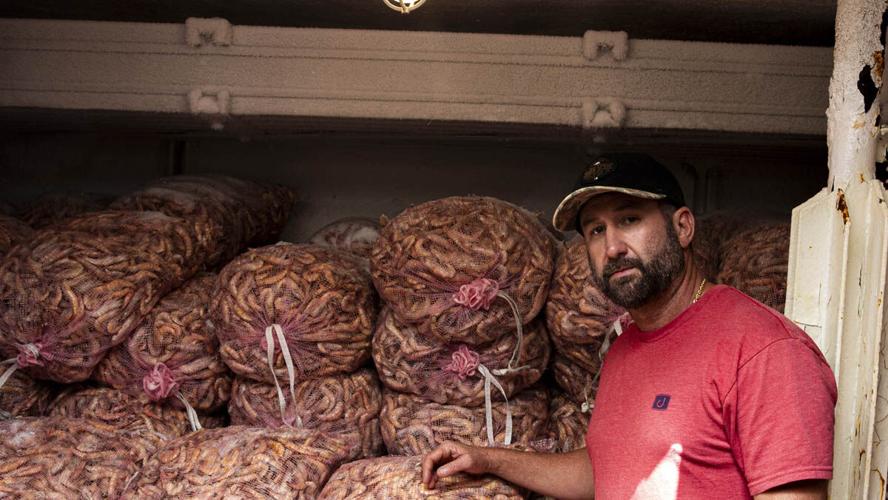
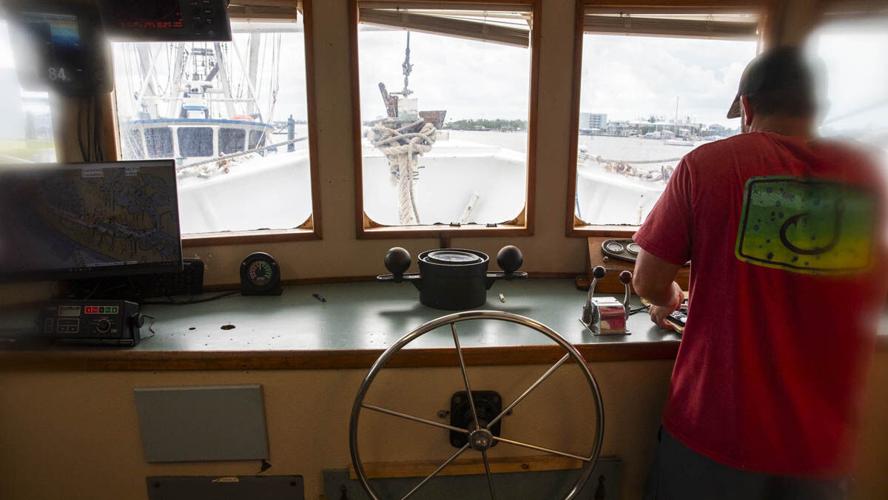
Capt. Michael Frost, 44, is deeply familiar with the event. A fourth-generation commercial fisherman, Frost has worked for his family’s shrimping operation — Trico Shrimp Co. — since childhood.
Trico closed after Hurricane Ian decimated the Gulf pink shrimp industry Sept. 28, 2022.
The industry remains centered on San Carlos Island in Lee County, where Matanzas Pass offers a port with convenient access to ever-reproducing seabed fields of “pink gold” southwest of the shoreline.
Like other independent contractors, Frost continues to harvest shrimp. He and his family members plan to rebuild their livelihood against increasing economic headwinds.
“It’s going to take a while to build back everything, but that’s our goal,” Frost said. “It’s just hard to walk away from something that you’ve been doing for so long.”
Meanwhile, Grant Erickson and his daughter Anna Erickson still run Erickson & Jensen Seafood, next door to the former Trico operation.
Since Trico closed, the more than 75-year-old Erickson & Jensen has been Lee County’s last remaining commercial shrimping operation.
Both the Ericksons and the Gala family, which co-owned Trico, run retail seafood markets near Fort Myers Beach.
The Ericksons, too, are determined to rebuild even though most of the San Carlos shrimping docks, their boats and other infrastructure were destroyed by Ian.

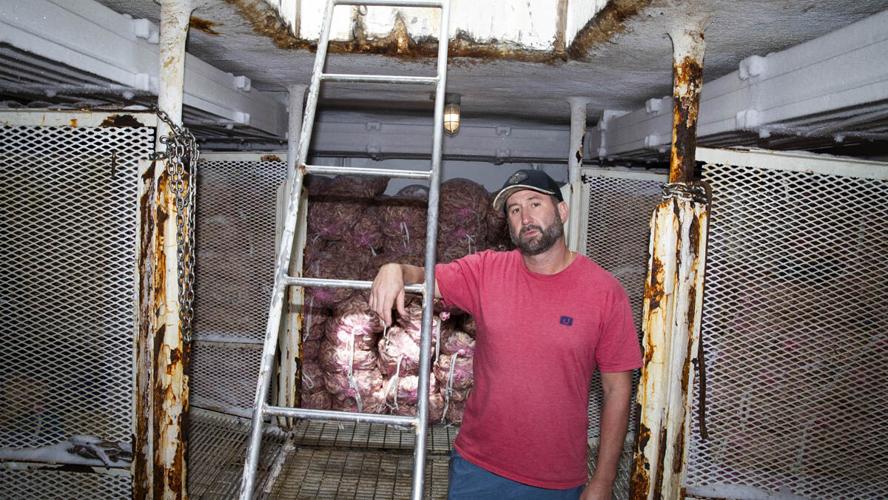
Capt. Michael Frost stands with bags of Gulf pink shrimp aboard the Big Daddy. The fourth-generation commercial fisherman continues harvesting shrimp as his family works to rebuild its livelihood after Hurricane Ian.
Economic headwinds
In many ways, things remain the same for Gulf shrimpers.
Bad weather, cheap competition and high fuel prices remain the industry’s top economic headwinds. Shrimpers often made a good living while navigating some combination of these conditions, but their effects have collectively intensified since Ian.
Public recovery efforts, including county plans to rebuild part of the docks where Trico once operated, have yet to materialize.
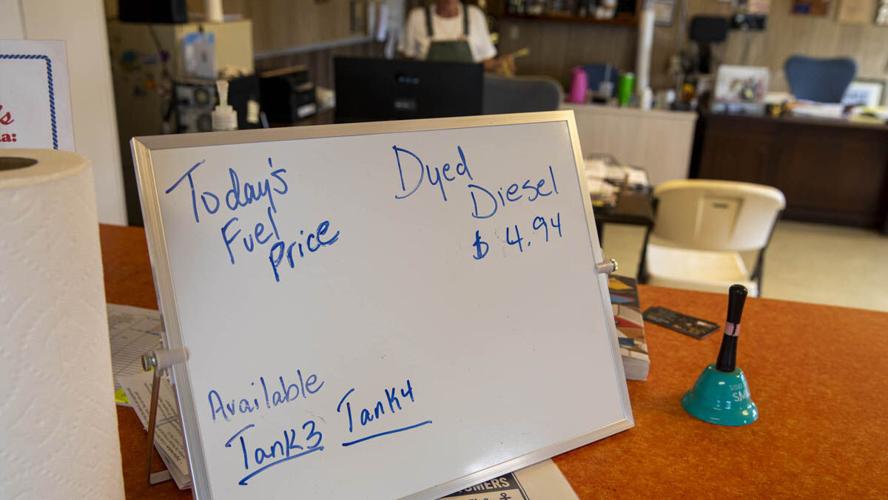
At the same time, the constant flood of cheap foreign shrimp into U.S. markets continues to drive down pink shrimp prices while the cost of diesel fuel — the lifeblood of shrimping vessels — shot up due to the U.S.-Iran War. The combination has gobbled up profits.
“The cost of the diesel is just so high right now combined with the fact that dockside prices they’re getting for shrimp is so low; it’s a horrible combo currently,” said Andrew Ropicki, a University of Florida assistant professor and Florida Sea Grant marine economics specialist.
Grant Erickson admits he’s considered selling his waterfront property.
“We could sell it,” he said. “We wouldn’t want for money.”
His daughter, Anna, 40, helped convince him otherwise. She plans to take over the business one day.

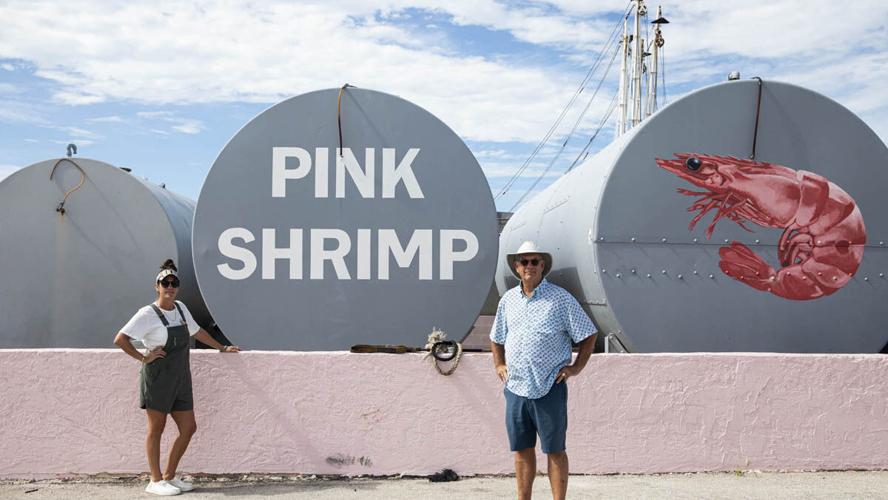
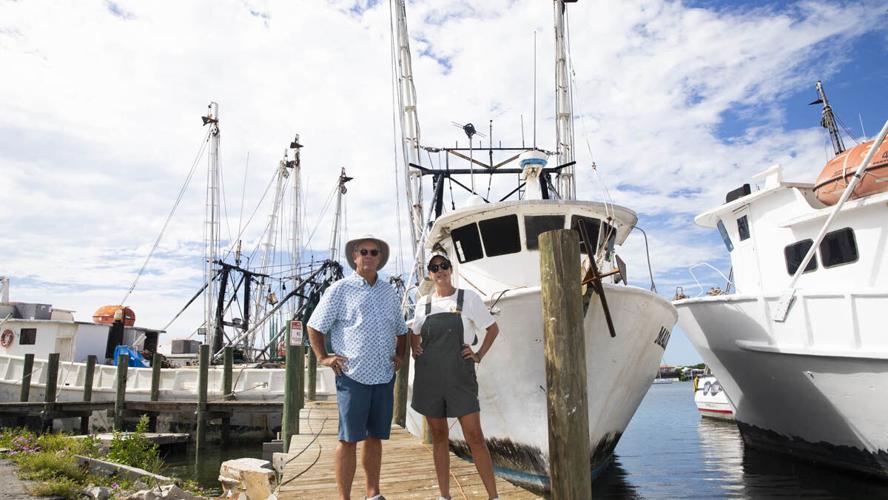
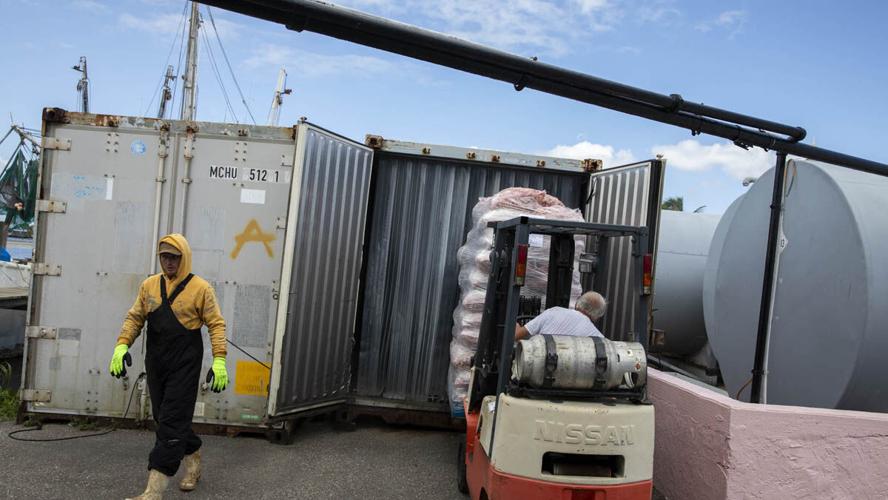
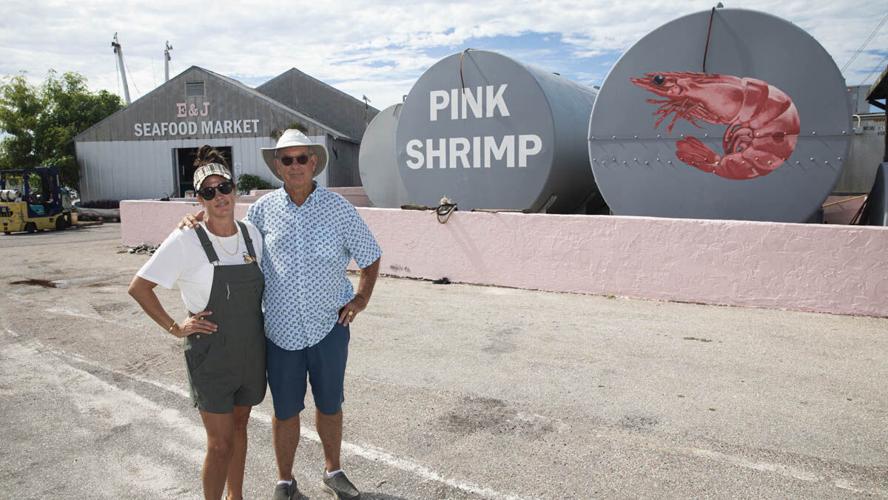
Anna Erickson and her father, Grant Erickson, stand near diesel tanks at Erickson & Jensen Seafood on San Carlos Island. High diesel costs combined with low dockside shrimp prices have put additional pressure on the local commercial shrimping industry.
“We’re a family here and you don’t give up on family,” she said. “So, we keep moving forward.”
She and her father count North Atlantic whalers among their ancestors, part of a commercial fishing tradition extended by blood and profession that migrated to the Gulf Coast for its sustainable pink shrimp beds.
“We like what we do,” Grant Erickson said. “We’re hanging with it. We’re progressing. We’re changing. We’re making the best of it, is what it amounts to.”
San Carlos Island remains Florida’s dominant pink shrimp port but is operating at a fraction of its pre-Ian capacity, along with other Florida west coast shrimpers.
In 2021, 8.9 million pounds of pink shrimp worth $27.8 million were harvested off Florida’s west coast, NOAA Fisheries data shows. The Florida Department of Agriculture named Lee County the second-highest-grossing commercial landing site for saltwater seafood in the state that year, primarily due to pink shrimp harvests. It was outranked only by perennial top producer Monroe County, which includes the Florida Keys.
By 2024, Florida’s west coast pink shrimp harvest fell to 4.1 million pounds worth $8.1 million. That year, Lee’s Department of Agriculture ranking fell to ninth place behind Monroe, Pinellas, Hernando, Duval, Brevard, Collier, Bay and Hillsborough counties.
NOAA’s preliminary numbers for 2025 show the pink shrimp harvest at 5.7 million pounds at a value of $12.8 million.

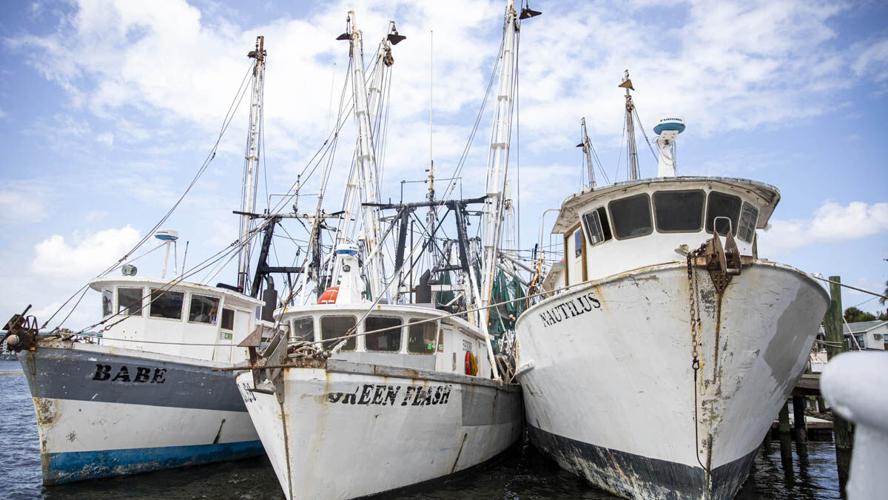
Commercial shrimp boats are docked at Erickson & Jensen Seafood on San Carlos Island. The more than 75-year-old company is Lee County’s last remaining commercial shrimping operation following Trico Shrimp Co.’s closure after Hurricane Ian.
New retail markets
The path to recovering ground lost to Ian isn’t certain to Erickson, but the shrimp still are.
“The shrimp are still there and there’s as much as there was in the so-called good old days,” he said. “The sustainability is tremendous. That’s what I base my whole life and career on right there.”
Lee County’s commercial fishery negotiates recovery daily while trying to convince consumers and stores to more often pay for superior — sweeter, healthier, local — shrimp.
Erickson & Jensen reported bringing in about $1 million per month in revenue before the storm. Getting about half that back has required some changes.

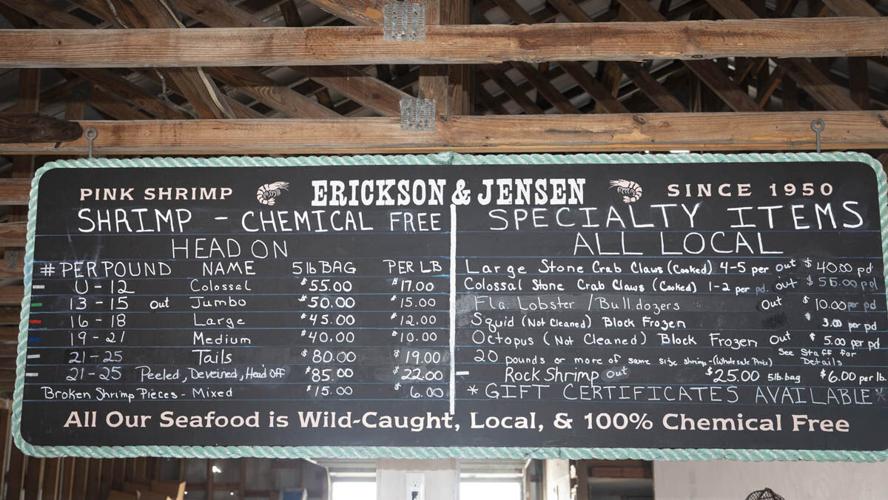
A seafood price board at Erickson & Jensen Seafood lists Gulf pink shrimp and other wild-caught local seafood. The company added an on-site retail market as it works to rebuild revenue lost after Hurricane Ian.
Profits from the company’s traditional wholesale operation were difficult to come by after the storm. The business made room for a new daily, on-site retail market that is helping make up the balance. E&J Seafood Market now shares space in the building where bags of shrimp are unloaded by working hands and a conveyor belt.
Customers can purchase all sizes of pink shrimp, from medium to colossal, along with other wild-caught, local seafood, such as stone crab claws, Florida lobster and squid.
The market also has introduced peeled and deveined shrimp in the hope that it will be more saleable, especially for restaurants, than the whole-shrimp varieties.
They are considering adding food trucks to the mix, too, Anna Erickson said.
The Trico Shrimp Co.’s Gala family also reopened its pre-Ian seafood market in a new location. Big Daddy’s Seafood Market is open daily on San Carlos Boulevard just before the Matanzas Pass bridge.

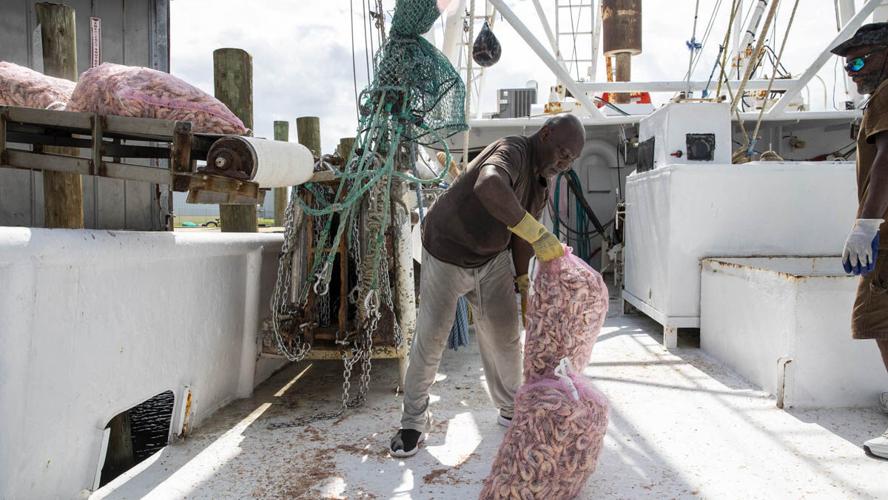
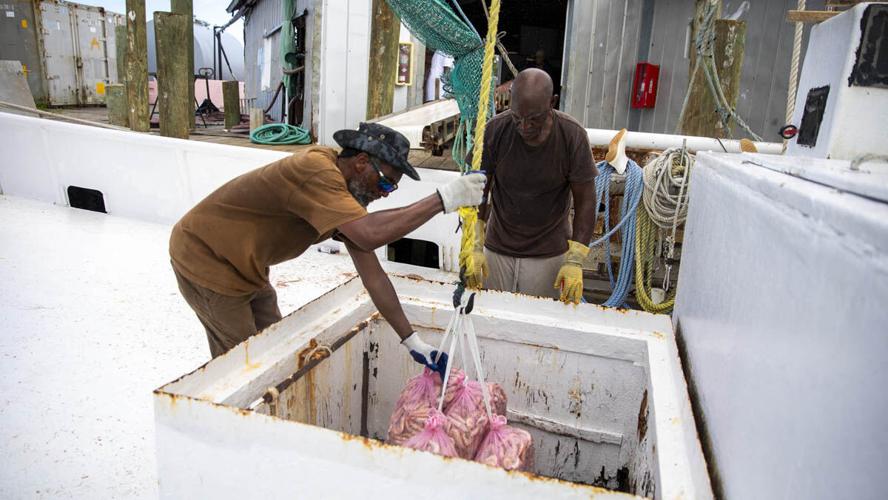
Crew members lift bags of Gulf pink shrimp from the refrigerated hull of the Big Daddy on San Carlos Island on Sept. 10. The shrimp are flash-frozen in brine at sea and stored at about 5 degrees below zero until the vessel returns to port.
In port
Frost also is finding ways to navigate the high fuel costs by cutting harvest trips short. They used to last a month or more, but on the last outing, the crew returned after 24 days.
The crew harvested prime pink shrimp beds more than 100 miles offshore between Key West and the Dry Tortugas. Crews trawl at night and sleep during the day. The shrimp are immediately flash-frozen in brine and stored in the hull at about 5 degrees below zero.
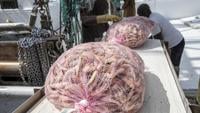
The morning after their return Sept. 10, crew members were busy pulling 50-pound bags of shrimp from the hull on a rope, four bags at a time, and lifting them onto a conveyor belt.

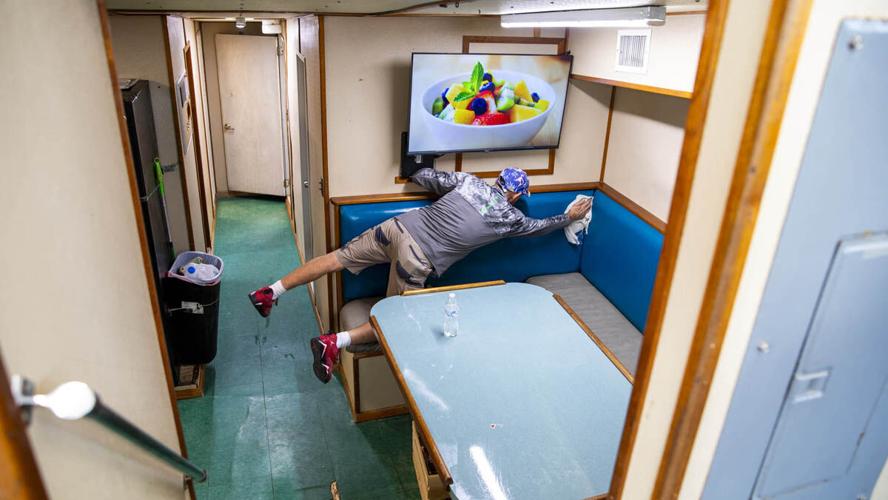
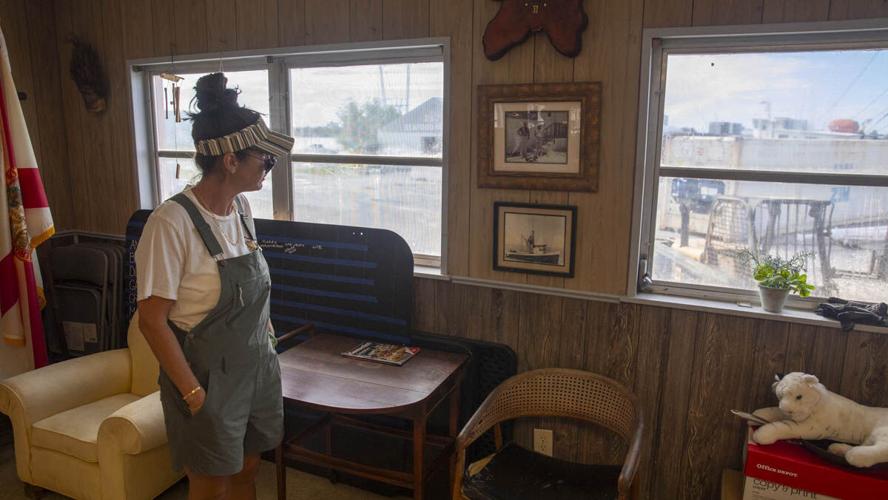
Big Daddy crew member Wayne Romano cleans the vessel’s galley while in port on San Carlos Island on Sept. 10. Romano has worked with Capt. Michael Frost for about two decades and said the solitude at sea is one of his favorite parts of the job.
Down in the galley, Bonita Springs resident and longtime crew member Wayne Romano, 63, cleaned a tabletop to a spotless shine.
Romano said he was homeless before starting work for Frost some two decades ago, a job that afforded him a mobile home and a truck.
Like Frost, the solitude at sea is one of his favorite parts of the job, after the income.
“Out there I think it’s my peace,” he said.
Frost and his crew spend about a week on land before setting out again.
“By the time you get used to everything it’s time to go out fishing,” Frost said. “That’s my routine for the whole year.”
Foreign shrimp
Commercial fishing families flocked to the area after discovering its fertile pink shrimp beds around 1950. The shrimp became the area’s signature seafood product but have faced a series of challenges over the years, including environmental regulations.
The most serious challenge emerged as aquaculture technology improved beginning in the 1980s. In subsequent decades, low-cost production in foreign countries flooded the market with farm-raised shrimp.
More than 90% of shrimp consumed in the U.S. is imported, much of it farm-raised. India supplies the most, along with countries such as Ecuador, Indonesia and Vietnam.
Deborah Long, spokesperson for the Southern Shrimp Alliance, said foreign producers benefit from lower labor costs and less stringent safety and environmental standards, and she raised concerns about the use of chemicals banned under U.S. rules.
Waning profits have convinced some shrimp-boat operators, often independent contractors, to shorten their trips or not go out at all.

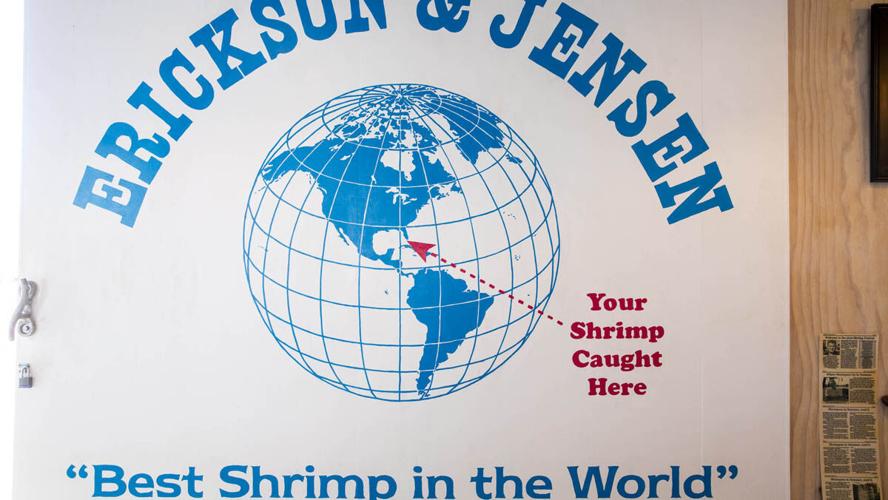
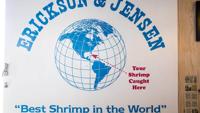
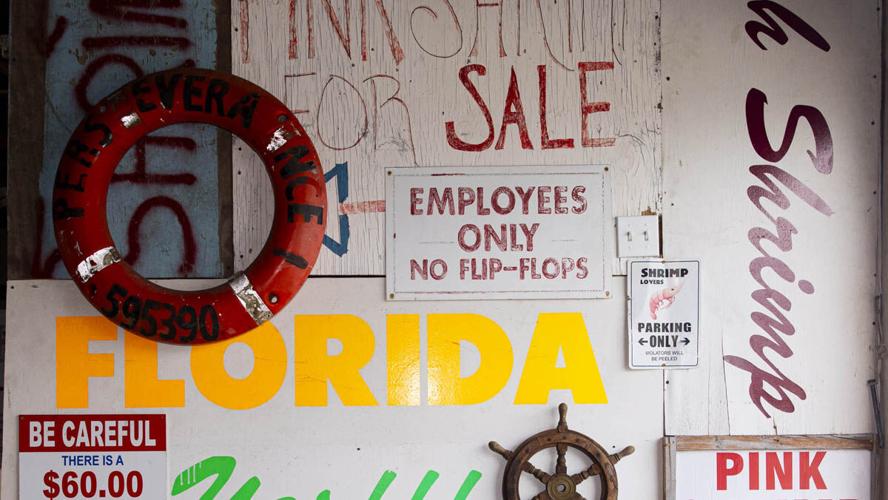
A sign at Erickson & Jensen Seafood highlights the San Carlos Island company’s Florida shrimp. Local shrimpers are trying to persuade consumers and restaurants to choose wild-caught Gulf pink shrimp over lower-priced imports.
“At today’s low value of shrimp and high costs of production, they’re making the economic choice to stay tied to the dock,” Long said. “It’s not that the shrimp aren’t there and ready to be plucked.”
Long and shrimping companies are also looking for ways to promote Gulf pink shrimp by educating consumers about their superior qualities.
Some industry professionals are optimistic that the new U.S. Department of Agriculture Office of Seafood, established in April 2026, will play a role in promoting the Gulf pink shrimp industry and other U.S. fisheries, support fair trade practices and educate consumers. The office supports President Donald Trump’s 2025 Restoring American Seafood Competitiveness executive order, which states that the U.S. government “must address unfair foreign trade practices, eliminate unsafe imports [and] level the playing field that has benefited foreign fishing companies.”

Grant Erickson and his daughter, Anna Erickson, stand at the docks of Erickson & Jensen Seafood on San Carlos Island. Anna Erickson plans to eventually take over the family business as it continues rebuilding from Hurricane Ian.
Lee County’s plan to rebuild docks
Most of the San Carlos Island shrimp docks were destroyed by Ian. The Ericksons have continued to build out the docks immediately in front of the company’s main office.
Lee County officials plan to redevelop part of the destroyed docks next to Erickson & Jensen, where Trico used to operate, on 5.5 acres of county-owned property called San Carlos Island Maritime Park.
The San Carlos Island Working Waterfront Resiliency and Emergency Marine Operations Project is expected to use $7.5 million in federal funds awarded in June 2024 by Gov. Ron DeSantis. The county is seeking more federal funding for the project.
It is designed in part to provide space for shrimping companies to lease for mooring and offloading shrimp boats, improving capacity on the waterfront.
At the same time, it supports construction of a barge landing for county marine and disaster response operations, county staff said.
“We’re just waiting to see what’s going to happen,” Frost said. “Is it going to work? How long is it going to take to do it?”
County staff said construction on initial improvements is expected to be complete by summer 2028, but it’s not clear whether that will include shrimp boat mooring facilities.
Officials said they have struggled with a combination of permitting and grant money deadlines that have delayed work.
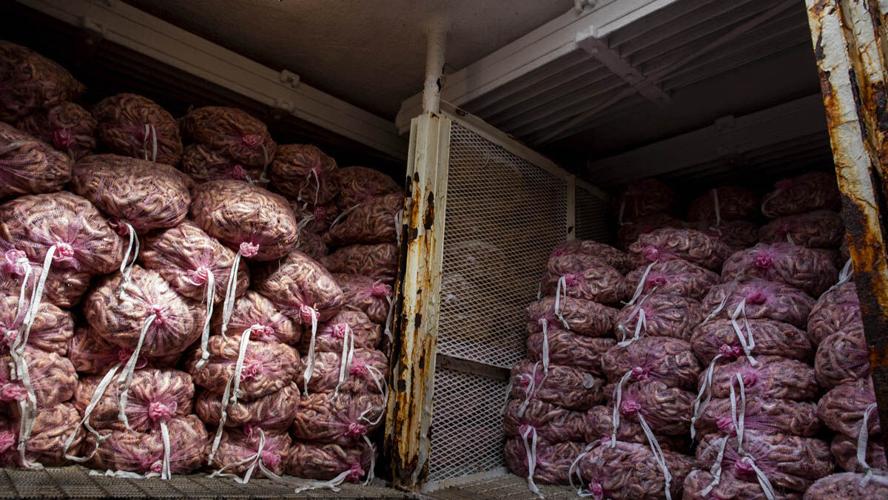
Gallery: Southwest Florida shrimpers fight to stay afloat
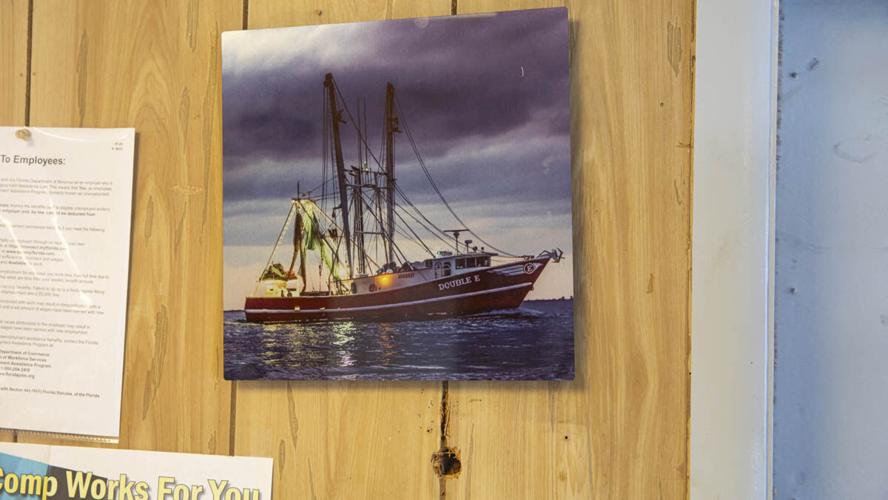
Southwest Florida’s Gulf pink shrimp industry is still rebuilding four years after Hurricane Ian devastated San Carlos Island. Go aboard the Big Daddy and inside Erickson & Jensen Seafood as shrimping families unload their catch, adapt their businesses and fight economic headwinds.
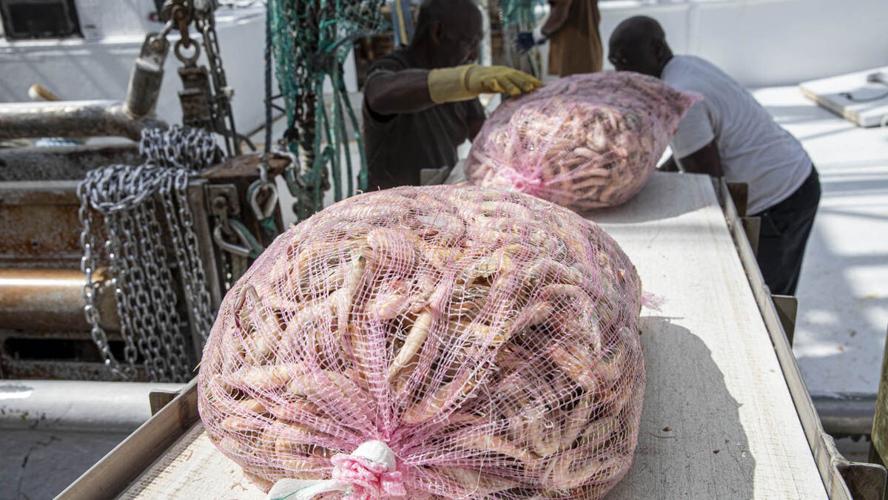
Bags of Gulf pink shrimp move along a conveyor as the Big Daddy’s catch is unloaded on San Carlos Island on Sept. 10. The shrimp are flash-frozen in brine at sea and stored in the vessel’s hull at about 5 degrees below zero until returning to port.
The county’s website describes phase one as including upland work on driveways, parking areas, drainage and a new seawall. Phase two includes dredging to support mooring and barge landings.
Lee Commissioner David Mulicka declined an interview request for this article but issued a statement on the project.
“As the district commissioner representing San Carlos Island and Fort Myers Beach, I’m pleased to be a part of the rebuilding of the historic working waterfront at San Carlos Island Maritime Park,” he wrote.
“Lee County has a long history of supporting the local shrimping community, and the facilities we will provide will help the industry thrive in Southwest Florida. The project has been complicated, and the state and county are making a large investment, so we thank everyone affected for their patience.”
(0) comments
Welcome to the discussion.
Log In
Keep it Clean. Please avoid obscene, vulgar, lewd, racist or sexually-oriented language.
PLEASE TURN OFF YOUR CAPS LOCK.
Don't Threaten. Threats of harming another person will not be tolerated.
Be Truthful. Don't knowingly lie about anyone or anything.
Be Nice. No racism, sexism or any sort of -ism that is degrading to another person.
Be Proactive. Use the 'Report' link on each comment to let us know of abusive posts.
Share with Us. We'd love to hear eyewitness accounts, the history behind an article.