
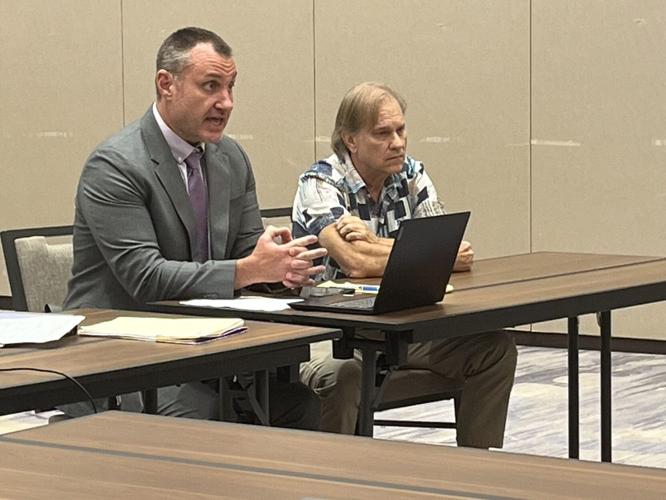
When Naples designer Dave Wainscott was fined $24,000 in 2023 for using a deceased architect’s seal, it was the highest fine meted out in the history of the state Board of Architecture and Design.
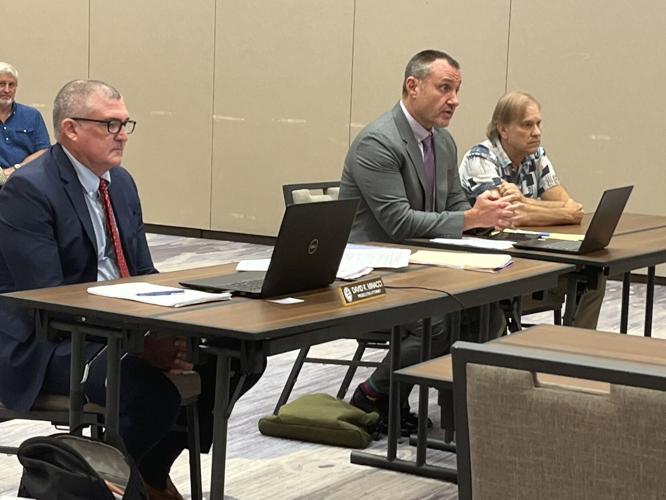
On July 29, during a probable-cause hearing in Tampa, a five-member panel of the state Board of Architecture and Design unanimously recommended a $189,000 fine against Dave Wainscott for a second offense — this time for using the seal of 91-year-old Gene Cravillion, who has lived in a North Naples memory care facility since August 2022 and has had dementia since 2012. Wainscott, whose record of unlicensed activity spans more than 30 years, was charged with 63 counts related to the unauthorized use of Cravillion’s seal.
The state board’s case against 25 Naples designers, contractors and businesses was investigated by the board’s investigator, Melissa Minacci. They were issued cease-and-desist letters by the state Department of Business & Professional Regulation in January. All were involved in some way — some unaware of the fraud — because many hired Octavio Sarmiento, of ASSA (Agencias Sarmiento S.A.), a Naples permit and plan firm, who used Cravillion’s seal and signature to enable them to obtain building permits. The state panel said they should have used more due diligence.
The case also is being investigated by the FBI and has affected more than 400 homes and commercial buildings throughout Collier County, 76 on Marco Island and five in Naples.The exact number hasn’t been disclosed.
“There’s an awful lot of harm that has been caused and that is yet to be caused,” said panel member Miguel “Mike” Rodriguez. “We … need to send a very clear message that this is not tolerated.”
A letter Wainscott wrote to Collier County building officials says he went to a homeowners’ house for an X-ray structural assessment and Cravillion also came for the inspection; he did not. The homeowners said Wainscott introduced himself as an engineer.
The digital seal on building plans verifies the identity of a state-registered architect and confirms that the documents are authentic and meet local, state and federal codes for safety and structural integrity. However, architects are required to be involved in the project from start to finish — something that did not happen in this case.
Continuing pattern
In November 2023, Wainscott was fined $24,000 for using deceased architect Leonard LaForest’s seal 50 times on Marco Island and elsewhere more than a year after his death — and more than three years after LaForest’s license was suspended. Records show Wainscott’s mother-in-law, Christine Ritter, notarized documents saying LaForest signed the documents in her presence — although he’d been dead 86 days; she was never disciplined and has since died.
Because it was Wainscott’s second violation for unlicensed architecture, the board’s prosecutor, David Minacci, sought a $3,000 fine per count, noting he’d used the seal 30 times in Collier County to obtain permits and 50 times on Marco Island.
Wainscott’s attorney, James Kurnik II, told the panel that the fraud stemmed from a contract Wainscott had with Sarmiento. He said Wainscott has since sued both Sarmiento and ASSA and has already spent $100,000 to hire a new engineer to review and properly seal all the plans that previously bore Cravillion’s seal.
Wainscott’s lawsuit alleges Sarmiento and ASSA jeopardized projects, causing nearly $106,000 in losses and damage to Wainscott’s reputation. In its legal response, ASSA denied any wrongdoing.
Panel members didn’t think the lawsuit mitigated what Wainscott did, noting he’d just separated himself by creating another layer, a contract and should have done more due diligence.
Minacci likened it to Wainscott opening a legal services firm in Fort Myers and telling clients he has a Tallahassee attorney who will sign complaints and demand letters. After meeting with clients, he said, Wainscott drafts a complaint or demand letter and gets an attorney to sign off on it.
“The Florida Bar would have a problem with that,” Minacci said.
After the hearing, Wainscott said, “It wasn’t us doing it, I paid someone to do it.” Kurnik contended, as he did at the hearing, that Wainscott was a victim, “wasn’t the bad actor” and shouldn’t be fined.
Permitting firm owner faces federal prison
The panel recommended the highest fine, $425,000, for Sarmiento, Cravillion’s last business partner. Neither Sarmiento nor his attorney showed up for his hearing and he didn’t answer correspondence, or emails from The Naples Press.
The prosecutor and panel noted Sarmiento helped Wainscott, other designers and firms obtain permits with Cravillion’s signature and seal. Sarmiento is charged with 107 counts — 53 counts of practicing as an architect, 53 counts of presenting an architect’s license and one count of using the title of an architect on his website.
Minacci said he was involved in “hundreds” of applications, took continuing education courses under Cravillion’s name and went to the memory care facility to get Cravillion to renew his license last November, extending it to 2027. Minacci suggested the maximum fines for each count, $3,000, $5,000 and $1,000.
“He could be in prison for two years,” Minacci said of the pending FBI investigation.
Rodriguez said of Sarmiento: “He was known to everybody as the go-to for architecture.”
Rodriguez cited concern that Sarmiento wasn’t at the hearing, wasn’t privy to their discussions and warnings and “wouldn’t stop” the fraudulent activity.
“The building department completely missed it,” Rodriguez said of Collier County only warning contractors, businesses and homeowners about Cravillion’s signature and seal and not Sarmiento, Wainscott and 23 others using it.
Miami-Dade County, which was alerted to the fraud but not affected, was the only county that issued an online warning listing all 25 parties involved.
The recommendations for Wainscott, Sarmiento and seven others could go before the full 11-member board in October to be finalized. If the state can serve them and they agree to the settlement proposal or don’t respond within 21 days of service, Minacci said they will be on the October agenda. If the state can’t serve them, or they elect a formal hearing, the cases probably won’t be heard in October.â¯
Hundreds of homes affected
Since January, when the state alerted governments that Cravillion’s seal was being used fraudulently, an investigation by The Naples Press showed hundreds of stop-work orders halted construction countywide and homeowners and builders were advised to hire a new architect or engineer for residential and commercial projects stamped with Cravillion’s seal. Collier building officials said they’d have to review 200,000 permit applications dating to August 2022 but initially focused on 189 permit applications signed by Cravillion that were recently closed or active this spring and asked that they all hire a new engineer or architect.
Lawsuits are pending or settled, and several firms were called before code-enforcement boards and the county Contractors’ Licensing Board. Nova Homes of South Florida, which used Dave Wainscott Designs, immediately severed ties, saying it was victimized twice by Wainscott using LaForest’s and Cravillion’s seals.
During the hearing, James Allen, of J.D. Allen & Associates Inc., Cravillion’s former business partner, testified Cravillion was being paid $400 to $500 for each signed and sealed plan, a charge many architects say is far too low. He testified Cravillion was taken advantage of.
Allen cited a design-build exemption, whichâ¯allows a licensed contractor to perform both the design and construction of a project, without requiring a separate architect or engineer for certain aspects of the design.â¯Minacci said Allen admitted to three counts and the panel agreed to recommend a $9,000 fine, $3,000 for each count.
Testimony showed Nestor Garcia, of Nestor Garcia Design, took a $200 “finder’s fee” off each $800 payment by Santiago Pinilla, of SP Drafting LLC, to Sarmiento after referring Pinilla to Sarmiento. The panel accepted Minacci’s recommendation to fine Garcia and Pinilla $3,000 each.
Others recommended for fines were:
Carlos Barbato, of Thinline Group LLC, $6,000
Luis Sanchez, of A1 Services Construction & Renovation Inc., $1,500
Linda Levin, of Argon Development Co. LLC, $18,000
Isaiah Trujillo, of Tru Drafting & Design Inc., $3,000
In addition, Juan Carlos Robalino, of JC Robalino Inc., avoided a fine and was ordered to cease and desist practicing architecture without a license. Records show the case against Drafting Design of Naples was closed June 27, marked “legally insufficient.”
Cases against Alba Perez Toscano, of The Toscano Group LLC, and Gregory Ulrich, who operates KGT Builders Inc., were closed without a finding of probable cause and Diego Bustamante, who operates Archie BIM Design, was issued a notice and order to cease and desist.
Fines won’t go to architect, homeowners affected
“My greatest concern is his dad’s estate is entitled to that money, not the state of Florida,” Minacci told the panel, referring to Cravillion.
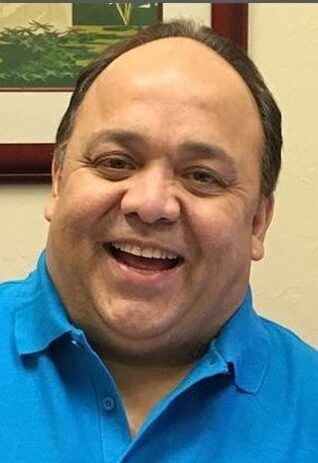
Tom Cravillion, who traveled from Wisconsin to Tampa with his wife to watch the hearing, said afterward that the fraud damaged his father’s reputation as an award-winning, well-respected architect in Wisconsin, who was involved in building hospitals, schools, jails, prisons, nursing homes and health care facilities and homes in Naples. He noted his father wasn’t paid fully for work that he did, money to pay for memory care is dwindling — and homeowners would never get any of those funds.
“The real crime is that the victims aren’t entitled to any of the fines,” Cravillion said, noting it goes to a state fund. “Victims have no access to the money. They can’t use any of it.”
The fines are deposited into the Professional Regulation Trust Fund, which also receives license fees and other charges to support state Department of Business and Professional Regulation activities, including the Florida Board of Architecture and Interior Design.â¯Funds are used for investigations, board regulatory and operating expenses, and scholarships and education assistance for minorities and others.
Cravillion said his father was a respected architect, but not a great businessman and partnered with Sarmiento to handle the business side. But his father began a cognitive decline in 2012 and started making poor financial decisions, so much so that he had to take over his affairs. He said his father decided to fully retire in 2020, just before the pandemic, when his “dementia was off the walls.”
(0) comments
Welcome to the discussion.
Log In
Keep it Clean. Please avoid obscene, vulgar, lewd, racist or sexually-oriented language.
PLEASE TURN OFF YOUR CAPS LOCK.
Don't Threaten. Threats of harming another person will not be tolerated.
Be Truthful. Don't knowingly lie about anyone or anything.
Be Nice. No racism, sexism or any sort of -ism that is degrading to another person.
Be Proactive. Use the 'Report' link on each comment to let us know of abusive posts.
Share with Us. We'd love to hear eyewitness accounts, the history behind an article.