

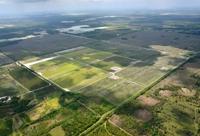


The National Audubon Society is suing two federal agencies over their approval of the planned 10,000-home Kingston development in Lee County, a 6,700-acre project next to Corkscrew Swamp Sanctuary. Filed Aug. 1 in the Middle District of Florida, the lawsuit names the Army Corps of Engineers, the U.S. Fish & Wildlife Service and top officials at both agencies.
The lawsuit centers on the development, including 750,000 square feet of commercial and hotel space adjacent to the protected wetland recognized internationally for its ecological significance.
Corkscrew Swamp Sanctuary attracts more than 80,000 visitors annually and covers more than 20 square miles. It includes ecosystems, including rare freshwater marsh, cypress swamp and pine flatwoods and is home to wildlife species, such as Florida panthers, snail kites, roseate spoonbills and wood storks.
In a statement on the nonprofit’s website, Sanctuary Director Keith Laakkonen said the proposed Kingston development is “one of the biggest threats this special place has ever faced.”
“Corkscrew Swamp Sanctuary currently has the cleanest water quality in the region, which this development will almost certainly degrade,” Laakkonen said in the statement.
Laakkonen said the Kingston project’s 10,000 homes and 750,000 square feet of commercial space would harm the sanctuary by using large amounts of water and fertilizer, which could damage its marshes. He added that converting more than 6,700 acres from farmland to development would cut off crucial wildlife corridors, especially for Florida panthers.
He said Audubon spent several years negotiating with the developer, Estero-based Cameratta Cos., to build common-sense protections for Florida panthers and water quality protection into the developer’s designs, without its substantial cooperation.
“We shared our concerns with permitting agencies in the hopes they would condition their approvals on requiring protective measures for wildlife and water, with no response,” he said.
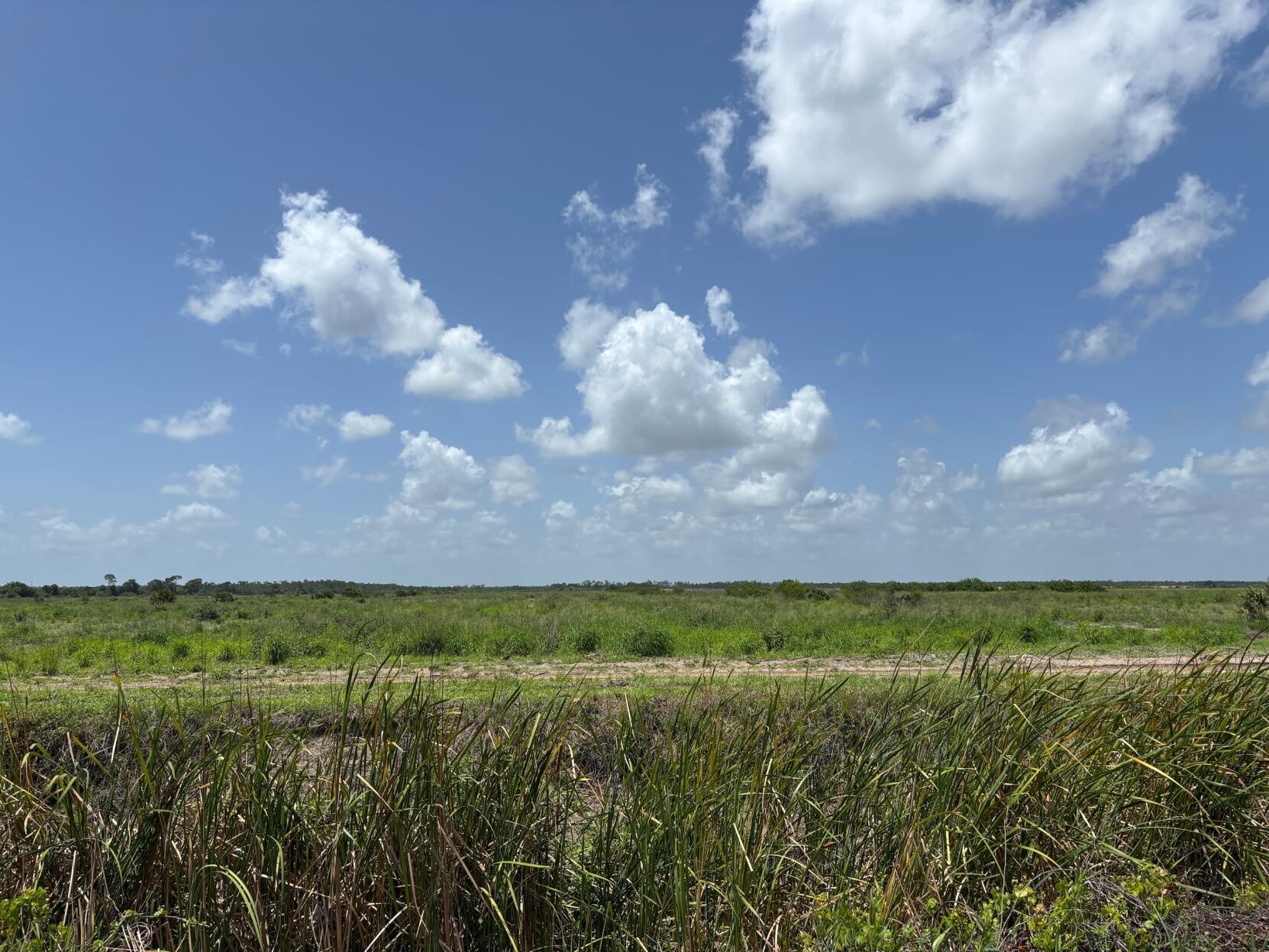
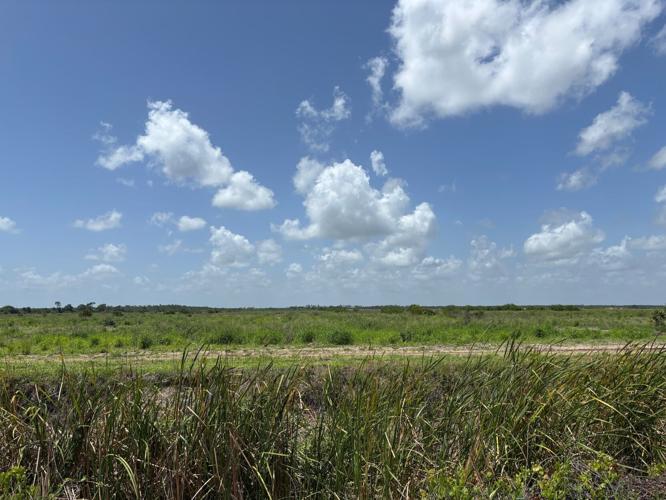
Open land at the future Kingston development site, which Audubon argues could cut off vital wildlife corridors for Florida panthers and other species.
After the Army Corps of Engineers issued the project’s final major permit, Laakkonen said Audubon elected to challenge the permit’s validity in court.
Audubon’s lawsuit states the Army Corps and U.S. Fish & Wildlife approved the project in violation of several federal laws meant to protect the environment and endangered species, including the Endangered Species Act, Clean Water Act and National Environmental Policy Act.
The project could destroy habitat for species, including the Florida panther, wood stork, crested caracara, eastern indigo snake, Florida bonneted bat, tricolored bat and the Everglade snail kite, according to the lawsuit. It also warns that the development would cut off vital wildlife corridors connecting protected areas. Increased traffic from the 10,000 planned homes could further raise the risk of vehicle collisions, especially for panthers.In addition, the suit argues that the federal agencies failed to set clear limits or establish specific conditions that would require additional environmental protections if certain thresholds, such as declines in water quality or impacts to wildlife, were reached.
In terms of threats to water quality, the suit claims runoff from lawns, roads and stormwater lakes “could pollute downstream wetlands and undo years of restoration work at Corkscrew.”
Audubon argues that the agencies mishandled the review process by skipping a full Environmental Impact Statement despite the project’s size. The group also faults officials for limiting public input — no hearings were scheduled even though they received a large number of comments — and for failing to release the Environmental Assessment, which Audubon later obtained through a Freedom of Information Act request.
Neither Laakkonen nor Audubon’s law firm, Everglades Law Center in Miami, responded to requests for additional comment on the lawsuit.
Cameratta Cos. did not respond to requests for comment on the lawsuit, in which they are not named. However, in a June Gulfshore Business story about a $92.8 million land purchase for the Kingston project, CEO Joe Cameratta said the development would include wildlife corridors to allow panthers to move through their habitat. He also noted plans to plant millions of trees and restore significant areas of wetlands.
The Army Corps of Engineers did not respond to a request for comment by deadline. The U.S. Fish & Wildlife Service, through Interior Department spokesman Taylor Pool, said it is agency policy not to comment on pending or active litigation.
(0) comments
Welcome to the discussion.
Log In
Keep it Clean. Please avoid obscene, vulgar, lewd, racist or sexually-oriented language.
PLEASE TURN OFF YOUR CAPS LOCK.
Don't Threaten. Threats of harming another person will not be tolerated.
Be Truthful. Don't knowingly lie about anyone or anything.
Be Nice. No racism, sexism or any sort of -ism that is degrading to another person.
Be Proactive. Use the 'Report' link on each comment to let us know of abusive posts.
Share with Us. We'd love to hear eyewitness accounts, the history behind an article.