




A Collier County Circuit judge denied a motion by a Naples home designer seeking more than $130,000 from a permit and planning firm that certified his plans using the seal of a retired architect later found to have Alzheimer’s disease.
During a brief hearing this week, Circuit Judge James Stewart denied David Wainscott’s motion for summary judgment against Octavio Sarmiento of Naples-based ASSA (Agencias Sarmiento S.A.). A motion for summary judgment asks a judge to rule that no genuine issues of material fact exist and to decide the case without a trial.
“What a jury thinks, that’s a different issue,” Stewart told the attorneys, who appeared via Zoom. “I think there’s just enough there to look into for a jury.”

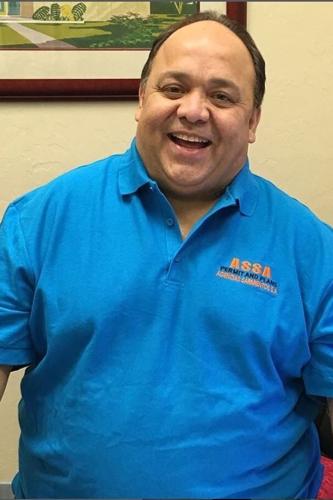
Octavio Sarmiento, owner of ASSA (Agencias Sarmiento S.A.), faces more than 100 counts in a state permit-fraud case involving hundreds of homes and commercial buildings in Collier County.
Wainscott and his firm, DWD Designs, sued Sarmiento in March 2025, alleging he jeopardized projects, caused nearly $106,000 in losses and damaged his reputation. According to the lawsuit, from March through December 2024 Wainscott paid Sarmiento $2,250 per month, totaling $24,750, for a licensed architect at ASSA to review his structural design plans.
Sarmiento has denied allegations of fraudulent misrepresentation, breach of contract and violations of Florida’s Deceptive and Unfair Trade Practices Act.
The case stems from a permit-fraud investigation that began in January 2025, when the Florida Department of Business and Professional Regulation notified Collier County that architect Gene Cravillion had retired, suffered from Alzheimer’s disease and was unaware his signature and seal were being used to obtain building permits. His son has said Cravillion’s memory had been declining for 12 years.
Cravillion, now 92, has lived in a North Naples memory care facility since August 2022. The state ordered 25 professionals and businesses to cease and desist. Several have been fined, some cases have been dropped and three, including Sarmiento’s, are pending hearings. The FBI is investigating. County officials reviewed 220,000 permits dating back to August 2022, and property owners were required to hire new engineers or architects to recertify plans. Some homes were found to have significant structural problems.
Wainscott said he paid $105,960.14 to hire another engineer of record to review and recertify designs bearing Cravillion’s seal. His lawsuit seeks reimbursement totaling $130,710.14.

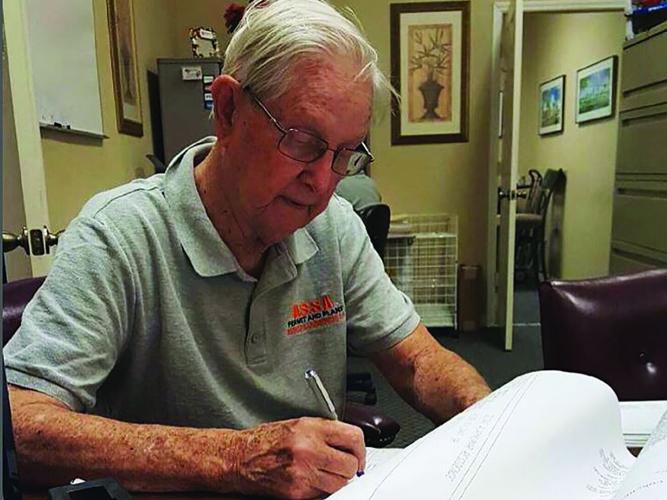
Retired architect Gene Cravillion reviews and signs building plans at the Naples office of ASSA (Agencias Sarmiento S.A.), whose use of his architectural seal is at the center of a wide-ranging permit-fraud investigation in Collier County.
DBPR records show Wainscott has a history of unlicensed activity dating to 1991, including representing himself as an architect or engineer. In January, he agreed to pay $50,000 to the state Board of Architecture and Design for 63 counts of practicing architecture without a license. The settlement reduced a recommended $189,000 fine.
That case followed a $24,000 fine in November 2023 for using the architectural seal of Leonard LaForest, who was suspended in 2019 and died in November 2021. Records show Wainscott used his mother-in-law to notarize plans certifying LaForest appeared before her when he was deceased.
The board’s prosecutor, David Minacci, has said Sarmiento faces potential federal prison time as a result of the FBI investigation. A state panel recommended fining him $425,000 for 107 counts.
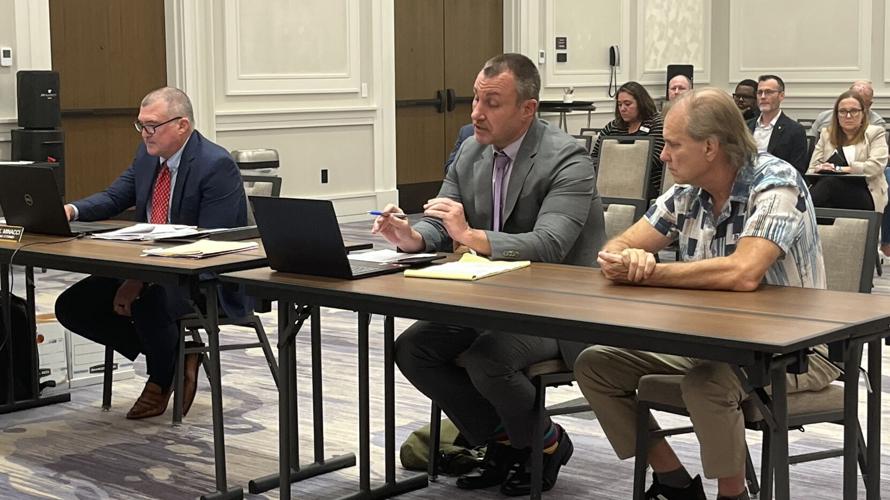
At this week’s hearing, Wainscott’s attorney, James Kurnick II, argued that Sarmiento admitted Cravillion “personally reviewed and approved every structural design” during the relevant period, despite suffering from Alzheimer’s disease. Kurnick said Sarmiento could not provide documentation or communications to support that claim.
“There’s nothing that exists that shows they ever submitted a plan or that [Cravillion] sent a plan back,” Kurnick said, adding that Wainscott was unaware the seal was fraudulent.
Sarmiento’s attorney, Eusebio Gonzalez, argued there was no proof Cravillion lacked the capacity to perform the work, noting Alzheimer’s is progressive.
“His condition didn’t impair his architectural ability,” Gonzalez said.
Stewart said it was possible there were no written communications documenting the review process.
“They gave him the stuff to review, and he reviewed it, but there’s no memorializing of that in an email or in written form. Isn’t that possible?” the judge said.
Kurnick agreed it was.
(0) comments
Welcome to the discussion.
Log In
Keep it Clean. Please avoid obscene, vulgar, lewd, racist or sexually-oriented language.
PLEASE TURN OFF YOUR CAPS LOCK.
Don't Threaten. Threats of harming another person will not be tolerated.
Be Truthful. Don't knowingly lie about anyone or anything.
Be Nice. No racism, sexism or any sort of -ism that is degrading to another person.
Be Proactive. Use the 'Report' link on each comment to let us know of abusive posts.
Share with Us. We'd love to hear eyewitness accounts, the history behind an article.